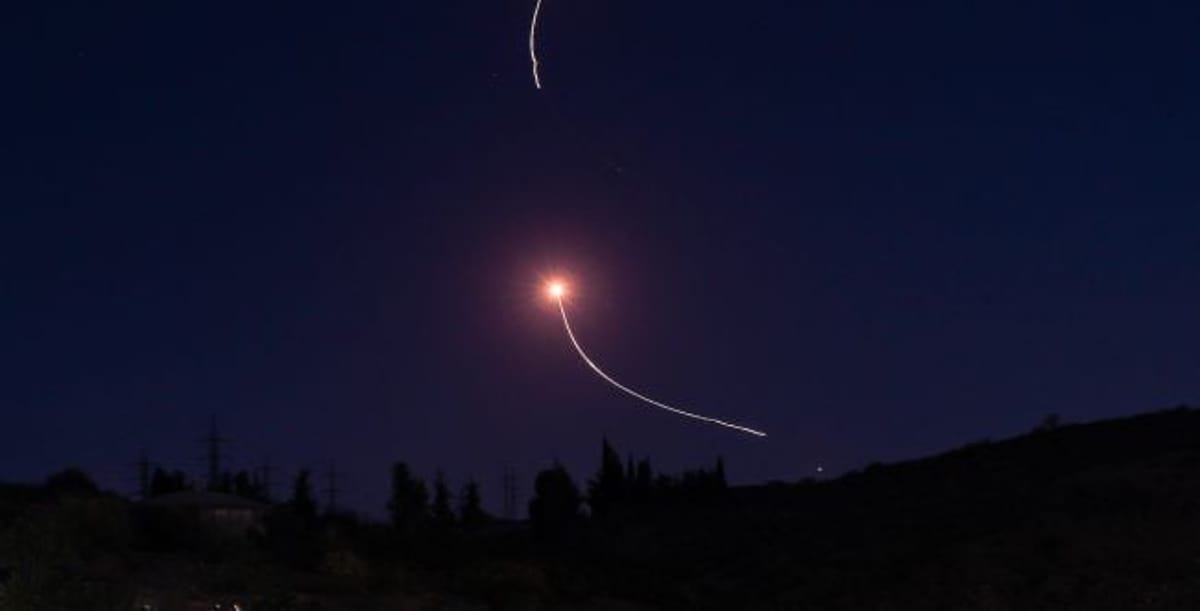
For the second time in a matter of days, a ballistic missile fired from Yemen toward Israel crashed before reaching its target, this time falling in Saudi Arabian territory around 21:00 on Wednesday. Launched by the Houthi rebels, the missile didn’t make it close to Israeli soil, and consistent with protocol, no alerts were sounded, leaving daily life undisturbed. The American air defense system, positioned in Saudi Arabia, intercepted the projectile, mirroring an incident just two days earlier when another Houthi missile met a similar fate. Over the past two weeks, the Houthis have ramped up their attacks, sending a string of missiles toward Israel. Some, like Wednesday’s, disintegrate mid-journey, while others are shot down by external defense networks, though these often spark sirens across central Israel, from Jerusalem to Tel Aviv, over concerns about debris.
The pattern isn’t new. Last Thursday, fragments from an intercepted missile rained down on a school in Tsur Hadassah, a town on the southwestern fringe of the alert zone. Then, on Sunday, central Israel heard sirens again, though Jerusalem was spared. These incidents highlight the growing threat, even if many missiles fail to reach their mark. With a flight time of five minutes or more, Israel’s monitoring systems can track and predict trajectories, prompting Home Front Command to weigh a new approach: issuing warnings a few minutes before sirens. The idea is to give people a heads-up to reach shelters without panic, but it’s yet to be tested in real-time, and officials hope it stays that way.
For now, the combination of Houthi aggression and robust defenses keeps Israel on edge but largely unscathed. Wednesday’s crash in Saudi Arabia, like Monday’s, underscores that while the threat persists, it’s often neutralized far from Israel’s borders. Still, the specter of falling debris keeps the tension alive, even when the missiles themselves don’t make it through.