
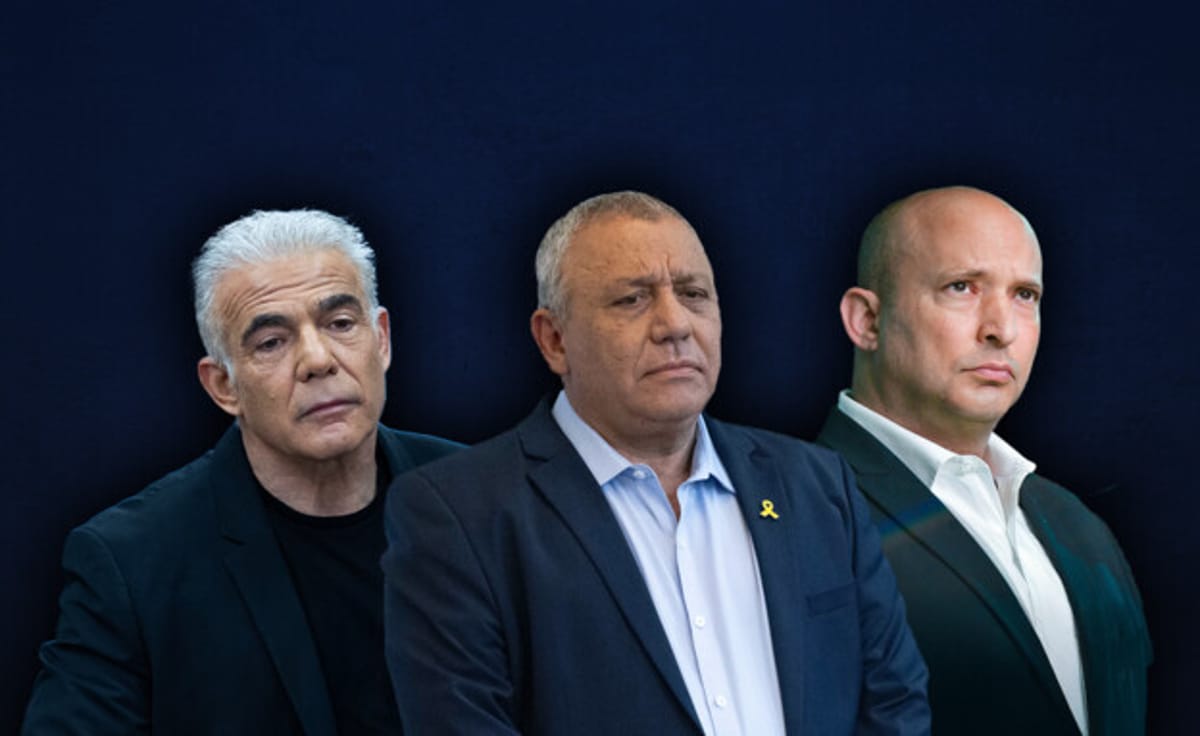
A new KAN 11 poll published Tuesday night showed Prime Minister Benjamin Netanyahu’s Likud narrowly ahead of Naftali Bennett and Yair Lapid’s new joint slate, as the coalition faces a deepening crisis with Haredi parties over military service legislation.
According to the poll, Likud would win 26 seats if elections were held today, while Bennett’s Together party, formed through his merger with Lapid, would receive 25. The result positions Together as the only party currently close to challenging Likud for first place.
Former IDF chief of staff Gadi Eisenkot, whom Bennett and Lapid have been trying to bring into their alliance, also remains a major factor in the race. The poll suggested that if Eisenkot were to join Together, the combined slate could overtake Likud.
The survey was released as Netanyahu’s coalition was shaken by a dispute with Haredi parties over the government’s handling of draft-related legislation. The immediate crisis erupted after it became clear that Netanyahu was seeking to advance a bill extending military service without simultaneously advancing legislation regulating exemptions for Haredi yeshiva students.
Haredi factions saw the move as a breach of coalition understandings and warned that they could begin working to dissolve the Knesset. Because apparently the one thing Israeli politics lacked was another coalition crisis over the exact same issue that has been simmering since roughly the invention of bureaucracy.
The dispute centers on the long-stalled Haredi draft bill, one of the most politically sensitive issues facing the government. Haredi parties have demanded legislation preserving the status of yeshiva students, while many in the public and opposition have demanded broader enlistment, particularly during wartime.
For the Haredi factions, the order of legislation is the core issue. Advancing a bill that lengthens service for those already serving, while leaving Haredi enlistment unresolved, was seen as upsetting the political balance Netanyahu had tried to maintain inside the coalition.
The crisis has immediate parliamentary implications. After Degel HaTorah said it no longer considered itself part of Netanyahu’s bloc, the coalition pulled its bills from the Knesset agenda over concerns it lacked a majority.
The poll reflects how dangerous the moment could become for Netanyahu. Likud remains slightly ahead, but Bennett and Lapid are within striking distance, and Eisenkot’s next move could reshape the opposition. At the same time, Netanyahu’s coalition stability now depends on whether he can contain Haredi anger without alienating voters already frustrated over the draft issue and the failures surrounding October 7.