
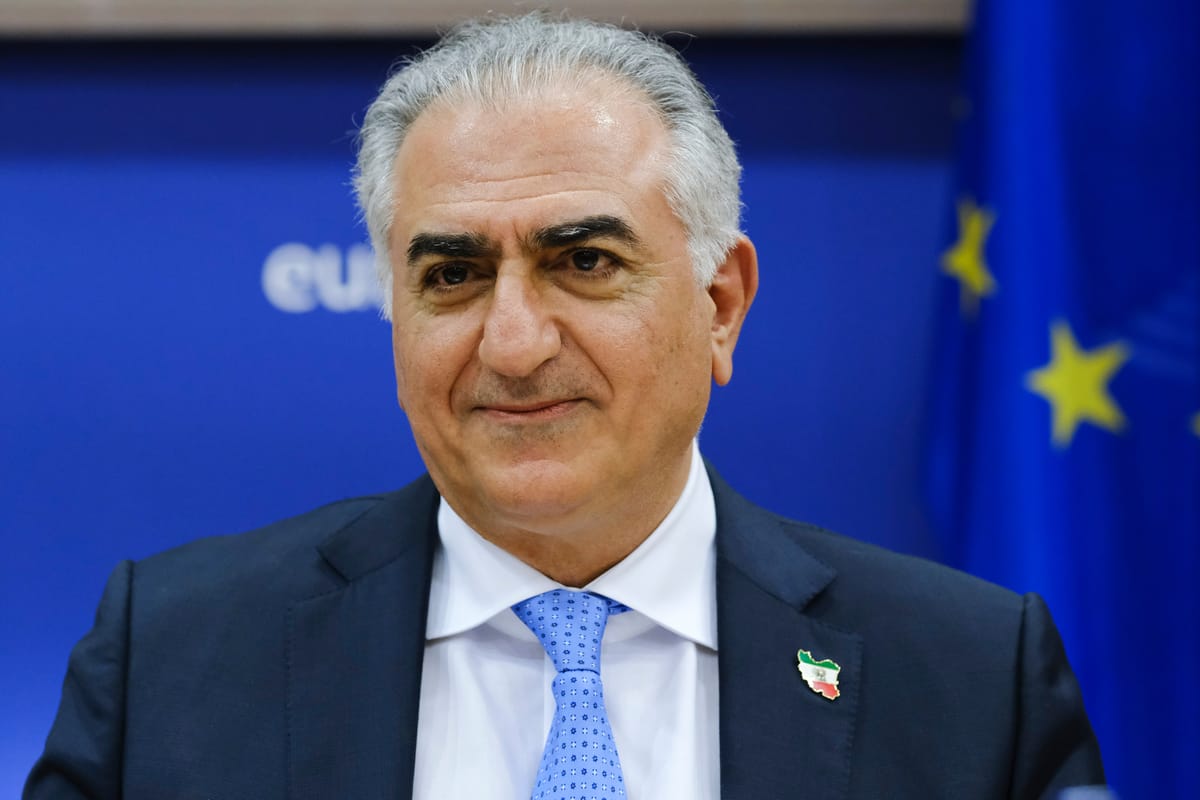
Iranian Crown Prince Reza Pahlavi called on the United States to stop pursuing negotiations with Tehran and instead fully support regime change, arguing that the Islamic Republic cannot be reformed and that the current war has created a rare opportunity to remove it from power.
Speaking Tuesday at the POLITICO Security Summit in Washington, Pahlavi said Western governments had spent years trying to appease Iran, a strategy he said strengthened the regime and its proxies.
“Appeasement has failed,” Pahlavi said. “The regime was to some extent emboldened. Previous administrations allowed the regime to have access to billions of dollars that they obviously did not spend on the people of Iran and their needs, but to further strengthen their proxies.”
Pahlavi said the Islamic Republic is “inherently incapable” of coexistence with the democratic world and warned that the threat from Tehran extends beyond Hamas, Hezbollah and the Houthis. He said Iran also maintains networks and sleeper cells in Europe, the Western Hemisphere and the United States.
He argued that negotiations are unlikely to succeed because the Islamic Revolutionary Guard Corps effectively controls the country.
“The regime has been weakened, but it’s the radical elements that are the most in charge,” he said. “It’s the IRGC that controls everything ultimately.”
Asked whether he wanted US troops in Iran, Pahlavi rejected the idea, saying the “boots on the ground” should be the Iranian people themselves. But he said outside powers should provide political support and protection to help Iranians challenge the regime.
Pahlavi criticized what he described as mixed messaging from Washington, saying the United States cannot encourage Iranians to rise up while also negotiating with their rulers.
“You cannot have it both ways,” he said. “You cannot say, ‘people, we’ll keep you on ice, and we’ll tell you when we’re ready. In the meantime, we are attempting to figure out something else.’”
He said Iranians had already shown they were willing to risk their lives for freedom, but feared being abandoned again by the international community.
Pahlavi described the US-Israeli military campaign against Iran as a “liberation campaign,” not an attack on the Iranian people. He said the strikes had weakened the regime and reduced its ability to suppress domestic opposition.
“The majority of Iranian people look at this as a liberation campaign,” he said.
He also claimed Tehran is trying to buy time in the hope that political leadership changes in Jerusalem or Washington will reduce pressure on the regime.
Pahlavi said his movement is preparing for what he called a smooth transition to a secular democratic system, including by encouraging defections from Iran’s military and security apparatus. He said thousands inside the regime had contacted his network but were waiting for clearer international signals before acting.