
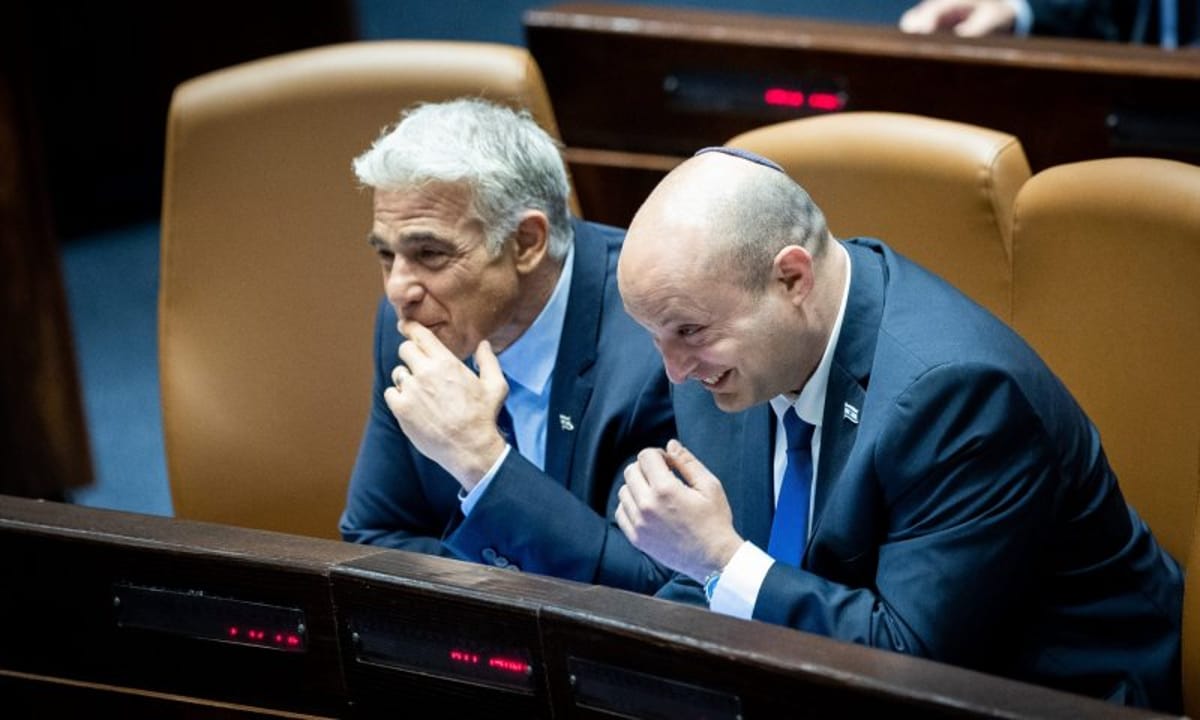
Former prime minister Naftali Bennett said that if he could erase one thing from the internet, it would include past statements and promises that have continued to follow him politically, particularly his pledge that he would not sit in a government with Ra’am chairman Mansour Abbas.
Speaking on Eran Suissa’s podcast ahead of the coming election campaign, Bennett was asked what online moment he would most want to remove.
“There are many things,” Bennett said. “All kinds of statements and promises from the past. Like the story from Channel 20, which did not do me any favors. I said then that I would not enter a government with Mansour Abbas.”
The remark refers to one of the most politically damaging moments for Bennett among right-wing voters, after he formed the 2021 Bennett-Lapid government with outside support from Ra’am, despite earlier statements rejecting such a move.
The issue has returned to the campaign in recent months as Bennett attempts to position himself as a central alternative to Prime Minister Benjamin Netanyahu while also reassuring voters on the right that he will not repeat the same coalition arrangement.
About three months ago, Bennett said that after October 7 there was “no mandate” to form a government based on Arab parties. Abbas responded at the time that he was not offended, but rejected Bennett’s framing.
“I never opposed a unity government,” Abbas said. “You can say that part of the public, part of the mandates, will not come if there is partnership with Arabs. But to come and say that after October 7 there is no absolute trust between Jews and Arabs, that is not true.”
Abbas argued that Arab society had proven itself after the Hamas-led massacre, saying it condemned the attack, showed empathy with Jewish victims and also paid its own price, including nearly 20 Arab citizens killed and abducted.
Bennett’s answer shows that the Ra’am issue remains one of the central vulnerabilities of his political comeback. For supporters, the former prime minister can argue he acted pragmatically to replace Netanyahu. For critics, the old pledge remains evidence of a broken promise that will not disappear from the internet, however much he might want it to.