Get our mobile app
Download on the App StoreGet it on Google Play

Water Emergency

Desalination Crisis: Only 60% Output

Knesset hearing reveals unprecedented algae bloom has crippled five of six major desalination plants. MK Schuster: We need to prepare ourselves for emergency events of this kind

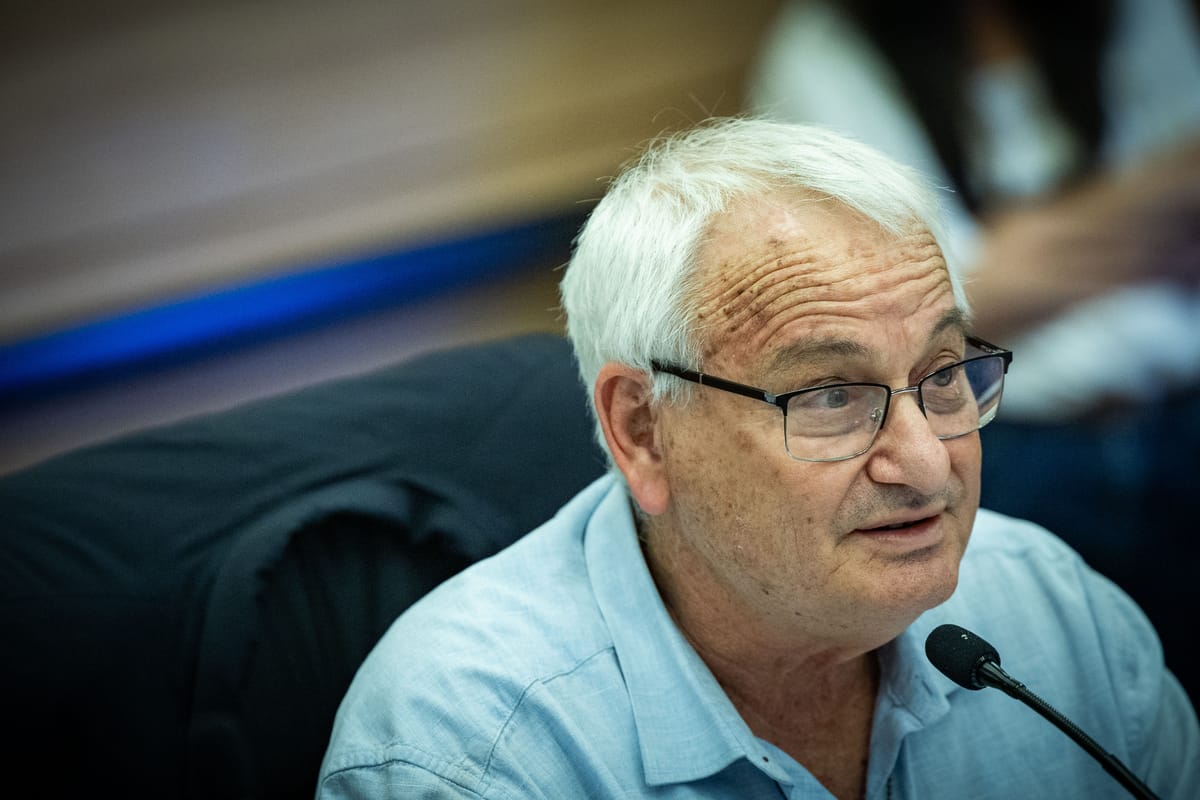
Alon Schuster

The Knesset State Control Committee convened Thursday for a hearing on seawater desalination facilities and oversight, against the backdrop of an unprecedented crisis that has struck Israel's water sector in recent weeks. At the end of August, an unusual algae bloom and extreme spike in seawater turbidity led to the shutdown or curtailment of five of Israel's six major desalination plants.

Committee chairman MK Alon Schuster said the current crisis has brought longstanding deficiencies back into focus. "The current crisis resurfaces the shortcomings highlighted by the State Comptroller in his reports, chief among them the lack of adequate long-term planning and the need to preserve natural water sources as a strategic reserve," Schuster stated. "We cannot predict everything, but we need to prepare ourselves for emergency events of this kind."

"Alongside strengthening the desalination system, the state must avoid exclusive reliance on it as much as possible and ensure that the Kinneret and the aquifers are preserved as backup sources for crisis situations," he added.

Representatives from the State Comptroller's office noted that the crisis illustrates the need they warned about in recent audit reports. According to them, Israel is expected to rely increasingly on desalination facilities due to growing water demand and declining natural water supply, and therefore preparation is required for cases where continuity of their operation is impaired.

Among other issues, the Comptroller pointed to the need to preserve natural water sources, rehabilitate aquifers, develop the drilling and treated wastewater systems, and establish desalination facilities on schedule and with geographic distribution.

The hearing revealed that the Water Authority has not completed a comprehensive master plan for the water sector. Comptroller representatives noted that failure to complete long-term planning damages the ability to prepare for crisis situations. It was also revealed that the plan for developing the desalination sector through 2050 was not approved on the timeline examined in the audit; in May 2026, the Water Authority council approved production capacity in the desalination sector for 2050 and 2075, and in June 2026 the government approved desalination facility production capacity for 2050.

Data from the State Comptroller's office presented at the hearing shows that in 2024, approximately 540 million cubic meters of water were produced by desalination facilities, compared to a production capacity of approximately 800 million cubic meters set in the concession agreements. The cumulative desalination volume in 2024 was lower by approximately 225 million cubic meters than production capacity—an amount equal to roughly one-third of the available water volume in the Kinneret. It was further reported that as of September 2026, the Kinneret level is approximately 0.41 meters below the lower red line.


The Comptroller further presented that between 2007 and 2023, there were 14 cases of seawater contamination that caused production stoppages at desalination facilities, for periods ranging from several hours to five days. Unlike those incidents, the current event has simultaneously affected five of the six major desalination facilities.

Comptroller representatives also pointed to gaps in oversight: between 2018 and 2023, the Ministry of Health did not conduct the required annual inspection at any of the desalination facilities, and the Water Authority refrained from conducting surprise inspections at high frequency. It was also presented that the Ministry of Health has not yet conducted a survey regarding invasive species in the Mediterranean Sea, even though in light of climate change they could damage the quality of raw water for desalination facilities.

Alongside the decline in the quantity of natural water, the Comptroller also pointed to deterioration in their quality. In 2020, the volume of contaminated water in the Coastal Aquifer stood at approximately 6.6% of the reservoir volume, a 32% increase compared to 2015. Despite the authorities granted to the Water Authority and the Ministry of Environmental Protection to prevent contamination, extensive contamination sites still exist whose rehabilitation has not yet begun in practice.

Water Authority Director General Yechezkel Lifshitz said this is an event of algae bloom and turbidity of extremely unusual magnitude. According to him, turbidity indices, which routinely stand at approximately 3-4, reached 15 and even 20 in southern areas. Due to concern about irreversible damage to the membranes, facility operations were halted, and then gradually restored under supervision.

Lifshitz updated that as of today, the Hadera facility is operating at full and even increased capacity, and the five other desalination facilities are operating partially. In total, approximately 60% of the daily water quantity produced routinely by desalination facilities is currently being produced, and the gap is being filled through increased pumping from the Kinneret and from drilling. According to him, the Water Authority is preparing for a scenario in which partial desalination output continues through the end of 2026, and in the current situation it is possible to continue supplying water needs for household and agricultural use.

Lifshitz further reported that desalination facilities have been instructed to increase the inventory of membranes in their warehouses, to enable rapid replacement in case of damage to them. According to him, no event identical in scope to the Israeli event has been found anywhere in the world, and the Water Authority has reached out to various countries, including the United Arab Emirates and Singapore, to learn from their experience.

Ready for more?

Join our newsletter to receive updates on new articles and exclusive content.

We respect your privacy and will never share your information.

Enjoyed this article?

Yes
No
Follow Us:

Unmissable content


Loading comments...

Also of Interest