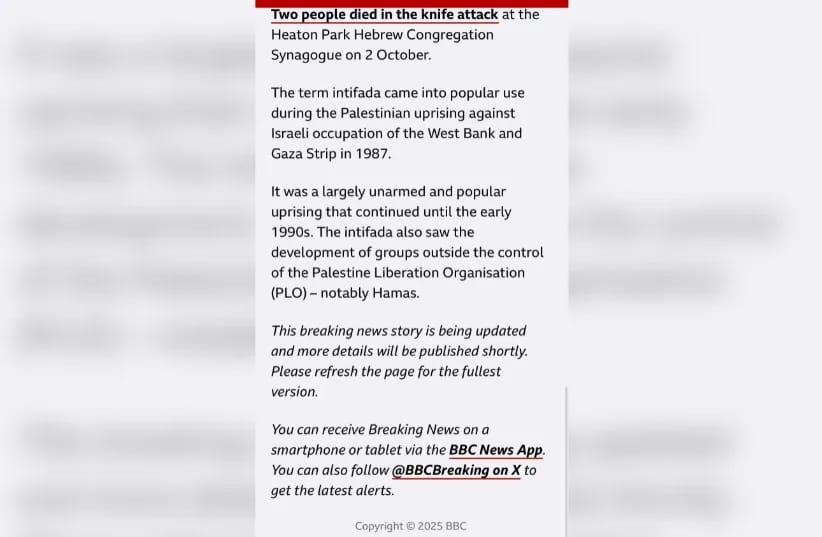
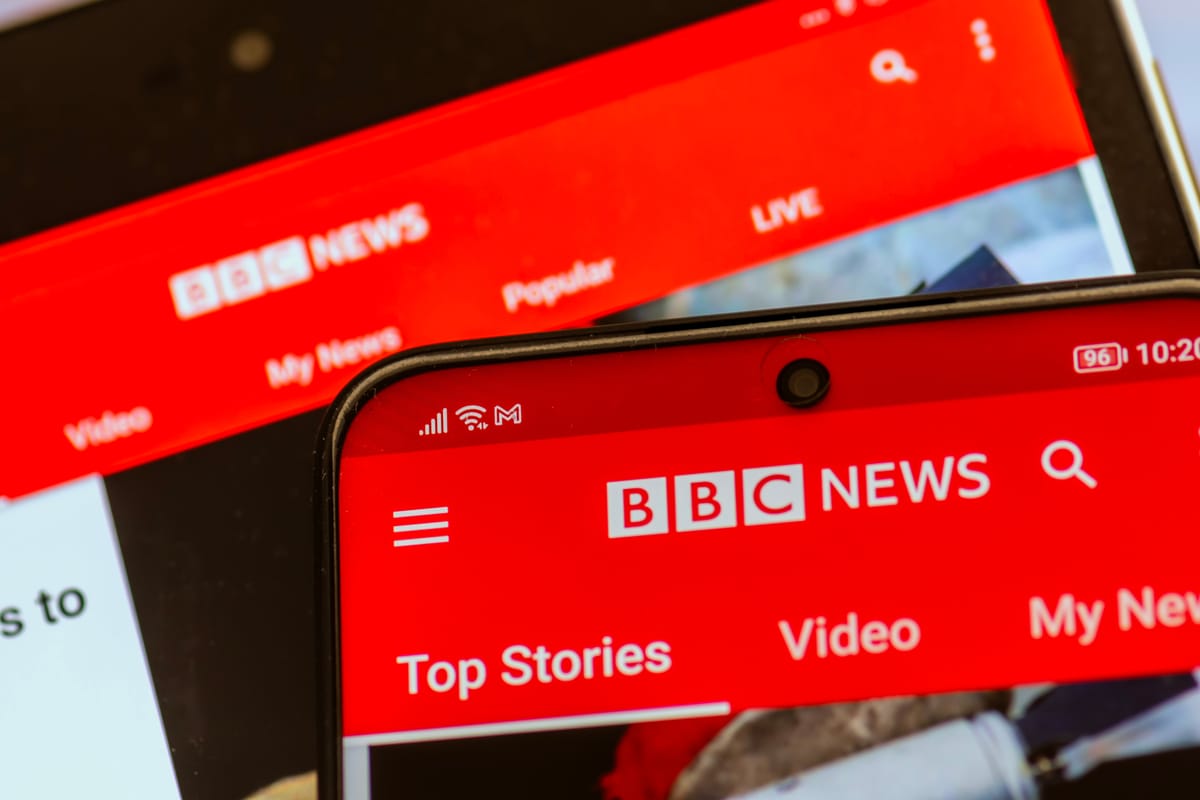
The BBC faced sharp criticism this week after describing the First Intifada as a “largely unarmed and popular uprising,” language that was widely condemned as misleading and historically inaccurate. The wording appeared in a Wednesday article covering the decision by UK police to arrest protesters who chant “Globalize the Intifada,” following the antisemitic terrorist attack at a Hanukkah celebration in Sydney’s Bondi Beach.
In explaining the meaning of the term “intifada,” the BBC initially wrote that the First Intifada was “a largely unarmed and popular uprising that continued until the early 1990s,” a characterization critics said minimized the scale of violence and the threat it posed. The phrasing quickly drew backlash, particularly given the context of the article, which dealt with contemporary concerns about incitement to violence and antisemitism.
Following the criticism, the BBC amended the article and added an editorial note acknowledging the problem. “An earlier version of this article sought to explain the wider background… by referring to the first Palestinian intifada,” the note said. “However, the language used in this brief summary did not give a clear enough or complete picture of the history, and so this section has been amended.”
Jewish advocacy group Campaign Against Antisemitism was among the most vocal critics of the original wording. In a statement, the group rejected the idea that the First Intifada could be accurately described as “largely unarmed,” pointing to extensive violence during the period. According to the group, 16 civilians were murdered, some 1,400 were injured, and more than 1,500 soldiers were injured or killed. The uprising also included thousands of Molotov cocktail attacks, hand grenade attacks, and hundreds of assaults involving firearms or explosives. Hamas, now designated a terrorist organization by many countries, was founded during that period.
The group contrasted the BBC’s description with the Second Intifada, during which more than 1,000 Israelis were murdered in suicide bombings targeting buses, cafes, and nightclubs. “Do these sound ‘unarmed’ to you?” the statement asked, accusing the broadcaster of downplaying antisemitic violence.
Critics noted that this episode is far from the first time the BBC has been accused of using language seen as sanitizing or contextualizing violence against Israelis. The broadcaster has repeatedly faced complaints over terminology, framing, and historical summaries related to terrorism and antisemitism, often issuing clarifications or edits only after public pressure.
The controversy comes at a particularly sensitive moment, as governments and police forces grapple with how rhetoric linked to past violence is used in present-day protests, and as Jewish communities worldwide confront a surge in antisemitic attacks.