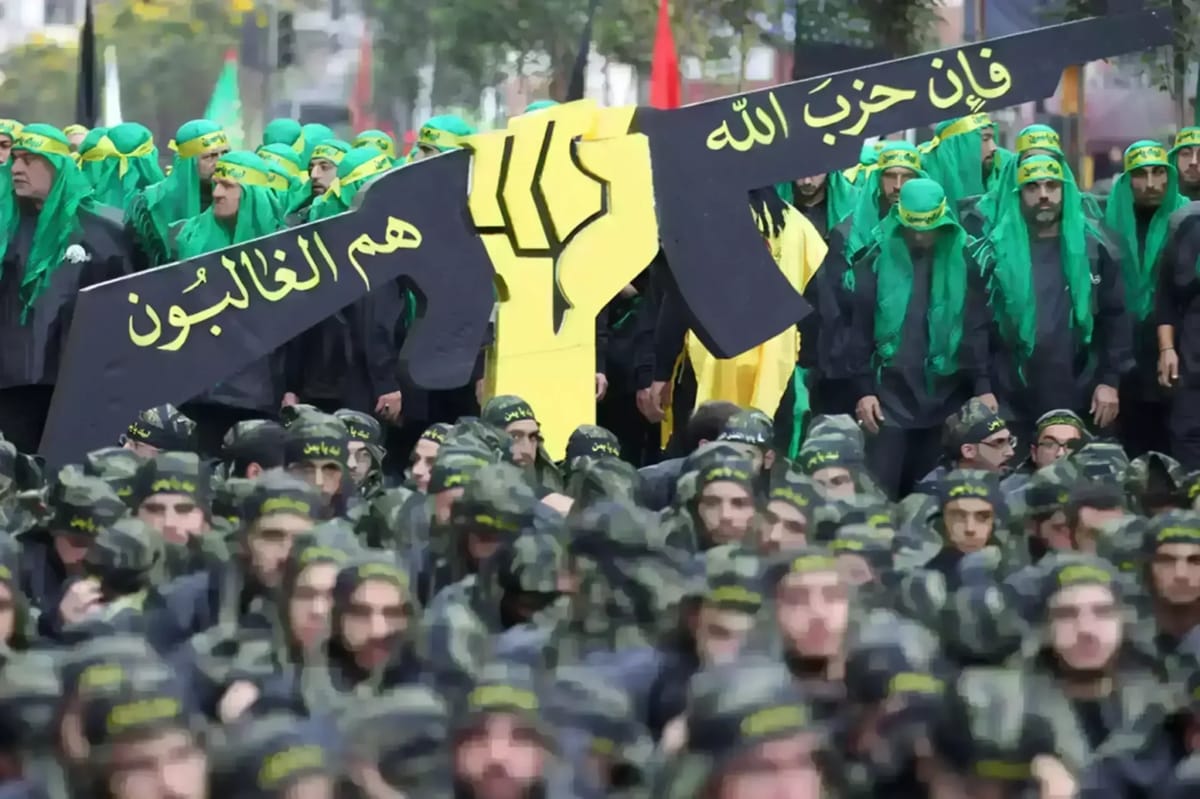
As the financial grip of the Islamic Republic of Iran weakens in the wake of internal crises and successful Israeli military campaigns, its primary proxy, Hezbollah, is rapidly shifting its operations to Latin America. Recent intelligence indicates that the terror group is increasingly reliant on drug trafficking and money laundering within Venezuela to replenish its depleted coffers. This strategic pivot comes as Hezbollah faces a massive budget shortfall, with Iran reportedly unable to continue providing the $700 million annual subsidy that previously covered 70 percent of the terror group's expenses.
The influx of terror operatives into South America has reached a critical level. Former Treasury official Marshall Billingslea recently revealed that more than 400 Hezbollah field commanders were specifically directed to evacuate to Latin America, with Venezuela identified as the primary destination. These commanders join an estimated 11,000 other operatives who have established a presence in the country over the last decade. Secretary of State Marco Rubio highlighted the severity of the situation, stating that Venezuela serves as the Islamic Republic's hub in the Western Hemisphere, where they have planted their flag with the full and open cooperation of the Maduro regime.
The core of Hezbollah's new revenue stream is the trade in "black cocaine," a substance chemically altered to resemble charcoal bricks to evade detection by customs authorities. Estimates suggest that Hezbollah moves as much as $400 million worth of cocaine through Latin American criminal networks annually, a figure believed to have spiked as other funding sources vanished. Former Attorney General Bill Barr described Venezuela as a strategic adversary and a base for Hezbollah, noting that the regime facilitates drug trafficking into the United States through various money laundering deals.
The alliance between Caracas and Tehran is not merely financial but deeply ideological. Experts point out that the fusion of anti-Americanism and revolutionary socialism creates a natural partnership between the two. Iranian President Masoud Pezeshkian recently reaffirmed this bond in a call with Nicolas Maduro, calling Venezuela a true friend and promising that Iran supports the country under any circumstances. However, with the Trump administration ramping up counter-trafficking measures and targeting drug-smuggling vessels, the terror group’s Venezuelan "anchor" is under more pressure than ever. As the Islamic Republic struggles with its own energy and water crises, Hezbollah’s survival now depends on its ability to maintain its grip on the illicit drug trade in the face of increasing American military and economic intervention.