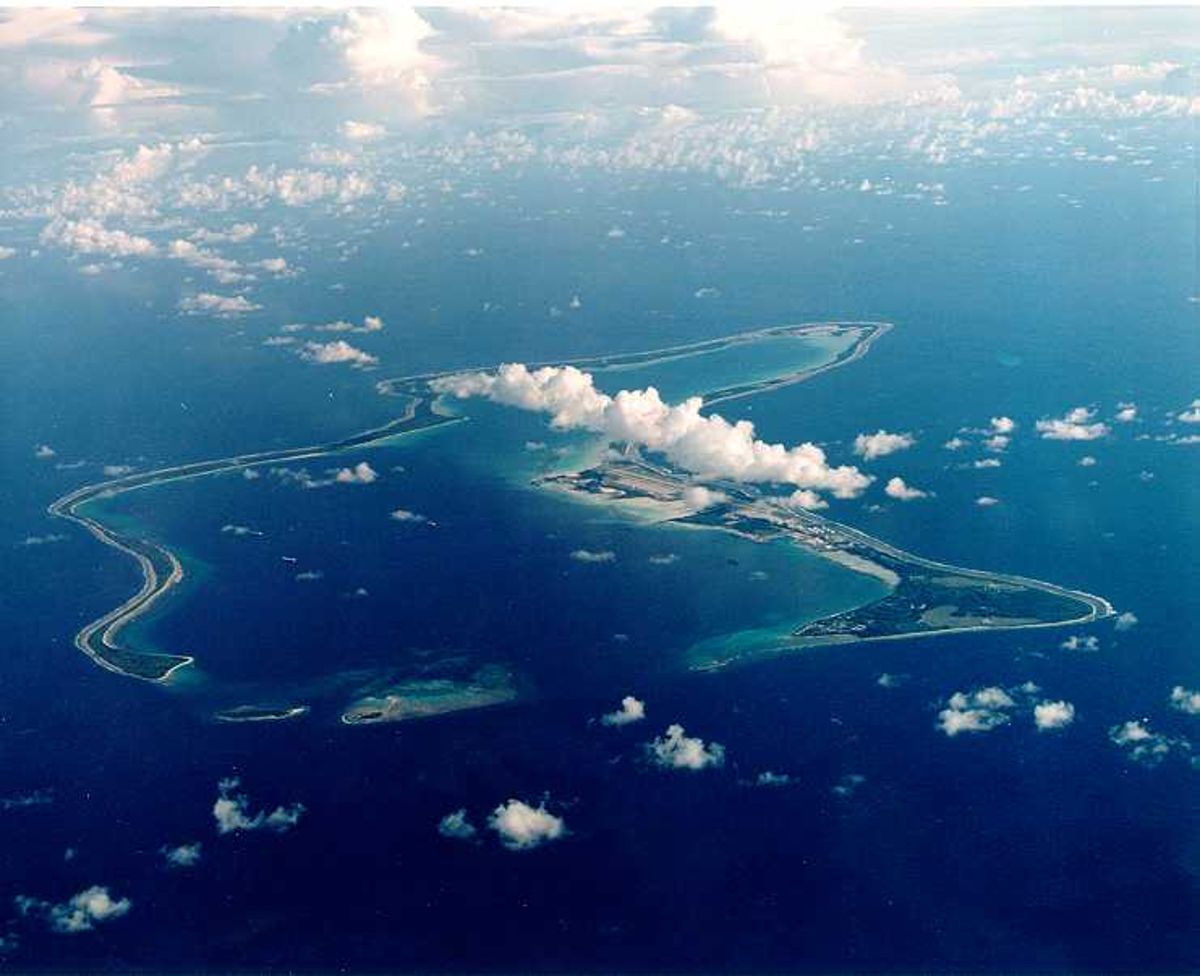
Iran targets the strategic US-UK base at Diego Garcia with 4,000km range missiles, shattering Tehran's 2,000km "limit" claim. Here's how a US Navy interceptor and a mid-flight failure prevented the longest-range Iranian strike in history.
The Indian Ocean strategic chessboard shifted Thursday when Iran launched two medium-range ballistic missiles toward Diego Garcia, a sprawling joint US-British military installation in the British Indian Ocean Territory. Neither missile reached the base, one malfunctioned during flight while the other faced an interceptor volley from a US Navy warship. But the strike attempt itself delivered a sobering message: Iran's weaponry reaches far deeper than previously acknowledged.
US military officials, speaking to the Wall Street Journal, confirmed both launches but called the interception outcome uncertain. What they couldn't dismiss was the staggering distance: roughly 4,000 kilometers separating Iran's launch sites from the target. Just weeks earlier, Iranian Foreign Minister Abbas Araghchi had told the world that Tehran deliberately capped its missile range at 2,000 kilometers, a statement that now carries a different weight entirely.
Military analysts scramble to reconcile conflicting data. Iran Watch assesses that Tehran operates missiles capable of reaching about 4,000 kilometers. Israel's Alma Research and Education Center, which monitors regional threats, estimates the maximum range at approximately 3,000 kilometers, though researchers flagged credible intelligence suggesting systems under development with substantially greater reach.
Amir Tsaraftai explained:
If the Diego Garcia strike report is accurate, then one of the central assumptions about Iran’s missile program has just collapsed. For years, the accepted ceiling was around 2,000 kilometers. A ballistic missile reaching Diego Garcia suggests something in the neighborhood of 4,000 kilometers, which pushes it out of the medium-range category and into the intermediate-range class (IRBM). That is a strategic leap.
The real story is not whether the missile was intercepted. It is that Iran may have demonstrated reach far beyond what much of the world believed it possessed. A 4,000-kilometer capability changes the map. Major European capitals begin to enter the conversation. Paris comes into range. London moves much closer to the edge of vulnerability depending on launch point and payload. This would mean the missile threat is no longer confined to the Gulf, Israel, or parts of South Asia. It would mean the radius of deterrence, defense, and fear has expanded dramatically. If confirmed, Diego Garcia was not just a target. It was a message.
Diego Garcia occupies a singular position in American military planning. The atoll serves as the lynchpin for US power projection across the Indian Ocean and beyond. From this coral-ringed base, the US maintains forward-deployed bombers, nuclear submarines, and guided-missile destroyers, assets that give Washington unmatched reach for operations targeting Iran even across vast oceanic distances. Military historians mark the island as the launching point for numerous major strikes and regard it as indispensable in any protracted confrontation with Tehran.
The base became the center of diplomatic friction in recent months when President Trump publicly criticized London's handling of its status, flagging its strategic relevance to potential Iran conflict scenarios. Those tensions provide context for Thursday's strike attempt, which occurred hours after reports surfaced that Britain had authorized US operations from its bases, including Diego Garcia, to neutralize threats affecting Middle East shipping lanes.
A Western diplomatic source disclosed that allied nations are working to remove obstacles to operations in the Strait of Hormuz region and safeguard energy shipping. The Iranian strike, in that light, reads as a direct challenge to the consolidating Western posture. It also hints at Tehran's determination to widen the geographic scope of its confrontation with the US, moving beyond the familiar Middle Eastern theater to target American interests across the global commons.