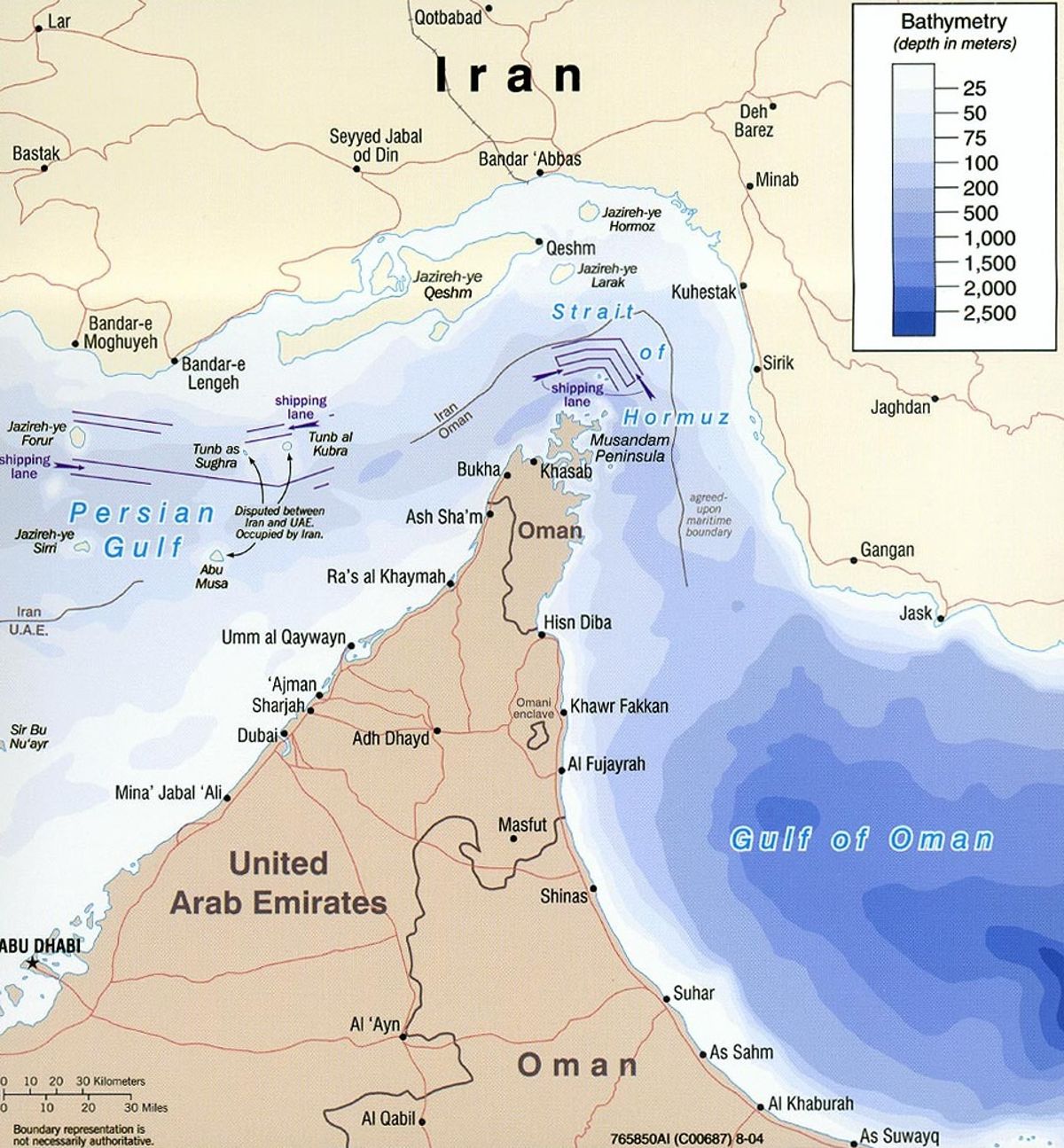
Iranian leaders have declared that the Strait of Hormuz, the narrow chokepoint carrying roughly 20% of global oil supplies, will never return to its pre-war status, announcing new permanent passage rules once the conflict ends.
Parliament Speaker Mohammad Bagher Ghalibaf and Foreign Minister Abbas Araghchi made the statements in the past 24 hours, framing the move as a direct response to the ongoing US-Israel war that began with pre-emptive strikes on February 28.
“The Strait of Hormuz cannot be the same as before and will not return to its previous conditions,” Ghalibaf said, according to Iranian state media. Araghchi added that the waterway remains open to “friendly nations” but is closed to American, Israeli, and allied vessels.
He stated:
From our perspective, this is a waterway located next to Iran. Naturally, we will not allow our enemies to use this waterway. At the same time, a war is taking place around it and naturally, many ships and countries may not want to use this route due to insecurity. Some countries contact us to discuss safe passage through the strait of whole mos, and we try to provide them with the conditions for such passage.
In my view, we need to design new arrangements for the Strait of Horus and the way ships pass through it in the future after the war, so that peaceful navigation through this waterway can be permanently maintained under clear regulations with consideration for Iran's interests and the interests of the region.
I believe that after the war, the first step should be drafting a new protocol for the Strait of Hormuz. Naturally, this should be done between the countries that lie on both sides of the strait as they are the principle parties in this matter, and it should guarantee that safe passage through the strait takes place under specific conditions.
Traffic through the strait has already collapsed dramatically. Only about 90 tankers have passed since March 1, a plunge of roughly 80-90% from the normal daily average of 100-135 vessels, after Iran effectively barred US, Israeli, and coalition ships starting March 4.
The restrictions followed the initial US-Israel attacks that killed Supreme Leader Ayatollah Ali Khamenei and other senior Iranian figures. Iran responded with missile barrages, and the war has now entered its third week with no ceasefire in sight.
The moves have triggered a global energy crisis, pushing oil prices sharply higher and leaving dozens of commercial vessels stranded or rerouted.