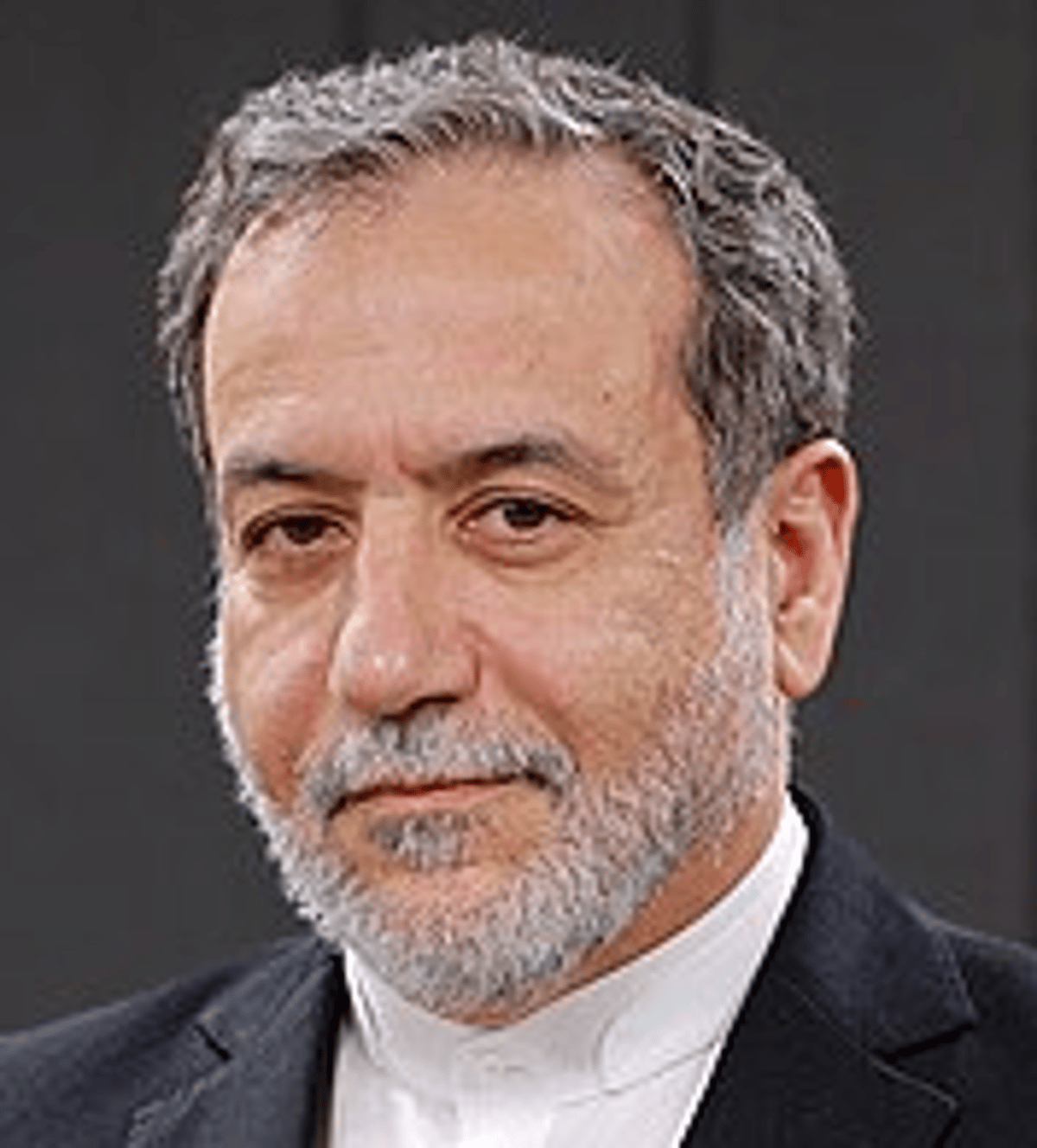
Iran’s leadership remains “unshaken” despite a wave of targeted killings and military strikes by the United States and Israel, Foreign Minister Abbas Araghchi said Wednesday.
Speaking in an interview, Araghchi insisted that the structure of the Islamic Republic is stable and not dependent on any single individual, even after the reported assassination of senior official Ali Larijani.
“The Islamic Republic of Iran has a strong political structure,” he said. “The presence or absence of a single individual does not affect this structure.”
He added that leadership continuity is built into the system. “We have not had anyone more important than the leader himself, and even the leader was martyred. Yet the system continued to work and immediately provided a replacement,” Araghchi said.
His remarks come as the US and Israel continue a campaign targeting senior Iranian figures and military infrastructure, in what Israeli officials have described as an effort to disrupt command and control within the regime.
Araghchi acknowledged that officials across multiple sectors could be targeted. “Anyone could become a target,” he said, adding that political figures, scientists, and civilians had all been affected by the strikes. He also accused the US and Israel of hitting civilian infrastructure, including hospitals and residential areas, while maintaining that Iran has not intentionally targeted civilians in neighboring countries.
“There may be collateral consequences,” he said, while arguing that Iranian strikes are focused on US military assets in the region. “When the United States attacks us, we cannot reach US territory. Therefore, we are compelled to respond by striking US military bases in the region,” he said.
Araghchi reiterated Iran’s refusal to accept a temporary ceasefire. “We do not accept a ceasefire. We believe in ending the war,” he said, adding that any agreement would need to be permanent and include compensation for Iran.
On the Strait of Hormuz, he said Iran would continue restricting access to its enemies while allowing some countries to negotiate safe passage. “Naturally, we will not allow our enemies to use this waterway,” he said, suggesting that new rules for maritime traffic could be established after the war.
He also rejected claims that Iran’s leadership is in disarray, pushing back on comments from US President Donald Trump. “We have a president, we have a foreign minister, we have the leader. All the pillars of the system are in their proper place,” he said.
At the same time, Araghchi placed responsibility for the war on Washington and Jerusalem, describing the conflict as driven by US and Israeli actions. “This is America’s war,” he said, adding in remarks directed at a broader audience that the cost is being borne by people across the region, including in Iran, the United States, and neighboring countries.