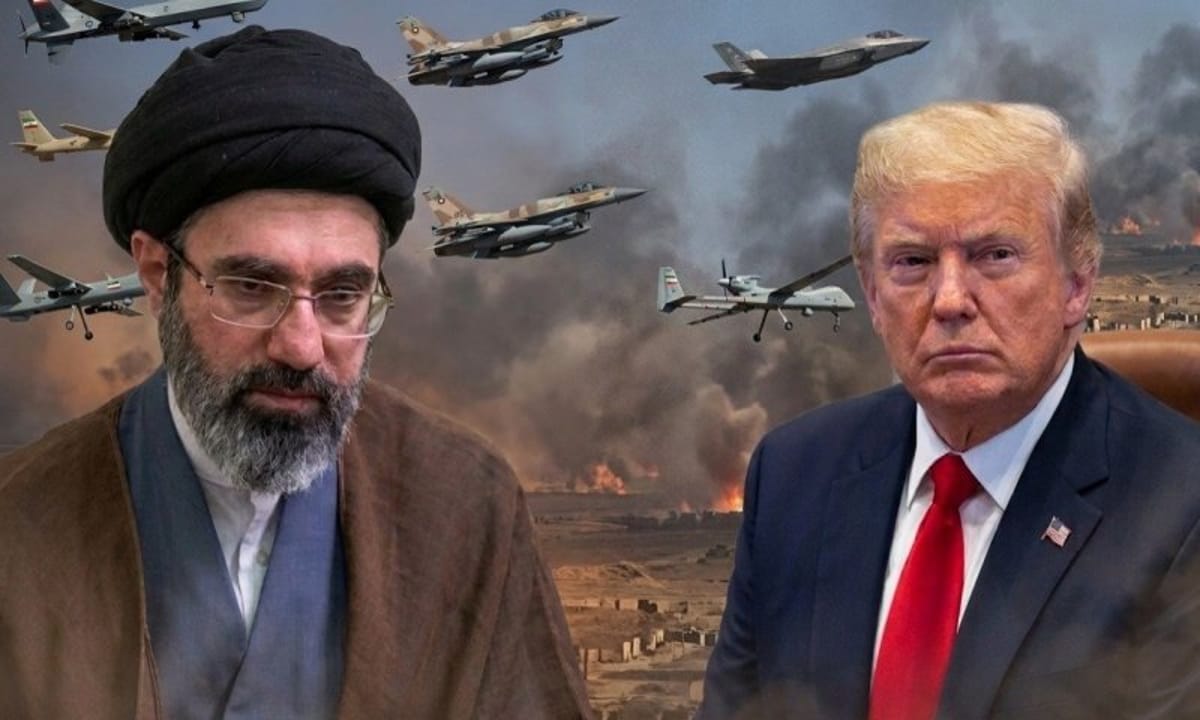
A carefully negotiated ceasefire framework between the United States and Iran is teetering on the edge of collapse after Iran's Supreme Leader Mojtaba Khamenei failed to formally approve the agreed terms, prompting President Donald Trump to harden his conditions and freeze key financial provisions of the proposed deal.
The Deal That Isn't — Yet
Negotiators from the US and Iran reached agreement on a 60-day memorandum of understanding (MoU) to extend the ongoing ceasefire, according to a Thursday Axios report confirmed by two US officials. However, Mojtaba Khamenei has not approved the drafted agreement, which is why President Trump has also withheld his own approval, a source familiar with the matter told The Jerusalem Post.
In effect, there appears to be an understanding among Iranian Foreign Minister Abbas Araghchi, Iranian Parliament Speaker Mohammad-Bagher Ghalibaf, and US envoy Steve Witkoff and his team, but senior Iranian leadership has not yet formally agreed to a ceasefire extension.
US Vice President JD Vance described talks as making "good progress," and said that if signed, the memorandum of understanding would be the most significant diplomatic step since the war began on February 28.
What the Draft Deal Contains
According to US sources, the draft terms include unrestricted shipping through the Strait of Hormuz, Iran removing all mines from the strait within 30 days, a proportional lifting of the US naval blockade as commercial shipping resumes, US sanctions waivers to allow Iran to sell oil, Iran's commitment not to pursue nuclear weapons, and a US commitment to discuss sanctions relief.
A two-month extension of the ceasefire would also extend beyond the FIFA World Cup period, during which Iran is scheduled to play all three group-stage matches on US soil, providing both sides with an opportunity to consolidate their positions without committing to final decisions.
Trump Raises the Stakes
With Khamenei's silence frustrating Washington, Trump moved to tighten his demands. Trump insisted that Iran must agree it will "never have a nuclear weapon or bomb," and that Iran's stockpiles of highly enriched uranium — which he called "nuclear dust" — will be "unearthed" and destroyed by the US in close coordination with Iran and the UN's nuclear energy agency. He also announced: "No money will be exchanged, until further notice," appearing to freeze the sanctions relief Iran was supposed to receive under the MoU once signed, adding that "other items, of far less importance, have been agreed to."
Trump had told advisers a day earlier that he was not satisfied with the current state of talks.
Khamenei: In Hiding, Communicating by Courier
The delay on the Iranian side is compounded by extraordinary circumstances surrounding the Supreme Leader himself. Mojtaba Khamenei has spent nearly three months in hiding as tensions with the US escalate. He went underground following the February 28 strike that killed his father, amid reports that he himself was gravely injured, described by War Secretary Pete Hegseth as "wounded and likely disfigured." His wife and son were also killed in the same strike. Messages between Khamenei and negotiators are reportedly moving by courier, with responses arriving days late.
It appears unlikely Trump will sign off on any agreement before receiving definitive word that Khamenei has personally approved the document.
Tehran Denies Nuclear Talks Are Happening
Iran's public posture has only deepened the uncertainty. Iran's foreign ministry stated on May 29 that there were "no negotiations" taking place on its nuclear programme, after Trump suggested Iran would relinquish its enriched uranium under a deal to end the war.
Iranian Parliament Speaker Ghalibaf signaled Tehran is waiting for the US to move first, saying "no step will be taken before the other side acts," and adding ominously that "the winner of any agreement is the side that is better prepared for war the day after it is signed."
A Deal That Could Still Collapse
While US officials expressed cautious optimism that a deal could be signed within days, they acknowledged it had not been finalized and could still fall apart. "We are in a very good place, but there are ways in which the deal can be undermined," one senior US official said.
Trump has previously rejected Iran's counterproposals, calling one "totally unacceptable," while Tehran has publicly vowed to "never bow" - a standoff that has continued to choke the Strait of Hormuz and roil global energy markets.
With Trump now in the Situation Room weighing his "final determination" on the Iran file, the next 48 to 72 hours are seen as decisive, either for a fragile ceasefire extension or for a renewed and potentially more dangerous escalation.