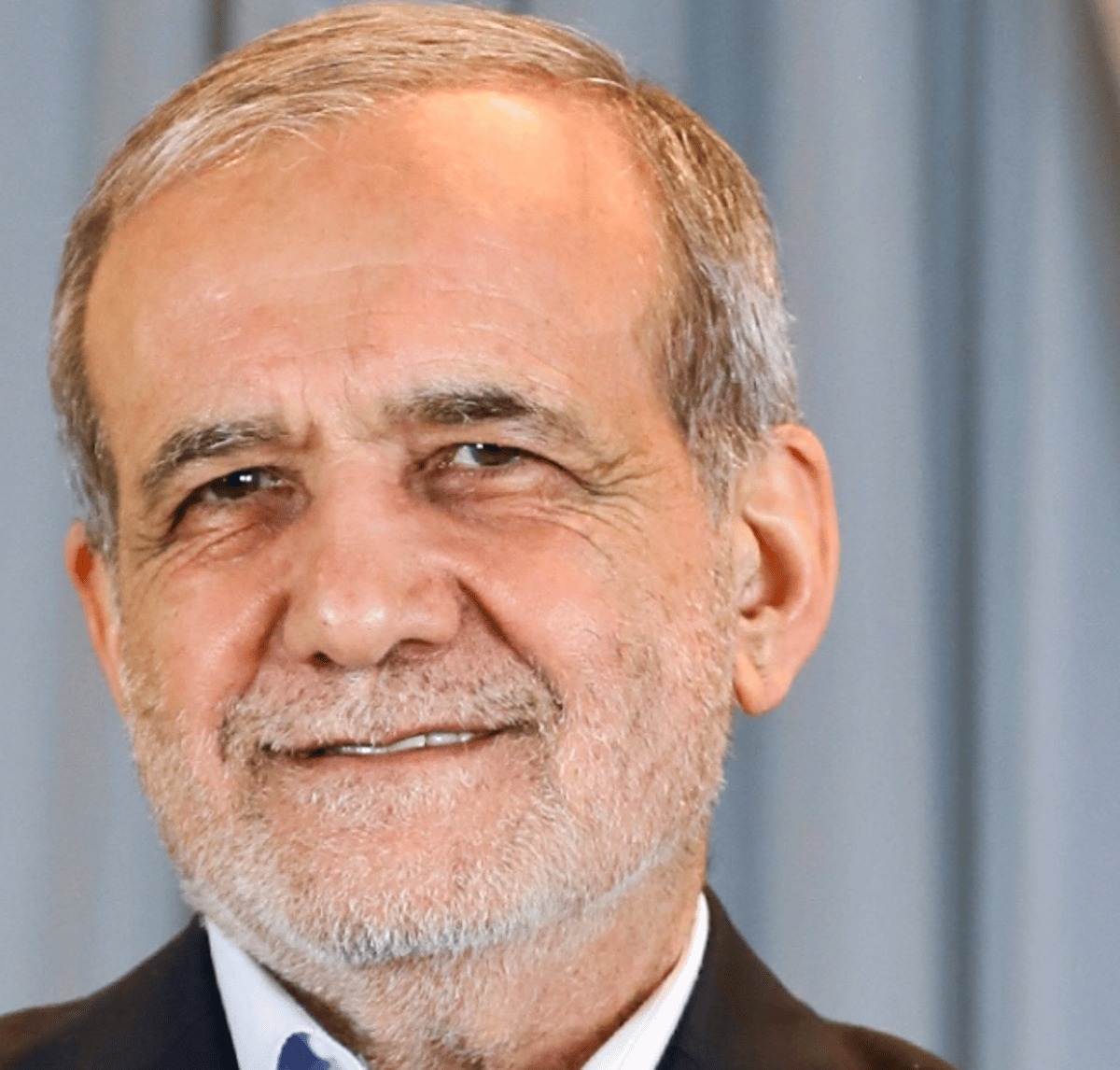
As Iran's political order fractures from within, President Masoud Pezeshkian is said to be weighing resignation, a move that would effectively surrender what remains of the civilian government to the Revolutionary Guards.
Sources close to the Iranian presidency say Pezeshkian has spoken privately of "handing over the keys," a stark euphemism for stepping down, amid mounting evidence that the Islamic Revolutionary Guard Corps (IRGC) engineered or permitted the death of Ali Larijani, a senior statesman seen as a potential post-Khamenei power broker and a figure to whom Pezeshkian was personally close.
The president's calculus, according to those familiar with his thinking, is brutally simple: if the IRGC was willing to sacrifice a figure of Larijani's stature, either by leaking his location to Israeli intelligence or by deliberately withdrawing his protection, then no civilian official, including the president himself, can consider his life or office secure.
The Larijani Conspiracy
Ali Larijani had long occupied an awkward position in the Islamic Republic, too 'establishment' to be sidelined, too independent to be fully trusted by the IRGC's inner circle. As speculation over the post-Khamenei transition intensified in recent months, Larijani emerged as a candidate capable of bridging factions and potentially constraining military dominance of the state. That made him, in the IRGC's calculus, a threat.
The allegations now circulating in Tehran, that the Guards either leaked Larijani's location or deliberately degraded his security detail, remain unverified, but have gained enough traction to reshape the political atmosphere in the capital. A growing narrative holds that his elimination was not an Israeli success story, but an internal settlement of accounts designed to clear the path for IRGC dominance in the succession struggle.
Pezeshkian's resignation, should it occur, would represent more than a personal political retreat. It would formalize what many analysts already regard as the operational reality: that Iran is governed not by its constitutional institutions, but by the IRGC and, increasingly, by Mojtaba Khamenei, the Supreme Leader's son, whose influence within the Guards has expanded significantly as his father's health has deteriorated.
The immediate casualty of such a transition would be diplomatic. Whatever narrow channels remain between Tehran and Western governments, fragile threads maintained in part through the fiction of a functioning civilian presidency, would be severed. A regime openly under IRGC command would have neither the incentive nor the institutional capacity to pursue negotiated off-ramps.
In addition, the logic of deterrence that has restrained Iranian proxy action in the past rests partly on regime self-preservation. A leadership that no longer believes it has a future to preserve operates under a different calculus entirely.