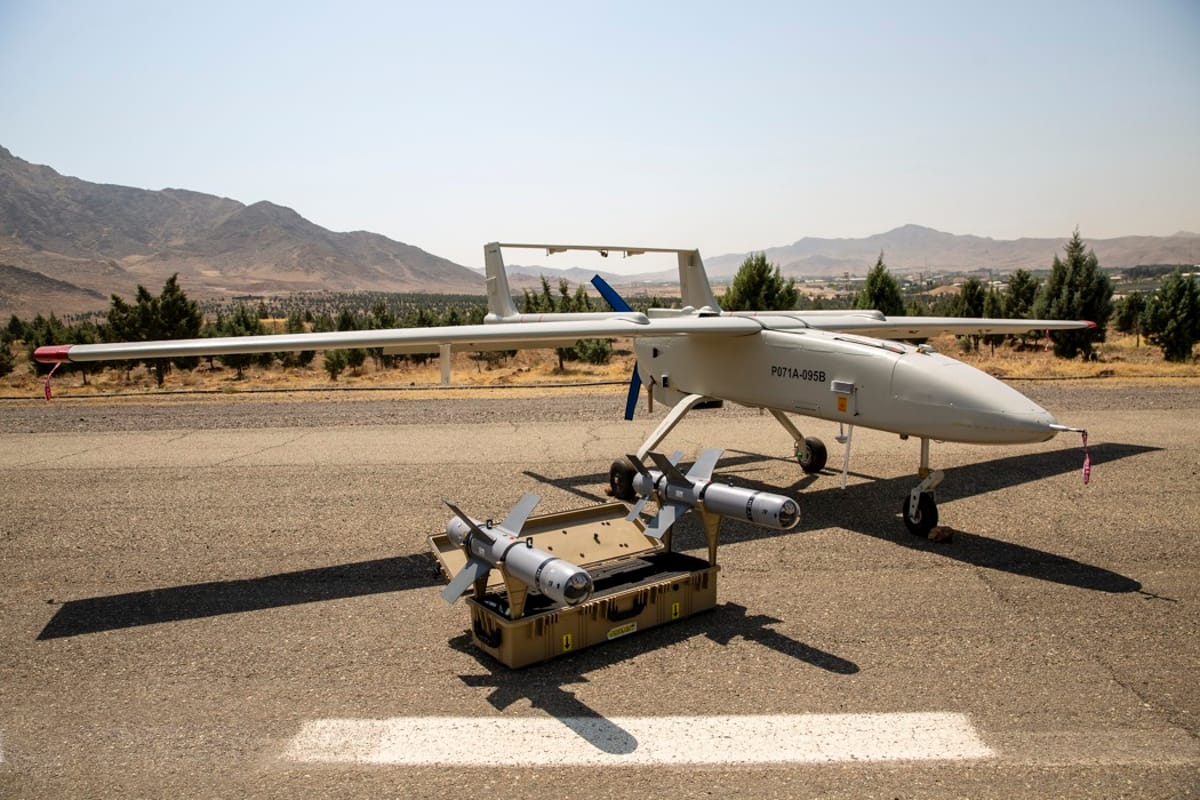
The battlefield in the Middle East is undergoing a fundamental shift. With an arsenal of thousands of drones and unmanned aerial vehicles (UAVs), Hezbollah has demonstrated that it can threaten the State of Israel using weapons that are remarkably simple, precise, and inexpensive. These systems, which gained global notoriety during the conflict in Ukraine, have now become a permanent and lethal fixture in the confrontation between the IDF, Iran, and its regional proxies.
Over the last six months, two specific Iranian-made models have dominated the landscape: the Mohajer-6, a versatile armed UAV, and the Shahed family, a series of long-range "suicide" drones.
The term "suicide drone" refers to unmanned, loitering munitions equipped with explosive warheads designed to strike high-value targets. While these systems are currently "starring" in the skies over Ukraine, the IDF has been tracking their evolution for two decades.
The primary challenge posed by this weaponry is three-fold:
- Ease of Operation: They require minimal infrastructure to launch.
- High Precision: They can be guided to specific coordinates with devastating accuracy.
- Low Detectability: Their small size and low altitude make them difficult for traditional radar systems to track.
Iran, the central architect of this threat, is mass-producing these remotely controlled aircraft to serve as a fast and efficient tool against Israeli interests across multiple fronts.
Unlike ballistic missiles, which have a predictable trajectory and significant heat signatures, UAVs often penetrate airspace with little to no prior warning. Their ability to "sneak" into Israeli territory provides a tactical element of surprise that complicates civilian alerts and military response times.
Israel possesses some of the world's most sophisticated defense systems, including interceptor missiles, fighter jets, and attack helicopters, all of which are being utilized to neutralize the drone threat. However, the nature of the UAV presents a persistent "asymmetric" problem.
While Israel’s multi-layered defense remains robust, the small, stealthy nature of these drones means that 100% neutralization is a significant challenge. As Iran continues to flood the region with low-cost "kamikaze" drones, the IDF is expected to accelerate the deployment of directed-energy weapons (such as lasers) and AI-driven detection to counter the "swarm" tactic. For now, the drone remains a potent weapon of attrition, testing the limits of even the most advanced air defense umbrellas in the world.