Damascus, Syria (April 26, 2026) — Syria held its first public courtroom reckoning with the ousted Bashar al-Assad regime on Sunday, as a cousin of the former president appeared in a defendants’ cage at the Palace of Justice in Damascus.
Atef Najib, a former brigadier general and head of the Political Security Branch in Daraa province, faced charges related to “crimes against the Syrian people.” Najib is the first detained senior regime figure to stand trial in person as part of the country’s emerging transitional justice process.
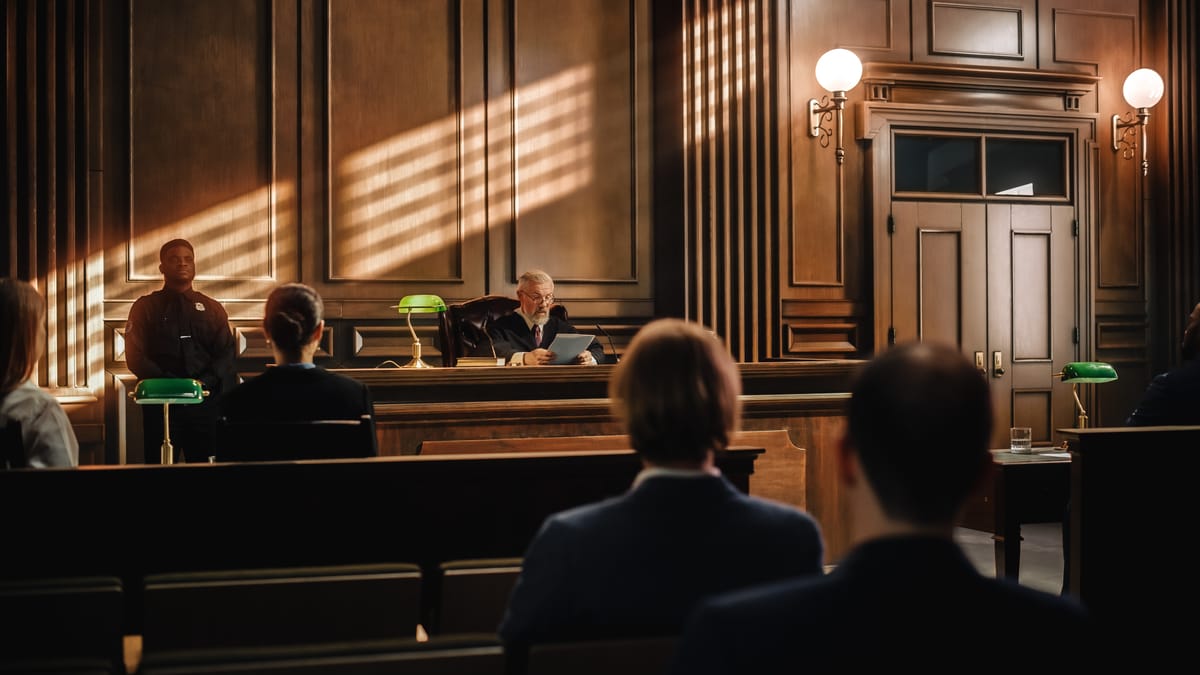
The preparatory hearing took place before the Fourth Criminal Court. Najib, dressed in prison attire, sat inside a specially designated cage as the session proceeded under tight security. He was the only defendant physically present; several others, including former President Bashar al-Assad and his brother Maher al-Assad, were reportedly called in absentia.
State news agency SANA described the session as focused on administrative and legal procedures. The full trial is scheduled to continue next month.
Najib’s case carries deep symbolic weight for many Syrians. In March 2011, security forces under his oversight in Daraa arrested and allegedly tortured a group of teenagers, some as young as 10 or 15, for scrawling anti-government graffiti on a school wall. When families protested the boys’ detention and mistreatment, security forces opened fire, killing several civilians. The brutal crackdown in Daraa is widely seen as the spark that ignited nationwide protests and eventually escalated into Syria’s devastating 14-year civil war.
Najib was arrested by the new authorities in January 2025 while hiding in rural Latakia. He had been dismissed from his post shortly after the initial 2011 events but remained a reviled figure, particularly in southern Syria.
The hearing drew victims’ relatives, members of the press, and judicial officials to the Palace of Justice. Photos and videos from the courtroom showed Najib behind bars as court officials read out names of other accused regime figures.
Syrian authorities have framed the proceedings as a key step toward accountability after the rapid fall of the Assad regime in December 2024. The transitional government, led by Ahmed al-Sharaa (formerly known as Abu Mohammad al-Jolani of Hay’at Tahrir al-Sham), has established mechanisms for addressing decades of repression, torture, enforced disappearances, and war crimes.
More trials are expected in the coming weeks and months, targeting other arrested officials as well as figures tried in absentia. Observers say the process aims to deliver Syrian-led justice, though questions remain about the legal framework, fair trial standards, and ensuring broad reconciliation.
The opening of public trials marks a historic shift in a country where the Assad family ruled for more than five decades with near-total impunity. For many Syrians, seeing a high-ranking regime insider — and a member of the extended Assad family — in the dock represents a long-awaited challenge to the culture of impunity that defined the old order.
The trial continues next month.