Diplomatic Damage Control

Netanyahu Meets Christian IDF Soldiers After International Statue Scandal

Prime Minister convenes with Christian soldiers and officers serving in IDF • Meeting follows international outcry over statue incident • 'Israel fights for Christian rights across Middle East' | Damage control effort (Israel News)

Replacement statue provided by Israel

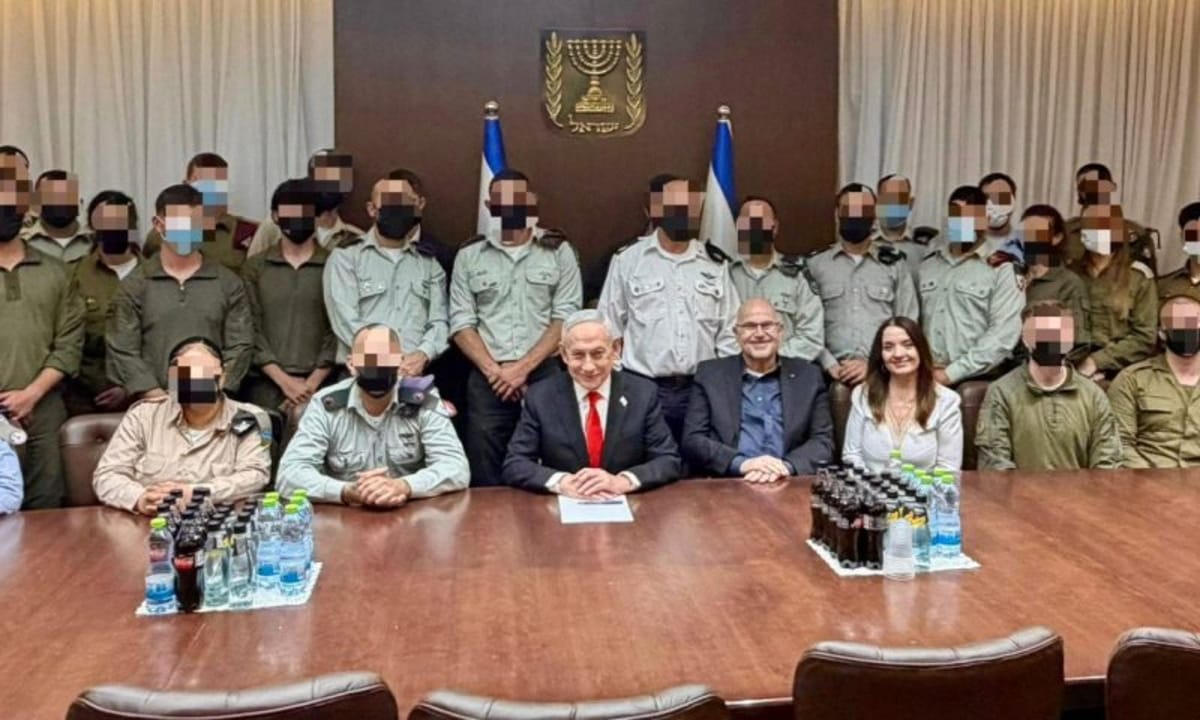
Prime Minister Benjamin Netanyahu convened Sunday with Christian soldiers and officers serving in the Israel Defense Forces, in what appears to be a calculated effort to repair diplomatic damage following an international scandal that erupted last week over footage from southern Lebanon.

The meeting at the Prime Minister's Office comes approximately one week after video documentation surfaced showing an IDF soldier striking a statue of Jesus with a hammer in the Christian village of Deir Siriane in southern Lebanon. The April 19 footage, which depicted a soldier wielding a five-kilogram sledgehammer against the statue's head, triggered widespread condemnation from Christian communities worldwide and created what officials described as a significant public relations crisis for Israel.

The incident occurred during ongoing IDF operations to dismantle terrorist infrastructure in southern Lebanon. Unlike other villages in the region, the military had not evacuated Christian communities, making the soldier's actions particularly damaging to relations with the local civilian population. Following an investigation that confirmed the footage's authenticity, the IDF removed the soldier from combat duty and sentenced him to 30 days in military detention. The statue has since been replaced by the military.

During Sunday's gathering, Netanyahu emphasized the contributions of Christian soldiers to Israel's defense establishment and sought to reframe the narrative surrounding Israel's relationship with Christian communities in the region.

"I am here in the Prime Minister's Office with an exceptional group of young men and women," Netanyahu stated. "These are Christian soldiers, men and women, in the Israel Defense Forces. They fill all the important roles in our amazing military and do amazing work."

The Prime Minister contrasted the incident with what he characterized as Israel's broader role in protecting Christian communities throughout the Middle East. "This is completely contrary to what is portrayed outside," he asserted. "Not only does Israel fight for the rights of Christians throughout the Middle East, it has Christian soldiers fighting to defend Israel and our Christian brothers throughout the region and beyond."

Netanyahu emphasized his impression of the soldiers' personal narratives and dedication. "I must say I was impressed by the personal stories, their commitment, their sacrifice, and their achievements," he noted. "Israel is the only country in the Middle East where the Christian community thrives, grows, and expands. And it is very successful, with amazing men and women."

The Prime Minister concluded the meeting by expressing appreciation to the assembled soldiers: "I want to salute all of you. Thank you for coming here."

The meeting represents a significant diplomatic effort to contain fallout from an incident that threatened to undermine Israel's standing among Christian communities globally. The original footage had sparked immediate international backlash, with the IDF issuing what it termed a "severe condemnation" and describing the soldier's actions as "an absolute departure from expected values."

Northern Command had announced its commitment to assist in restoring the damaged statue, recognizing the potential for the incident to create unnecessary tensions with Christian populations in southern Lebanon who had not been subject to evacuation orders during military operations in the area.

The timing of Netanyahu's meeting with Christian IDF personnel underscores the government's concern about the diplomatic ramifications of the statue incident, particularly as Israel continues to navigate complex relationships with various religious and ethnic communities both domestically and throughout the broader Middle East region.

Ready for more?

Join our newsletter to receive updates on new articles and exclusive content.

We respect your privacy and will never share your information.