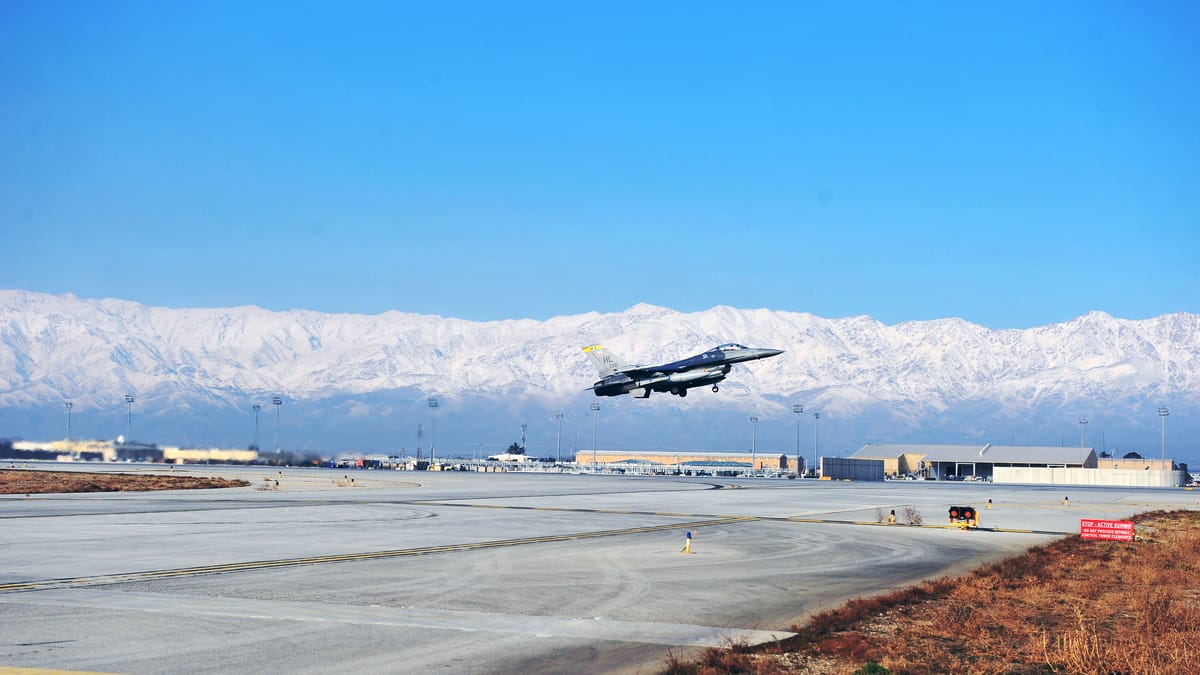
President Donald Trump has signaled interest in reestablishing a U.S. military presence at Afghanistan's Bagram Air Base, four years after the chaotic American withdrawal that ended the nation's longest war. Speaking at a joint press conference with British Prime Minister Keir Starmer on Thursday, Trump described ongoing efforts to "get it back," highlighting the base's strategic location near Chinese nuclear production sites.
"We're trying to get it back because [the Taliban] need things from us," Trump said, adding that the base is "an hour's drive" from key Chinese facilities. He portrayed the move as essential for national security, amid broader concerns over China's military capabilities. The comments come as reports reveal the administration has been quietly advocating for the base's return for months, driven by goals like monitoring China, securing mineral resources, and combating terrorism.
Bagram, once the epicenter of U.S. operations in Afghanistan, was vacated in July 2021 as part of the Biden-era pullout, which Trump has repeatedly lambasted as "stupid." The withdrawal concluded nearly two decades of conflict, costing trillions and thousands of lives, but left the Taliban in control. Any U.S. return could necessitate significant troop deployments, potentially over 10,000 personnel and air defenses, raising fears of renewed conflict.
The Taliban swiftly rebuffed the proposal, insisting on non-military engagement. Despite no formal ties, U.S.-Taliban talks have addressed issues like hostage releases, including a recent case in March 2025. Critics argue the plan contradicts Trump's campaign promises to end "forever wars," while supporters see it as a pragmatic counter to global rivals.
The White House has not detailed timelines or troop numbers, but the remarks have ignited discussions on U.S. strategy in the region.