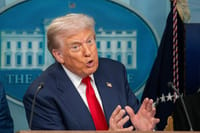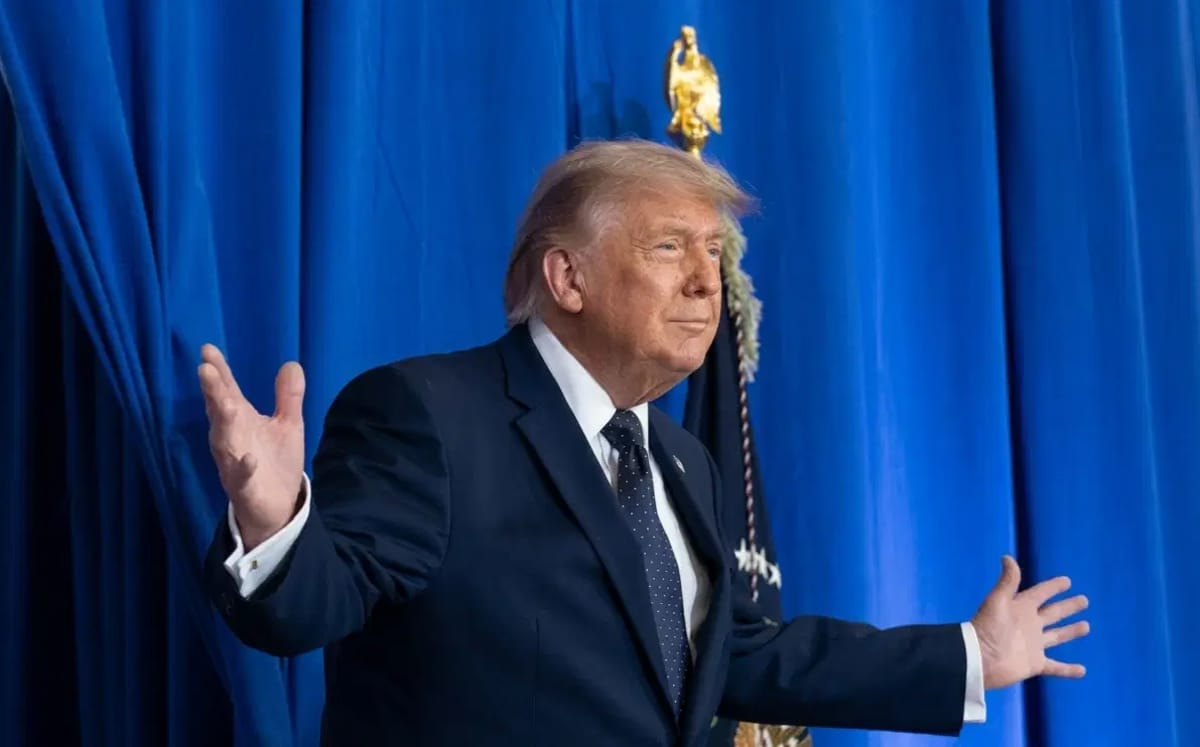
President Donald Trump has dramatically hardened his position in nuclear negotiations with Iran, demanding that Tehran's commitments be put in writing, not merely offered as verbal assurances, as part of any preliminary framework agreement.
Trump is demanding that Tehran put specific nuclear concessions down in writing as part of a preliminary agreement aimed at pushing past the drawn-out deadlock between the two countries. Iranian negotiators had previously given verbal assurances that the regime would ultimately agree to certain terms, but the president determined during a Situation Room meeting on Friday that those commitments were not strong enough.
The shift marks a significant hardening from the previous draft framework, which, according to earlier reports, did not even explicitly mention Iran's nuclear program, let alone require concrete written pledges.
What the US Is Now Demanding
Secretary of State Marco Rubio spelled out the new requirements in testimony before the Senate Foreign Relations Committee. Iran must explicitly commit to negotiations over high-level enrichment and the disposal of uranium already enriched to near-weapons-grade levels. "They have to commit to a very specific negotiation on high enrichment, removing the enriched uranium that's still buried deep in a mountain somewhere. They have to agree on a negotiation on severe, long-term restrictions and/or elimination of enrichment activity in their country," Rubio said.
Rubio was careful to note that the mechanics remain negotiable. "For example, they have to commit to say 'we will remove the enriched uranium.' The question now is, 'what are the mechanisms by which we do that?' That can be negotiated," he said.
Khamenei in the Shadows — But Reportedly More Involved
One of the more significant details to emerge: Mojtaba Khamenei, who has not appeared publicly since he was wounded in the strike that killed his father Supreme Leader Ali Khamenei, may be quietly directing the negotiations. Rubio told senators there are now "indications" that Mojtaba Khamenei is increasingly involved in managing the talks, though he has not been seen or heard from publicly since the strike that killed his father in the opening hours of the war.
Trump himself said Tuesday he expects a deal within the week, though his own officials are more cautious. "You ultimately are negotiating with people who then have to negotiate within their own system to see what they're allowed to give and what they're allowed to agree to," Rubio acknowledged.
No Sanctions Relief Upfront
Rubio also shut the door firmly on any early economic sweeteners. According to US sources, the draft terms include Iran's commitment not to pursue nuclear weapons, alongside a US commitment to discuss sanctions relief, but that discussion comes later, not at signing. Rubio was blunt: there will be no sanctions relief before a framework agreement is signed and Iran begins to deliver on its commitments. "That was never on the table," he said, pushing back on reports suggesting otherwise.
The Broader Stakes
Negotiators from both sides have reached agreement in principle on a 60-day deal to extend the ceasefire, but the deal still awaits final approval from both President Trump and the new Iranian leadership. The talks have also focused on reopening the Strait of Hormuz, a critical global oil chokepoint that Iran threatened to close during the conflict.
A state-sponsored Iranian news agency confirmed the updated draft is under review in Tehran, though internal divisions within the regime are seen as the main obstacle to a swift conclusion.