Grateful to Trump
Here's How The Legacy Media Reacted to Israel - Hamas Peace Deal
Worldwide media coverage of Trump's 21-point peace plan between Israel and Hamas, highlighting international reactions and the diplomatic breakthrough's potential impact.

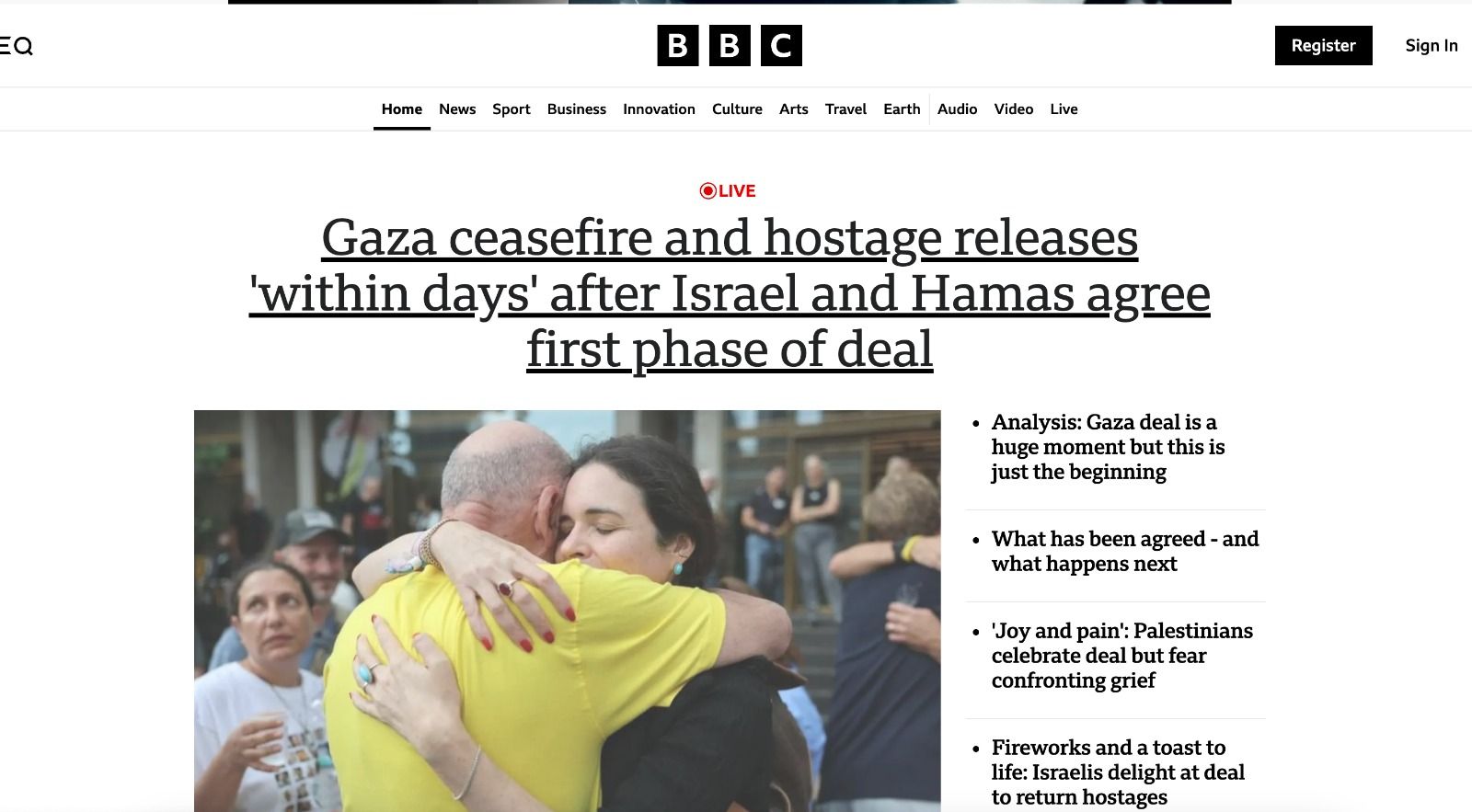
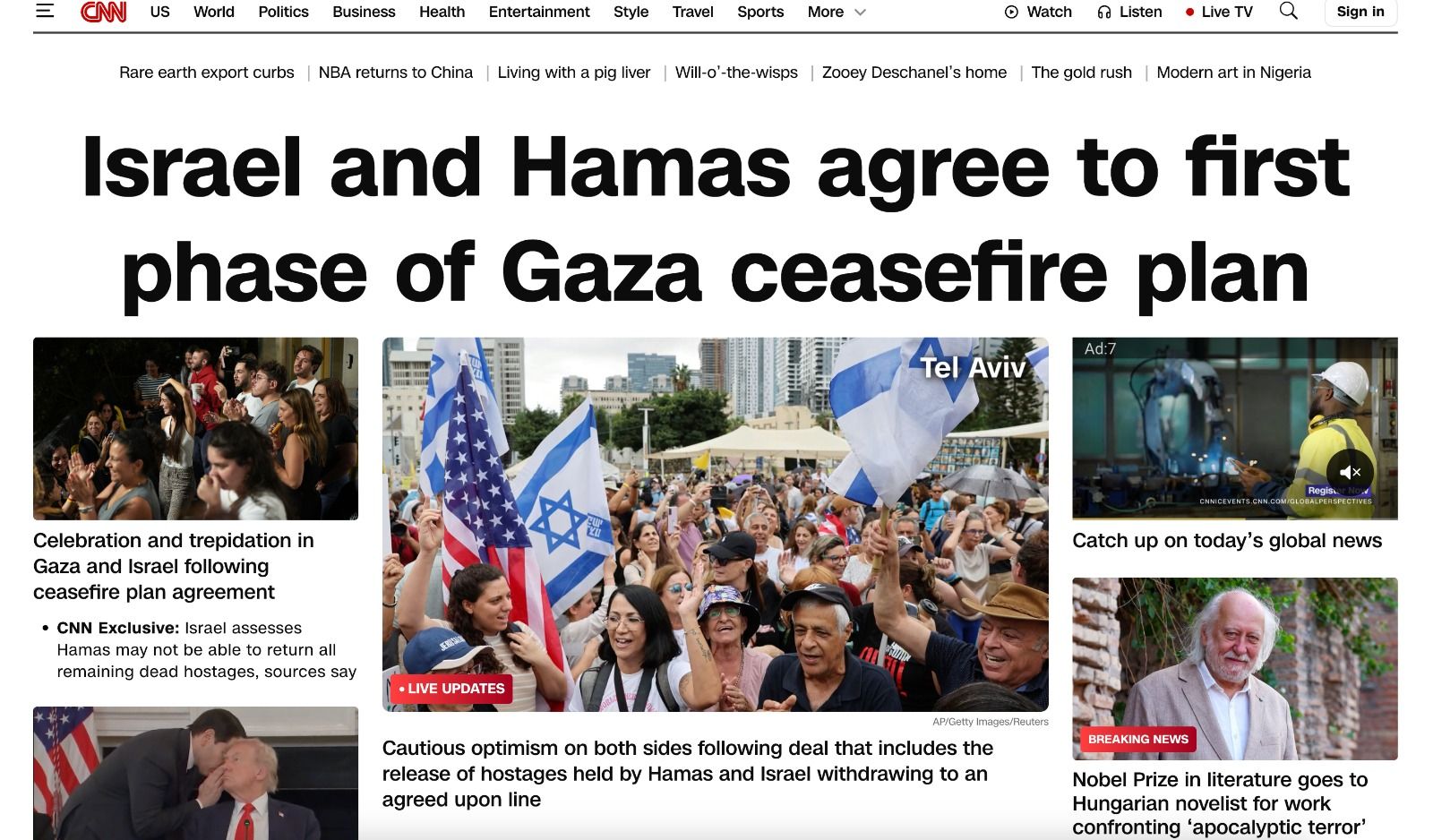
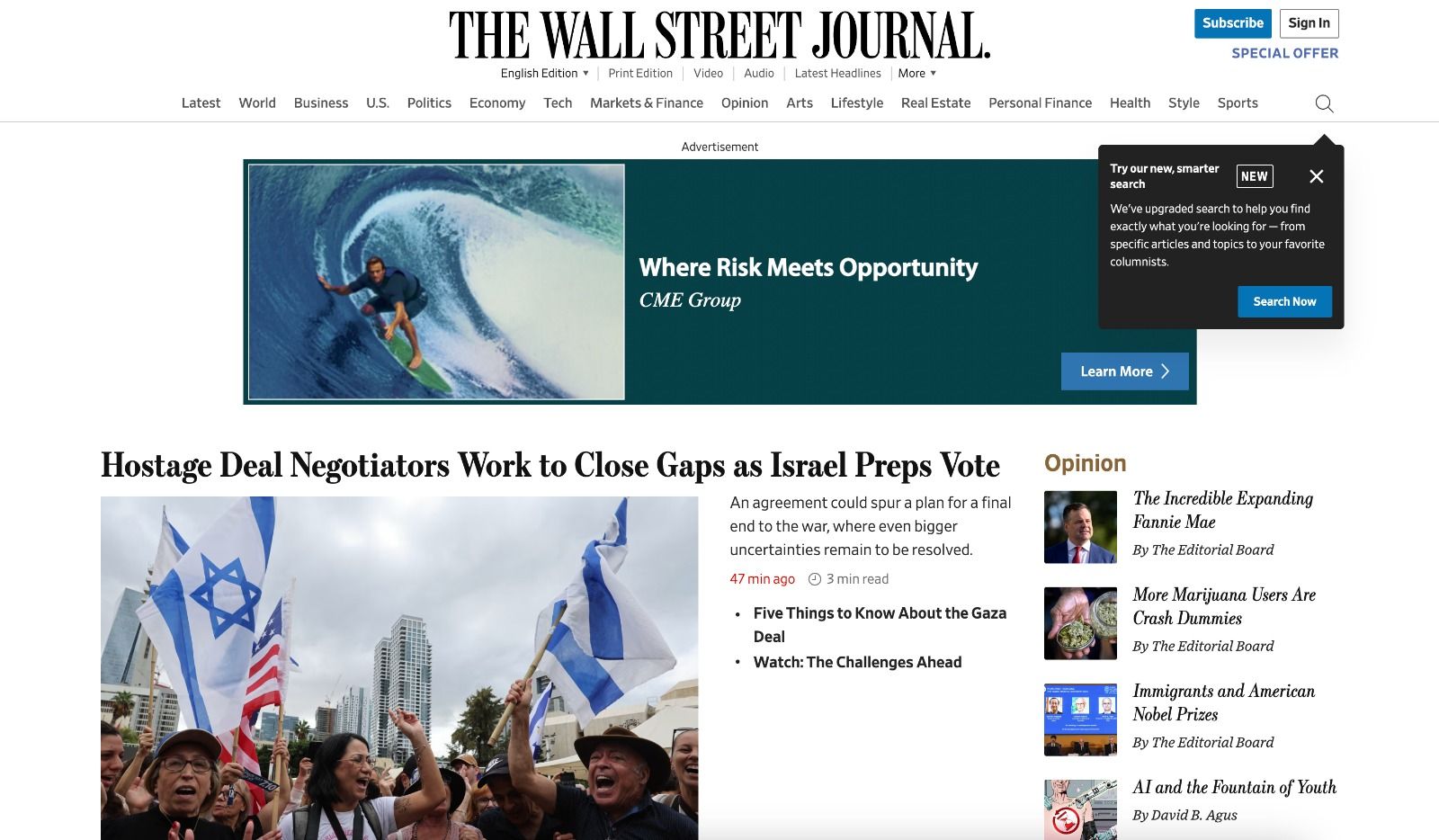
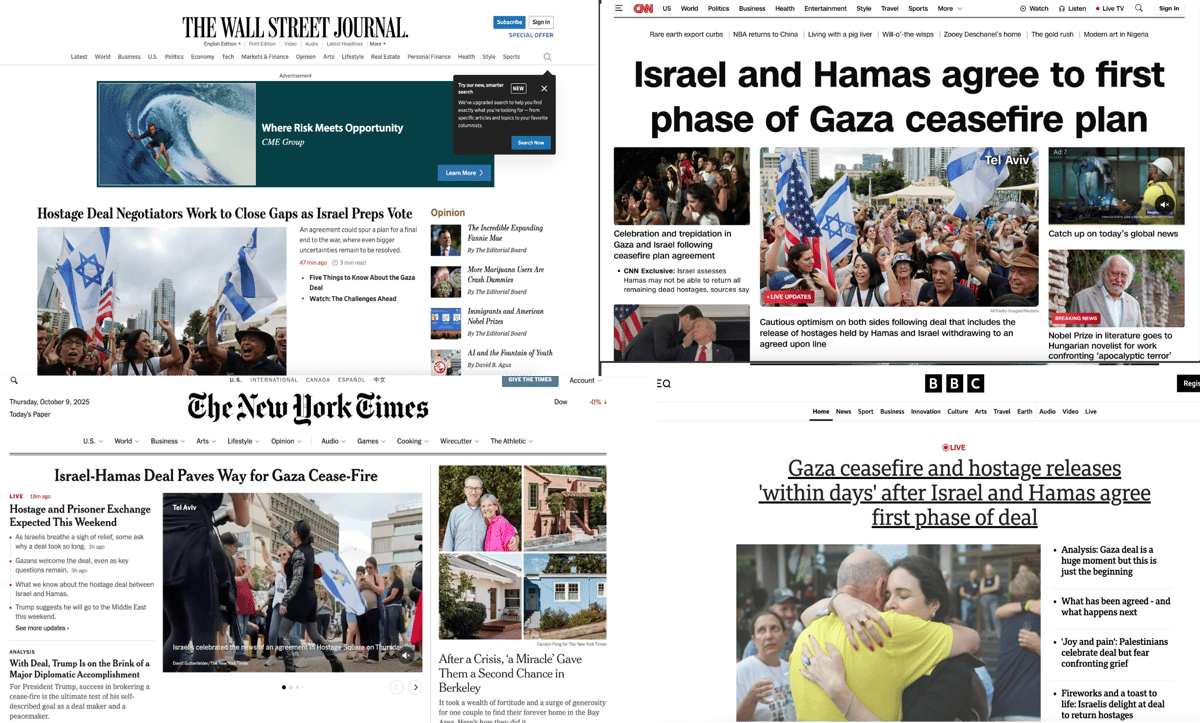
The historic early morning announcement by US President Donald Trump confirming an agreement between Israel and Hamas for the first phase of his Middle East peace plan dominated global headlines today. Outlets from the BBC and The New York Times to The Wall Street Journal universally described the deal, which mandates the release of all hostages in exchange for a partial Israeli withdrawal, as a "historic breakthrough" that positions Trump for a Nobel Peace Prize.
However, the consensus of the international press is one of cautious optimism, with reports raising serious doubts over the political cost and the plan’s long-term viability, particularly surrounding the future of Hamas and the governance of Gaza.
Trump’s Personal Involvement Trumps Netanyahu’s Role
A striking element of the international coverage is the near-exclusive focus on President Trump's diplomatic muscle, with Prime Minister Benjamin Netanyahu’s role often minimized or, in some cases, portrayed as subordinate.
The BBC’s Hugo Bachega deemed the announcement a "significant moment" but cautioned that "there is no guarantee a peace deal will materialize," pointing to unresolved issues like Hamas’ disarmament and future governance. Bachega emphasized the difference this time was "Trump’s personal involvement, applying pressure not only on Hamas but also on Israel." The BBC analyst suggested Trump, frustrated with Netanyahu, "used the leverage only an American president has leaving the Israeli leader little choice but to join the process."
The Associated Press called the deal "the biggest breakthrough in months," though it noted that "divisive aspects of Trump’s plan remain unknown," specifically how the disarmament of Hamas and the future governance of Gaza are linked to the exchange.
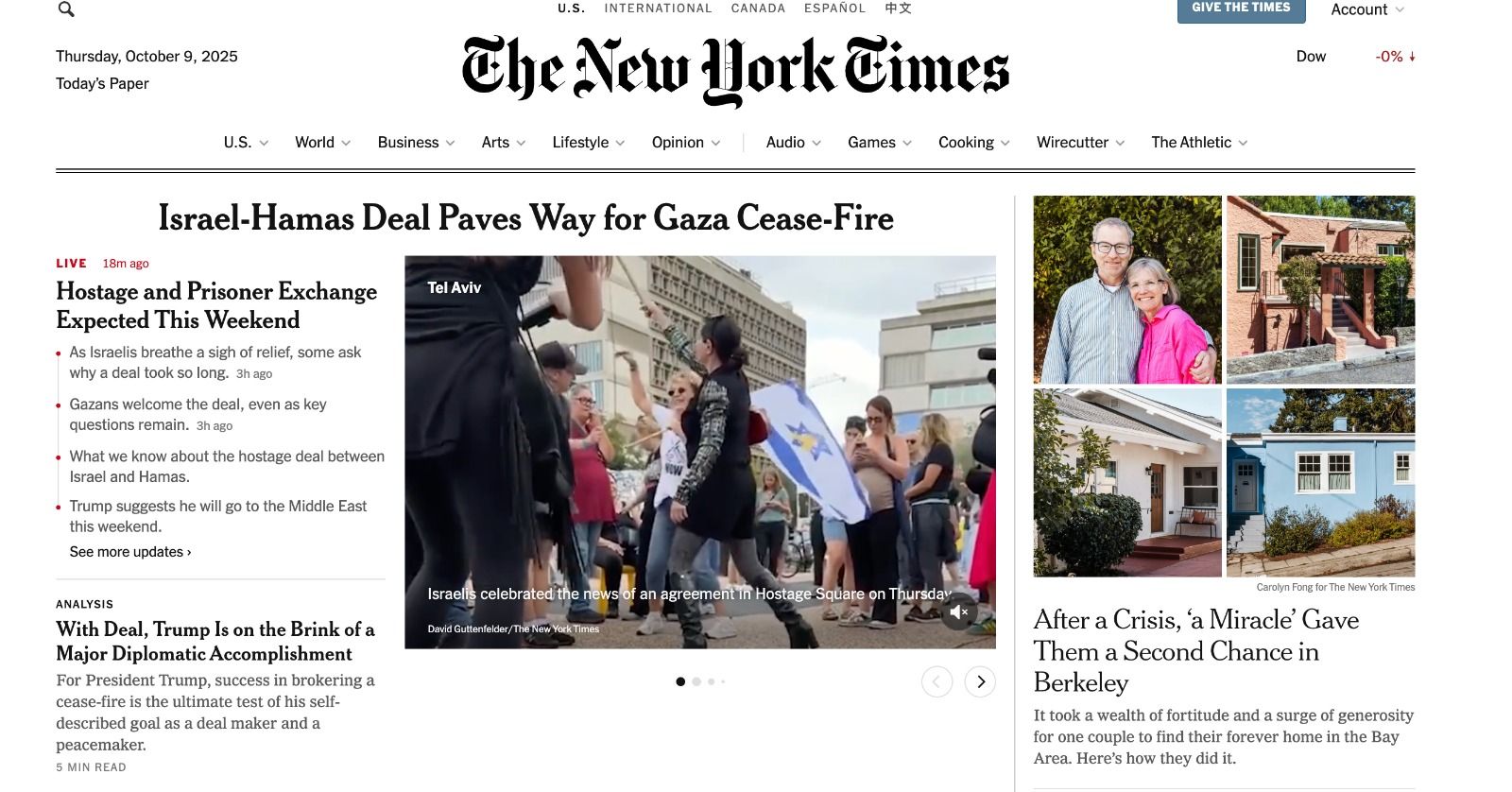
The New York Times' David Sanger was blunt, describing Trump as being "on the verge of the biggest diplomatic achievement of his presidency" and noting Netanyahu was "politically elated" but ultimately "restrained by Trump." Sanger highlighted Israel's growing international isolation after two years of war as a key factor in Netanyahu's decision to accept Trump’s terms.
The Price of Peace: Isolation and Leverage
Sanger’s analysis suggested that Netanyahu’s political high, spurred by major military operations, led him to "overreach," creating an opportunity for the US administration to intervene. He cited the scale of destruction in Gaza and a failed Israeli strike in Doha last month as events that "horrified the international community" and "stunned the White House." According to Sanger, Trump forced Netanyahu to apologize to Qatar, "and in the process maneuvered him into accepting Trump’s 20-point plan, one the Israeli leader had bet Hamas would reject."
International press coverage, including that from Spain's El País, emphasized the intense diplomatic pressure exerted by a coalition of mediators, including senior US envoys and intelligence chiefs from Qatar, Egypt, and Turkey. El País termed the deal "Trump’s eighth victory as a global peacemaker," noting his threats to "buy Gaza and unleash hell on Hamas" as part of his strategy.
Joy and Caution on the Ground
While political analysis dominated, European tabloids focused on the emotional impact. Germany’s Bild ran a front-page photo of Einav Zangauker, mother of hostage Matan Zangauker, under the headline: "A moment that touches millions of hearts!" The accompanying article detailed her tearful reaction at Hostages Square after hearing her wish had come true.
At the same time, international outlets noted expressions of hope among displaced Palestinians in Gaza. Ayman Saber, who fled Khan Younis, told the Associated Press that he hopes to return and rebuild his destroyed home: "We will rebuild the house. We will rebuild Gaza."
Despite the celebrations, The Associated Press cautioned that "both sides appear closer than they have been in months to ending the war," but noted the conflict that began on October 7, 2023, has left Israel "more isolated than it has been in decades" while the Palestinian dream of statehood "appears more distant than ever." As Sanger warned, "a lot can go wrong in the coming days—and in the Middle East, it often does."