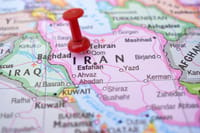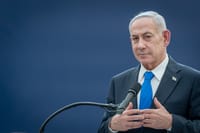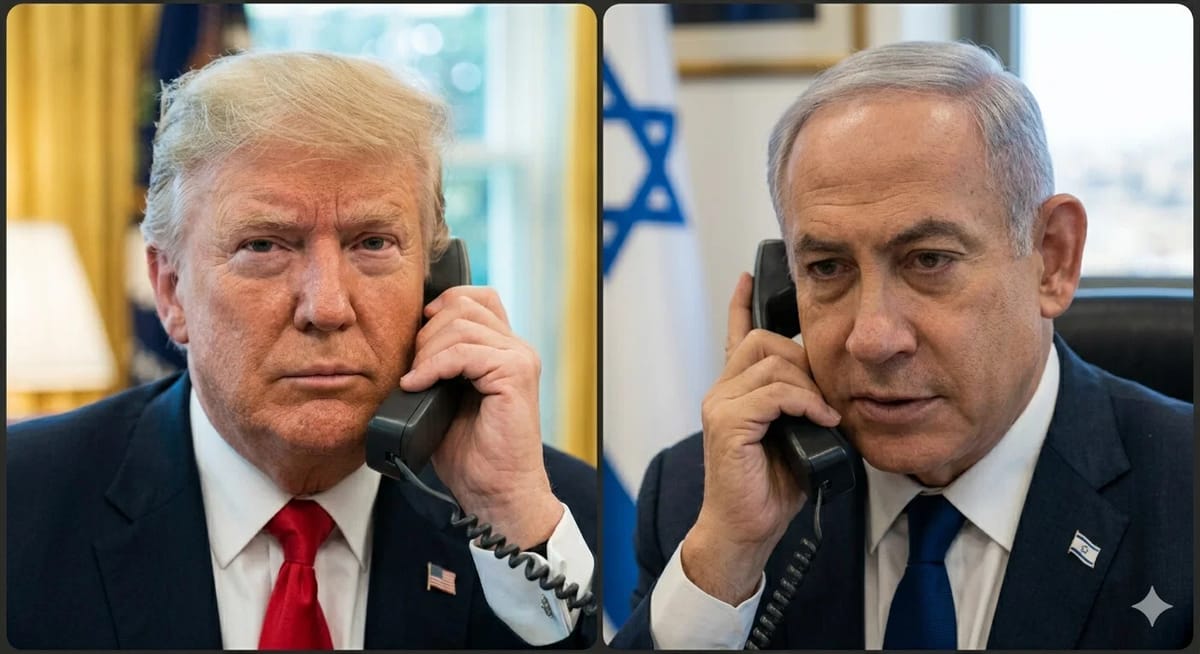
The urgent direct communications between the United States and Israel have officially concluded tonight following a severe wave of ballistic missile fire launched directly from Iran toward northern Israel. Prime Minister Benjamin Netanyahu and US President Donald Trump finalized their high-stakes call at a highly volatile moment for the Middle East, as the renewed air incursions threaten to break months of fragile diplomatic maneuvering. The call was hastily arranged after the Iranian regime escalated the ongoing war, forcing the two allied leaders to immediately address the operational trajectory of their combined defense assets.
Trump utilized the conversation to deliver an explicit directive to the Israeli Prime Minister, demanding that Israel refrain from launching a counteroffensive against Iranian territory. The President made his position clear prior to the call by stating that he would tell Netanyahu not to attack Iran in response to the evening's events, arguing that further military escalation would be counterproductive to global security. Trump emphasized his belief that both nations have conducted substantial military operations throughout the night, noting that each side has now completed its respective strikes and the cycle of violence must end.
The military reality of the situation heavily influenced the White House's demands for immediate restraint, as the latest Iranian offensive against northern Israel proved to be a tactical failure. A total of ten ballistic missiles were launched from western Iran, traversing regional flight corridors before entering Israeli airspace over border communities in the Galilee and Golan Heights. Every single projectile was successfully intercepted by active air defense networks or landed harmlessly in completely open, unpopulated areas. Official military assessments from Jerusalem confirmed that there were no civilian casualties and no structural damage reported as a result of the attack.
Trump asserted that because the Iranian strikes caused no physical harm inside Israel, there is no strategic justification for a massive counter strike that could pull the entire region into an unmanageable full-scale war. The President reiterated this position during a media appearance, addressing the Iranian leadership directly by stating that they have fired their missiles and that is sufficient. Trump urged Tehran to immediately freeze its offensive maneuvers and return to the negotiating table to sign a comprehensive peace agreement, which US Secretary of State Marco Rubio is actively trying to finalize.
The primary concern for the White House remains that an immediate Israeli retaliation will completely derail these sensitive diplomatic negotiations with the Iranian regime. Trump expressed immense optimism that a final deal regarding restricted Iranian capabilities and regional ceasefire parameters could be finalized within the next forty eight hours if all combatants freeze operations. The President warned that an aggressive response from Jerusalem would destroy months of delicate backdoor diplomacy, potentially alienating international partners who are seeking an immediate diplomatic resolution.
Political experts suggest that the relationship between the two administrations is facing a rigorous test due to a lack of prior coordination regarding recent heavy bombings in Beirut's Dahiyeh district, where Israeli warplanes targeted Hezbollah terrorist infrastructure. Netanyahu likely presented the specific intelligence justifications for the anti-terror operations in Lebanon during the telephone call with the American president. However, with the United States military currently on high alert in the region, the conclusion of this critical conversation leaves the next phase of the war hanging in a delicate balance between escalation and restraint.