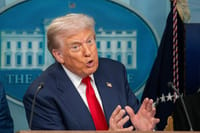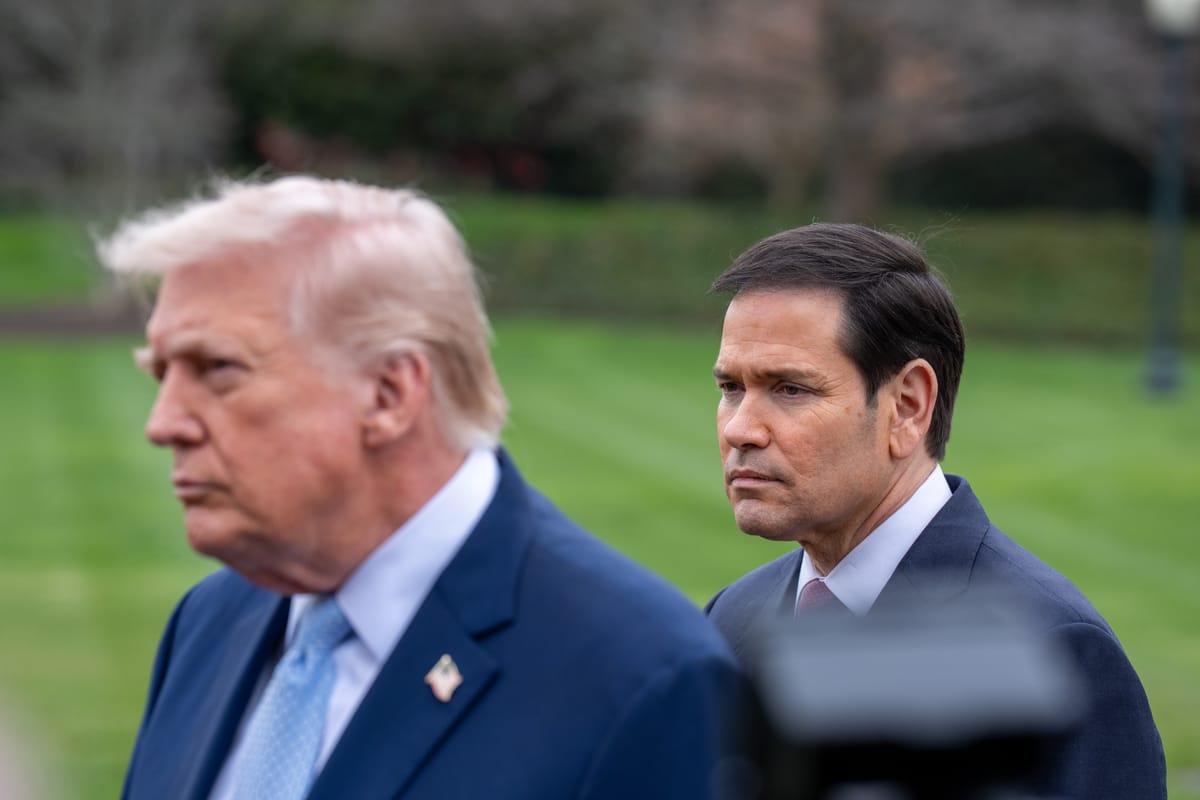
President Donald Trump has been privately questioning whether Vice President JD Vance has what it takes to lead the Republican Party, repeatedly asking aides and allies the same question in recent weeks and expressing uncertainty himself, according to a report published Saturday by The New York Times, based on conversations with more than a dozen sources inside the White House. The reporting, amplified Sunday by Israeli political media citing the same NYT account, adds new detail to what is emerging as one of the most consequential unresolved questions in American politics: who Trump actually wants to succeed him.
Trump has been running informal straw polls among dinner guests and close allies, asking them to choose between Vance and Secretary of State Marco Rubio, who also serves as National Security Advisor. He has not declared a preference publicly. But the pattern of his behavior, described consistently across multiple sources, points in a direction: Rubio is spending significantly more time with Trump on official flights and weekends, a proximity that Washington's power-watchers treat as a meaningful signal. Trump has also pointedly noted, in more than one setting, that Vance has never won a difficult election without his direct political backing.
"Whoever gets this is going to be very important. And if you get the wrong person: disaster."
— President Trump, in a recent interview, with Vance listening from the back of the room
The attacks from both sides of the aisle
Vance is facing pointed criticism from lawmakers on both sides, who have accused him of stumbling on high-profile assignments and reversing his original positions under pressure. Indiana Representative Ed Keller was particularly blunt, saying Vance "came back from Indiana empty-handed the same way he came back from Hungary empty-handed," a reference to two separate missions that critics say produced little result. Kentucky Governor Andy Beshear went further, delivering one of the sharpest assessments yet of the vice president: "JD Vance doesn't have a real bone in his body. Last week he was named czar of fraud, and this week he's defending a new secret $1.7 billion fund for the Trump administration to give to their allies."
The White House has pushed back firmly. Communications Director Steven Cheung called the NYT's framing "complete fake news," insisting that a key element of the reporting, specifically the claim that Chief of Staff Susie Wiles urged Vance to scale back his social media feuds on the grounds that such behavior was beneath the office, never happened. "This supposed 'conversation' never happened," Cheung wrote on X. Donald Trump Jr. also defended Vance, saying his father "always mentions that JD is a savage and destroys fake news, like the made-up narrative of this story."
The phone, the fumble, and the teasing
The NYT report also documents a series of private episodes that illuminate Trump's complicated feelings toward his vice president. Trump has teased Vance over his initial opposition to US military action against Iran before Vance reversed course and publicly backed the strikes. He has mocked Vance's diplomatic trip to Pakistan, his vacations, his tendency to interrupt conversations, and a widely circulated moment at the White House in which Vance fumbled the Ohio State Buckeyes' football championship trophy. At a breakfast for Republican senators, Trump reportedly gestured toward the subdued behavior of Chinese President Xi Jinping's subordinates and asked Vance directly: "Why don't you behave like that?"
The phone issue has also drawn internal concern. Vance frequently scrolls through his phone during meetings and directly engages critics on social media, a habit that senior West Wing officials, including Wiles, reportedly urged him to curb. Vance said he took a break from social media for Lent. The White House denied that Wiles ever raised the issue with him directly.
Despite the private doubts, the official posture from the White House is one of full confidence. White House Communications Director Steven Cheung said Sunday that "Vice President Vance has done an exceptional job helping implement President Trump's America First agenda. There has been no vice president in history who has been given more authority, and that reflects the great trust and bond between the two."
The 2028 race is already being run
The uncertainty has real electoral stakes. New polling from Emerson College shows Vance and Rubio separated by just one percentage point in a hypothetical 2028 Republican primary. At a recent Rose Garden dinner, Trump tested the room openly, asking guests who they preferred, Vance or Rubio, before making clear he was not endorsing either man. In a Fortune magazine interview conducted with Vance standing silently in the back of the Oval Office, Trump was asked who was best positioned to carry on his legacy and offered a deliberately ambiguous answer.
Rubio's growing proximity to Trump, his dual role as Secretary of State and National Security Advisor, and his extensive travel alongside the president on Air Force One have all raised his profile considerably. Whether Trump's private preference ever becomes a public one, and whether that moment comes before or after the 2026 midterms, is a question the Republican Party's donor class and elected officials are watching with growing urgency.
The bottom line
Vance remains the sitting vice president, the most institutionally powerful position in the succession line, and still the nominal front-runner for the 2028 Republican nomination. Trump described him as the "most likely" heir to the movement as recently as last August. But the gap between Trump's public statements and his private conduct, as documented by the NYT, suggests that the 2028 race is far more open than the official White House line admits, and that the man with the most influence over its outcome has not yet made up his mind.