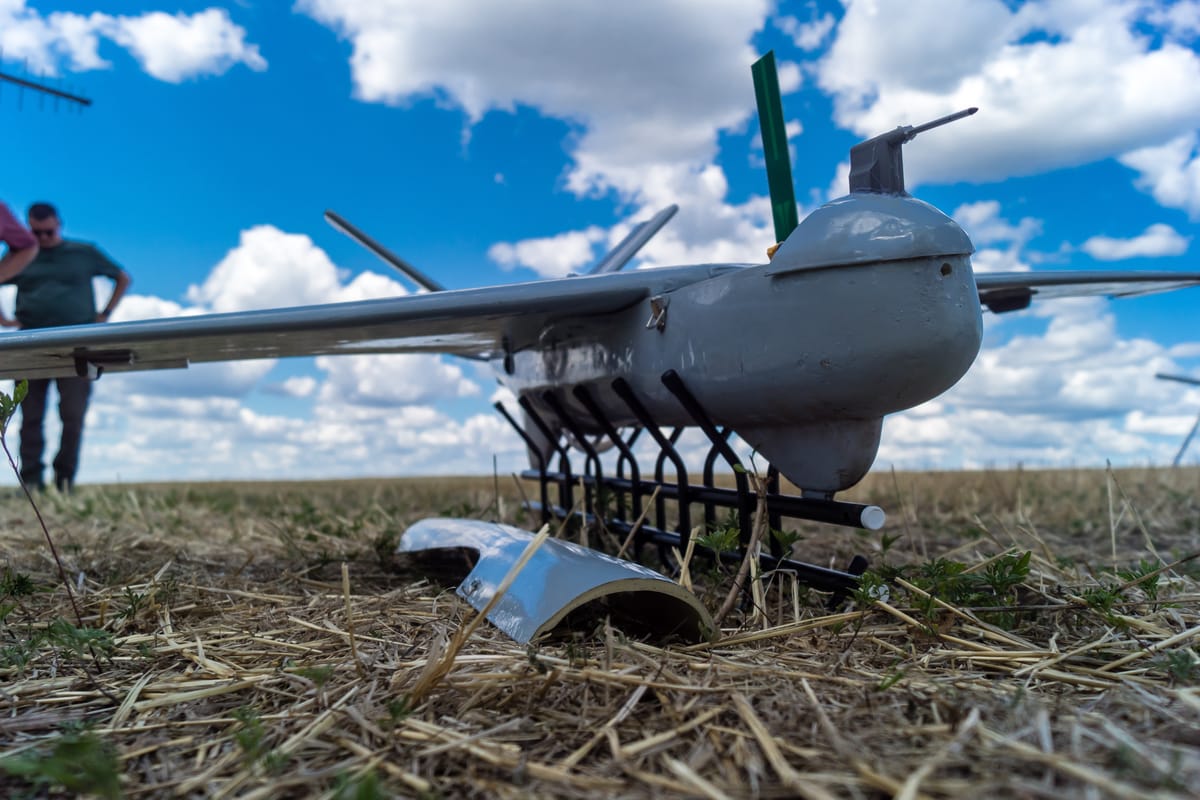
Ukrainian defense developers successfully replicated a Chinese civilian drone design after Beijing declined to sell the aircraft, transforming the platform into a long range strike weapon capable of traveling up to 2,000 kilometers. The newly developed MICH 2000 drone has emerged as a critical asset for the Security Service of Ukraine, enabling precision strikes against military airfields, ports, and industrial facilities deep inside Russian territory.
The project originated in the summer of 2023, after China restricted exports of the ZTK-150 civilian drone, which Ukrainian units had been purchasing and modifying for long range strike missions. The ZTK-150 resembles Iranian Shahed drones, featuring two distinct forward control surfaces.
In late 2023, a team of Ukrainian developers traveled to China to inspect manufacturing facilities and secure a commercial purchase. During the visit, factory representatives offered to sell production technology to the team, a proposition that appealed to Ukrainian commanders.
However, when the Ukrainian team returned to finalize the transaction, factory management unexpectedly declined to complete the sale. Chinese intermediaries subsequently offered to assist by assembling the aircraft in a jurisdiction without export restrictions while providing technical training to Ukrainian operators.
The Ukrainian team accepted the operational training, while simultaneously documenting the factory layout and manufacturing processes. They returned to Ukraine with trained operators and eight initial aircraft to serve as technical references.
Nearly two years later, Ukrainian engineers finalized the MICH 2000. According to the manufacturer, virtually nothing of the original Chinese aircraft remains besides its general outer contours.
The Ukrainian variant costs approximately 48,000 dollars to produce, compared to 50,000 dollars for the Chinese original. It carries a warhead weighing between 25 and 60 kilograms across ranges reaching 2,000 kilometers.
The drone was linked to a major strike on July 16 at the Engels-2 air base in western Russia, traveling 800 kilometers to strike a Tu-95 strategic bomber. Ukrainian security officials reported that the bomber suffered critical damage, including a severed tail section, which was later confirmed by satellite imagery.
The attack at Engels-2 further reduced Russia's operational fleet of Tu-95 bombers, leaving an estimated 43 aircraft, of which roughly 12 remain routinely active. Ukrainian forces continue prioritizing strikes against strategic bombers to neutralize missile threats before aircraft can launch munitions toward Ukrainian cities.
Ukraine currently manufactures the MICH 2000 at a rate of approximately 6,000 units per year, with production targets aiming for 10,000 annually. The platform features eight main variants, offering options for analog, digital, or Starlink communication systems, varied warhead configurations, and enhanced resistance to electronic jamming.