The Middle East is watching with intense focus following the dramatic capture of Venezuelan leader Nicolas Maduro by American forces, an event that many in the Arab world are describing as a scene straight out of a Hollywood movie. The image of a handcuffed and blindfolded Maduro, surrounded by soldiers, has moved far beyond the borders of Latin America, signaling a fundamental shift in how the United States intends to project its power on the global stage. For many regional observers, this operation serves as a loud warning to any regime that maintains close ties with anti-Western axes, particularly those linked to Iran, Russia, and North Korea.
While the international community processes the fallout, groups like Hamas, Hezbollah, and the Houthis have been quick to condemn the move, viewing it as a direct threat to their own ideological and financial networks. Qatar’s Foreign Ministry expressed deep concern over the developments, calling for restraint and de-escalation while emphasizing the need for dialogue. Similarly, Oman stressed its commitment to international law and the sovereignty of nations. However, many analysts suggest that the traditional rules of international diplomacy are being replaced by a more assertive and immediate American interest.
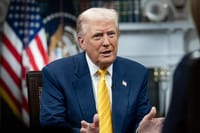
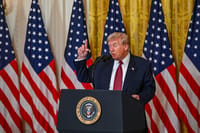
Saudi commentator Mashari Al-Zaydi, writing for Asharq Al-Awsat, described the American operation as a "Trumpian offensive." He noted that watching the operation live felt like a television series, a sentiment echoed by Donald Trump himself. Al-Zaydi pointed out that this isn't the first time Washington has acted so decisively, citing the arrests of Panama’s Manuel Noriega in 1989 and the fall of Saddam Hussein. He argued that we are entering a new American world that operates based on immediate national interests rather than long-term diplomatic stalemates, leaving Iran to wonder what this means for the rising tensions in the Middle East.
Lebanese analyst Tony Bouloss, a known critic of Hezbollah, offered an even sharper perspective, stating that the fall of Maduro is a blow to those who thrive on the rhetoric of resistance and smuggling economies. Bouloss argues that the era of managing crises from behind the scenes has ended, and the world has entered 2026 at a pace of decisive action. He claims that the United States is no longer satisfied with slow mediation or simple sanctions but is instead acting as a "command center" that is redrawing global maps. According to Bouloss, the message from Caracas to Tehran is clear: the immunity of leaders who fund shadow economies and illegal arms networks is being dismantled.
Qatari analyst Liqa Makki noted that while the operation may be seen as a violation of international law, the Trump administration has made it clear that they will respect international rules only as long as they serve American interests. He warned that what happened in Venezuela could easily be repeated elsewhere. This sentiment highlights a growing belief in the region that the "operating system" of the world has changed. The functional connection between Venezuela, Iran, and North Korea through money laundering and shadow alliances has made them targets in a new strategy of strategic strikes designed to organize the world through strength.