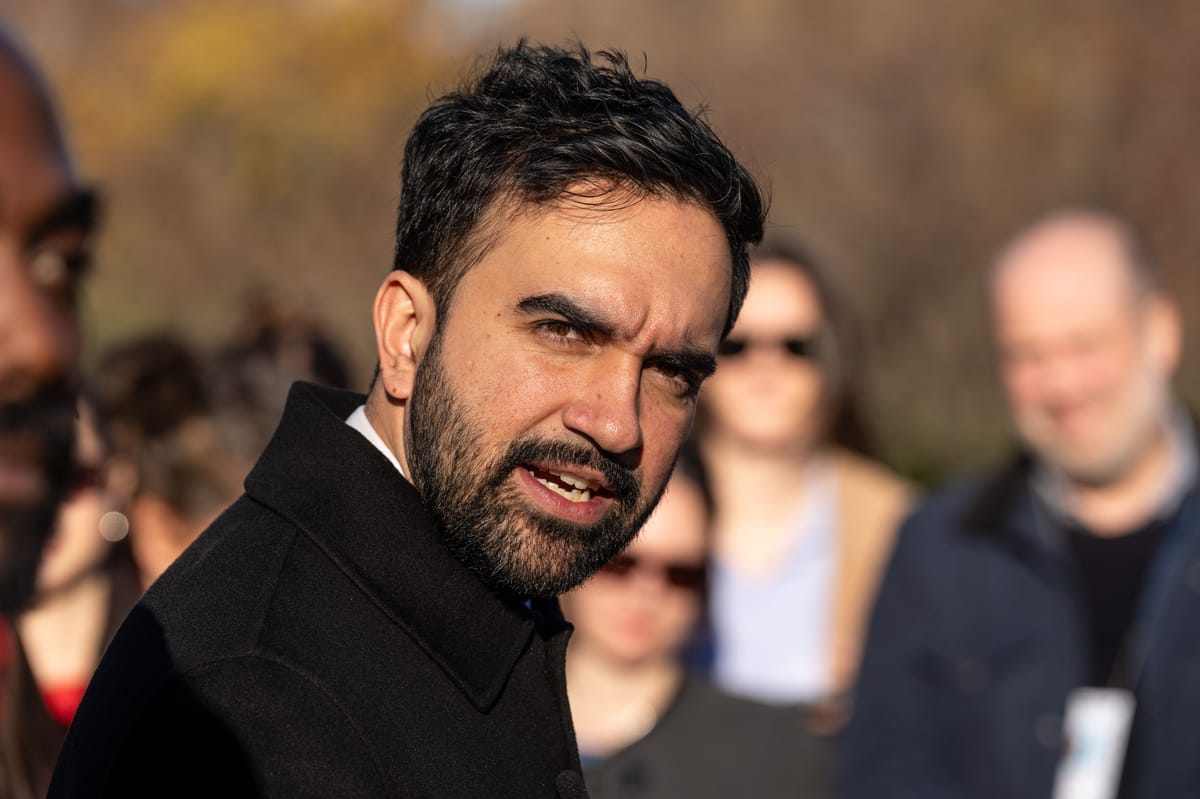
Mayor Zohran Mamdani, who took office as New York City's mayor in January 2026 after a historic election as the first Muslim and socialist mayor, unveiled his first preliminary budget proposal on February 17, 2026, for Fiscal Year (FY) 2027.
The $127 billion plan, representing an $11 billion increase over former Mayor Eric Adams' $115 billion FY 2026 budget, has been described by critics and media as a "shock" due to its aggressive revenue-raising measures, including threats of steep property tax hikes, raids on reserves tied to retiree benefits (often linked to broader pension concerns), and modest cuts to the NYPD amid a projected $5.4 billion deficit. Mamdani framed the budget as addressing an "inherited fiscal crisis" from the Adams administration, which he claims underbudgeted essential services by $12 billion across FY 2026 and 2027, including areas like rental assistance, homeless shelters, special education, and public safety overtime.
Overall Budget Context and Rationale
Mamdani's administration inherited what he calls the "Adams Budget Crisis," a $12 billion shortfall driven by years of fiscal mismanagement, including unaccounted recurring expenses (e.g., $7.54 billion in underfunded programs like cash and rental assistance, shelters, due process cases, judgments/claims, and structural deficits).
Through initial measures like $1.77 billion in agency savings (via new "Chief Savings Officers" in each agency), a $7.3 billion upward revision in tax revenue forecasts, and $1.5 billion in state aid (including $97 million in Foundation Aid), the gap has been narrowed to $5.4 billion.
The mayor presented two paths forward:
Preferred Path (Requires State Approval):
Raise taxes on high-income earners (e.g., a 2.2% increase on those making $1 million+) and corporations, plus address imbalances in city-state funding flows. This would generate sustainable revenue without burdening working- and middle-class residents. However, Governor Kathy Hochul has vowed no tax increases in 2026, making this unlikely.
"Painful" Alternative Path:
Rely on property tax hikes and reserve raids as "last resort" measures to legally balance the budget, which Mamdani says would weaken long-term fiscal stability and disproportionately hit average New Yorkers.
The budget includes $576 million in targeted investments across agencies but has drawn sharp criticism for not pursuing deeper cuts, with opponents arguing it represents a "tax-and-spend" approach that exacerbates affordability issues rather than streamlining government.
For context, NYC's spending is comparable to that of midsize countries like Greece or Thailand, highlighting perceived profligacy.
Property Taxes: Proposed 9.5% Hike
The most controversial element is the potential 9.5% increase in property tax rates, which Mamdani described as a "path of last resort" to generate $3.7 billion in FY 2027 revenue.
This would affect over 3 million residential properties (single-family homes, co-ops, condos) and more than 100,000 commercial buildings, potentially adding about $700 annually to the typical homeowner's bill.
It's the first such hike since Michael Bloomberg's term, and Mamdani emphasized it would only occur if Albany blocks his preferred wealth/corporate tax increases.
Rationale: Property taxes are one of the few levers mayors control without state approval. Mamdani argued it's necessary to avoid deeper service cuts but harmful, as it would place the burden on working- and middle-class families (median income ~$122,000) during an affordability crisis.
He called it a "false choice" imposed by state constraints.Backlash: City Council members like Oswald Feliz (D-Bronx) and Joann Ariola (R-Queens) slammed it as regressive and unnecessary, urging more spending cuts (e.g., auditing the Department of Education's $40 billion budget amid declining enrollment).
Residents and small business owners argue it reneges on Mamdani's campaign promises for affordable housing.
Hochul has downplayed the threat, and critics like the Washington Post see it as exacerbating NYC's high-tax environment.
Pensions and Retiree Benefits: Raiding Reserves
While not directly cutting pensions, the budget proposes drawing $229 million from the Retiree Health Benefits Trust (a fund for retiree medical benefits, often tied to broader pension systems) in FY 2027, plus $980 million from the city's Rainy Day Fund in FY 2026, totaling about $1.2 billion in reserve raids.
These are presented as temporary measures to plug recurring deficits.
Rationale: Legally required to balance the budget; avoids immediate service cuts but is unsustainable long-term. Mamdani blamed Adams' underfunding and prefers wealth taxes to replenish funds.
Backlash: Unions like TWU Local 106 warn it leaves the city vulnerable to economic downturns, could trigger credit rating downgrades, raise borrowing costs, and unfairly taps funds during record revenues.
Council Speaker Julie Menin opposes raiding reserves amid affordability issues.
Critics see it as risky fiscal policy that could increase debt service burdens.NYPD: Budget Cuts and Hiring FreezeThe NYPD faces a modest $22 million reduction from its $6.4 billion budget in FY 2027, primarily through "significantly reducing current vacancies" by adjusting funding for unfilled positions.
This includes canceling Adams' plan to hire 5,000 additional officers (300 in July 2026, 2,500 in July 2027, and 5,000 annually starting July 2028), capping the force near its current ~35,000 level instead of expanding to ~40,000.
No specific overtime cuts are detailed, though overtime is noted as a chronically underbudgeted area contributing to the gap.
Rationale: Part of broader efficiency measures to close the "historic" $5.4 billion chasm; Mamdani assured no immediate cuts were on the table initially but included vacancy reductions to avoid "typical" budget dances.
He emphasized public safety concerns but prioritized fiscal responsibility.
Backlash: Seen as undermining safety amid rising crime concerns; critics like Councilman Frank Morano (R-Staten Island) argue it's part of unchecked spending. Fox News highlighted it as reversing Adams' pro-police stance.
Broader Reactions and Next Steps
The proposals have sparked widespread backlash, with City Council negotiations expected to be contentious, Mamdani's "ultimatum" called "extreme" and "baloney" by members pushing for more audits and cuts (e.g., in education or wasteful projects like $1M public bathrooms).
Opinion pieces criticize it as fiscally irresponsible, potentially driving away residents and businesses.
Mamdani has defended it as fair and necessary, but full tax data (due soon) could shrink the gap further. The final budget will likely evolve, possibly softening the "shock" elements if state compromises emerge.