Get our mobile app
Download on the App StoreGet it on Google Play

Election night deadlock

Arab Parties Hold Balance in Israel's Election

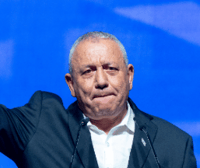
Exit polls and partial results leave neither Benjamin Netanyahu's bloc nor Gadi Eisenkot's camp with a Knesset majority, and Arab parties projected at 15 to 18 seats could decide who forms the next government.

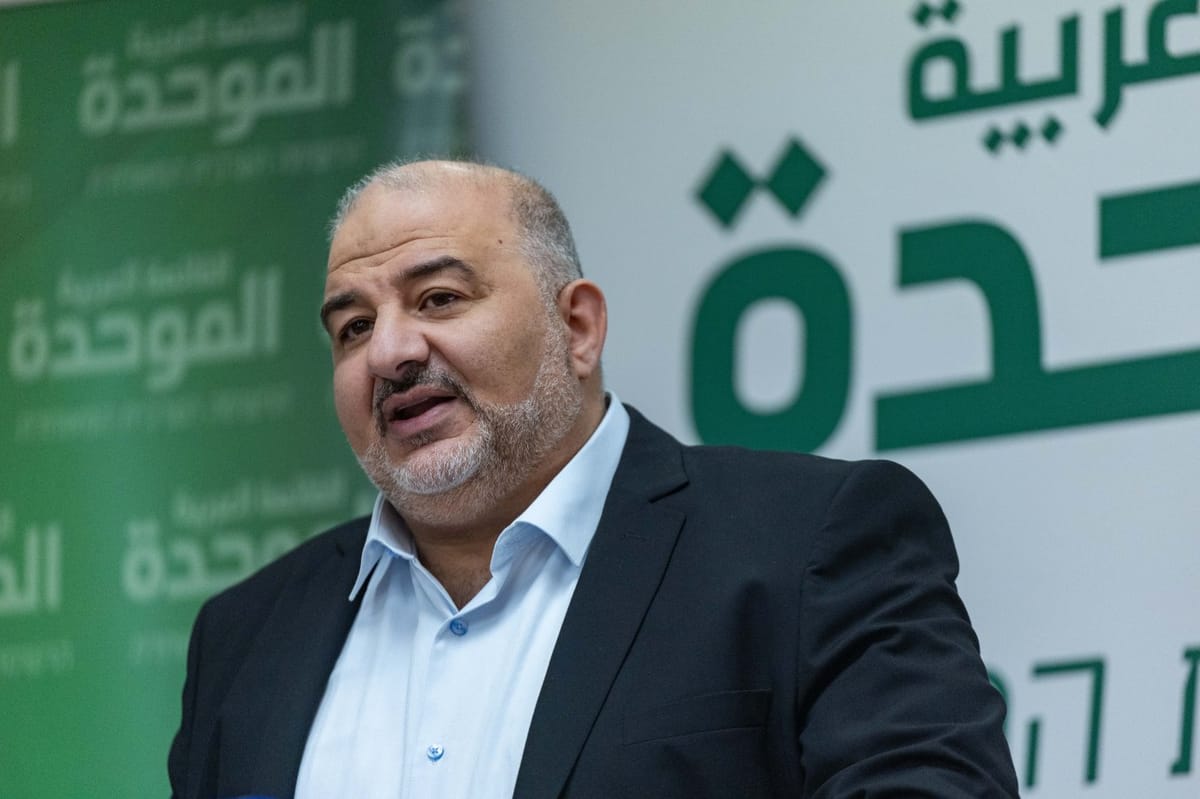
Mansour Abbas

Israel's election has produced no majority. Exit polls and partial results leave both Prime Minister Benjamin Netanyahu's bloc and the camp led by Gadi Eisenkot short of the 61 seats needed to control the 120-member Knesset. Arab parties are projected to win between 15 and 18 seats, which puts them in a position to decide who forms the next government.

Ynet reported that with 48.43% of ballots counted, Netanyahu's Likud party led with 27 seats. Yashar, the party headed by former military chief Eisenkot, had 22. That count gave Netanyahu's bloc 55 seats, the rival bloc 50 and the Arab parties 15. Military ballots and other votes that are counted late could still change the balance, and the final result could take days.

Without the Arab parties' seats, neither Netanyahu nor Eisenkot can reach a governing majority on the current numbers.

An earlier tally reflected 41.09% of votes counted as of 6:02 a.m. Wednesday. It came from the Central Elections Committee, which publishes the official results on its website as counting proceeds. In that count Netanyahu's right-wing and religious bloc had 57 seats, four short of a majority. The change bloc had 47 and the Arab parties a combined 16. The predominantly Arab Joint List was the third-largest faction with 12 seats. Ra'am, an Islamist party representing Arab Israeli voters, had four.

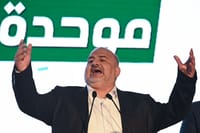
The first exit polls on Israel's major television channels came out at 10 p.m. They gave the change bloc 52 or 53 seats against 50 for Netanyahu's allies, with the Arab parties at 17 or 18. Later updates narrowed the gap. Kan 11 and Channel 13 each showed a 51-51 tie. A revised Channel 12 poll put Netanyahu's bloc ahead, 52 to 49.

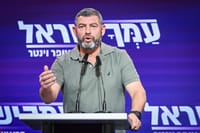
The i24NEWS exit poll gave Netanyahu's bloc 55 seats, Eisenkot's bloc 49 and the Arab parties 16. Of those 16, nine went to the Joint List of Hadash, Balad and Ta'al, and seven went to Mansour Abbas's Ra'am. For the chareidi parties, the poll gave Shas eight seats and United Torah Judaism seven. Two parties fell below the electoral threshold in that projection: the newcomer Charedi Public Party and Ofer Winter's party.

The channel's roundup of the other first polls reported that Channels 11, 12 and 13 each gave the coalition 50 seats, the opposition 52 and the Arab parties 18. Channel 14 stood apart, giving the coalition 60 seats, the opposition 43 and the Arab parties 17.

The Arab party figures reacted in sharply different ways. Osama Saadi dedicated his election results to Gaza, Judea and Samaria, Jerusalem and Palestinian prisoners. Abbas was asked whether Hamas is a terrorist organization and declined to answer.

Abbas also cast doubt on whether any coalition can be formed from these numbers. Speaking to Channel 12 on election night, the Ra'am chairman stated: "With these numbers, there is no government." He was asked about the criteria Eisenkot had set for joining a coalition and declined to commit. "I will decide whether to meet the criteria Gadi Eisenkot presented after I know if there is a government," Abbas said.

Ra'am had already drawn fire before the polls closed. On Tuesday morning, broadcaster Ella Hasson told Galei Israel radio that the media were trying to whitewash Mansour Abbas. She described Ra'am as a party "based on the Muslim Brotherhood and the Shura Council."

Ready for more?

Join our newsletter to receive updates on new articles and exclusive content.

We respect your privacy and will never share your information.

Enjoyed this article?

Yes
No
Follow Us:

Unmissable content


Loading comments...

Also of Interest