
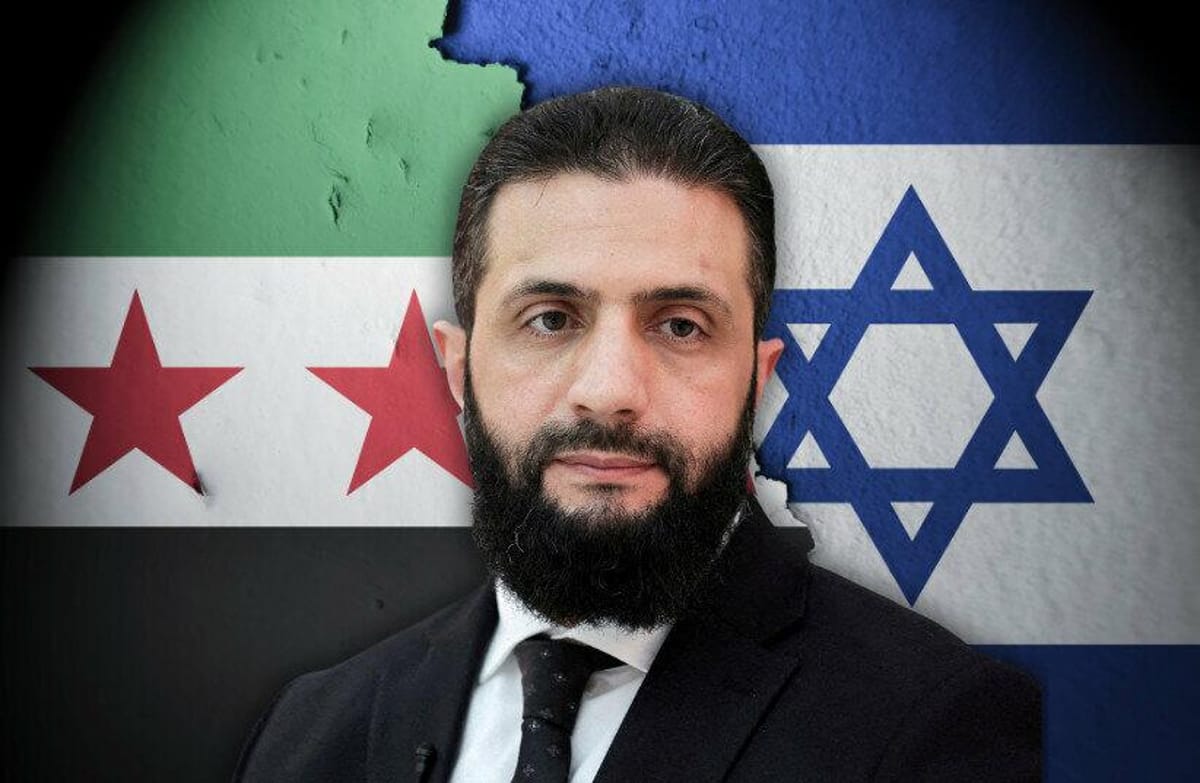
In a dimly lit hall in Damascus, President Ahmad al Sharaa stood before a circle of reporters. His words carried a weight that could reshape the Middle East.
“In the coming days, talks with Israel may lead to a security agreement,” he said, pausing just long enough for the silence to deepen. He made it clear, however, that peace and normalization were not yet on the horizon.
The announcement comes at a moment of fragile tension. According to al Sharaa, Syria and Israel had already been only days away from an understanding last July, before violent unrest in the southern province of As Suwayda derailed the process. What followed was bloodshed among the Druze population and retaliatory Israeli strikes on Syrian soil, including targets near Damascus close to the presidential palace. For al Sharaa, those attacks were not a warning but “a declaration of war.” Yet Syria chose restraint, he insisted, in order to keep the negotiations alive.
A Plan Watched by the World
Reports suggest that the agreement may be signed in front of the United Nations General Assembly in New York, with the United States pressing both sides to move quickly. President Donald Trump is said to be urging a tripartite summit with Prime Minister Benjamin Netanyahu and al Sharaa, a meeting that could echo through the global stage.
The details being discussed are nothing short of dramatic.
Israel would withdraw from territories it seized after the fall of Bashar al Assad last December, though it would retain control over two military posts on Mount Hermon.
In return, the Syrian army would refrain from placing heavy weapons along the border, and new buffer lines would be drawn.
The agreement also calls for resolving the deadly conflict in As Suwayda and ensuring that Syria does not become a launchpad for attacks on Israel.
For Damascus, this arrangement resembles the disengagement deal of 1974, which created a demilitarized zone between the two countries after the Yom Kippur War. But this time, al Sharaa emphasizes, international supervision is essential. The United Nations would have to play a central role.
Still, some issues are deliberately left unresolved. The fate of the Golan Heights is postponed. “It is too big of a matter,” al Sharaa remarked with a smile that did little to hide the gravity of his words. He also pledged that Syria would confront Iranian influence across its territory, a gesture aimed at calming Israeli fears and appealing to Washington.
In Jerusalem, officials have repeatedly declared that Israel intends to maintain its hold on strategic areas it captured after Assad’s downfall. The deep mistrust was evident in the tense Paris talks earlier this summer, where both sides accused one another of bad faith. Yet behind the suspicion lies a shared recognition: the war that has engulfed Syria for more than a decade cannot continue indefinitely.
Diplomats reveal that more than ninety five percent of the agreement has already been finalized. The target date is September twenty fifth, during the United Nations assembly, though Washington is pushing for a later ceremony in its own capital. Whether al Sharaa will agree to stand beside Netanyahu remains uncertain, particularly given the ongoing war in Gaza.
The path toward an accord is lined with obstacles, and history offers many examples of near breakthroughs that collapsed at the last moment. Still, the possibility of Israel and Syria reaching even a limited security arrangement carries immense significance.