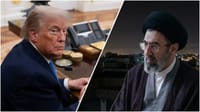
The agreement signed between the United States and Iran is being presented as a temporary arrangement, limited to sixty days. But in the Middle East, temporary agreements often become long-term realities.
The most dramatic aspect of the deal is not the nuclear issue. It is Lebanon.
For the first time, the United States is effectively accepting a regional reality in which Iran remains the dominant power behind Lebanon's political and military landscape. Hezbollah, currently at the lowest point in its history after suffering devastating blows, has now been handed a chance to recover.
As sanctions are eased and Iranian oil begins flowing back into global markets, Tehran will once again gain access to billions of dollars. History suggests that a significant portion of those resources will eventually find their way to regional proxies.
From Tehran's perspective, this is a major strategic achievement.
Since the Islamic Revolution of 1979, Iran's leadership has sought to build a regional sphere of influence stretching from Iraq to Syria, Lebanon, and Yemen. Despite setbacks, the current agreement provides Iran with an opportunity to rebuild that network.
The nuclear issue is equally troubling. Iran may be required to dilute portions of its enriched uranium stockpile, but it is not being forced to abandon the scientific knowledge, industrial infrastructure, centrifuges, or research facilities that make a future nuclear program possible.
Knowledge cannot be bombed away.
The real question is not what Iran will do in the next two years. The real question is what Iran will be capable of doing twenty years from now.
Presidents come and go. Agreements expire. Regimes adapt.
But scientific expertise remains.
One day, whether under this regime or another, Iran could decide to accelerate nuclear development once again. If that day comes, it will begin from a far stronger position than before.
The missile issue may be even more urgent.
The recent wars demonstrated the destructive power of Iranian ballistic missiles. Entire neighborhoods, streets, and civilian infrastructure were devastated by missiles carrying hundreds of kilograms of explosives. Yet the agreement places no meaningful restrictions on Iran's ability to preserve and eventually rebuild that capability.
For Israel, the conclusion is unavoidable.
The country must prepare for a new strategic reality.
It will need larger offensive capabilities, expanded long-range strike options, stronger intelligence networks, more advanced satellite systems, and the next generation of missile defense technology.
But the consequences extend far beyond Israel.
The agreement sends a message throughout the Middle East that Iran remains a rising regional power. Saudi Arabia, Egypt, Turkey, the Gulf states, and others will draw their own conclusions. The result may be the beginning of a new regional arms race.
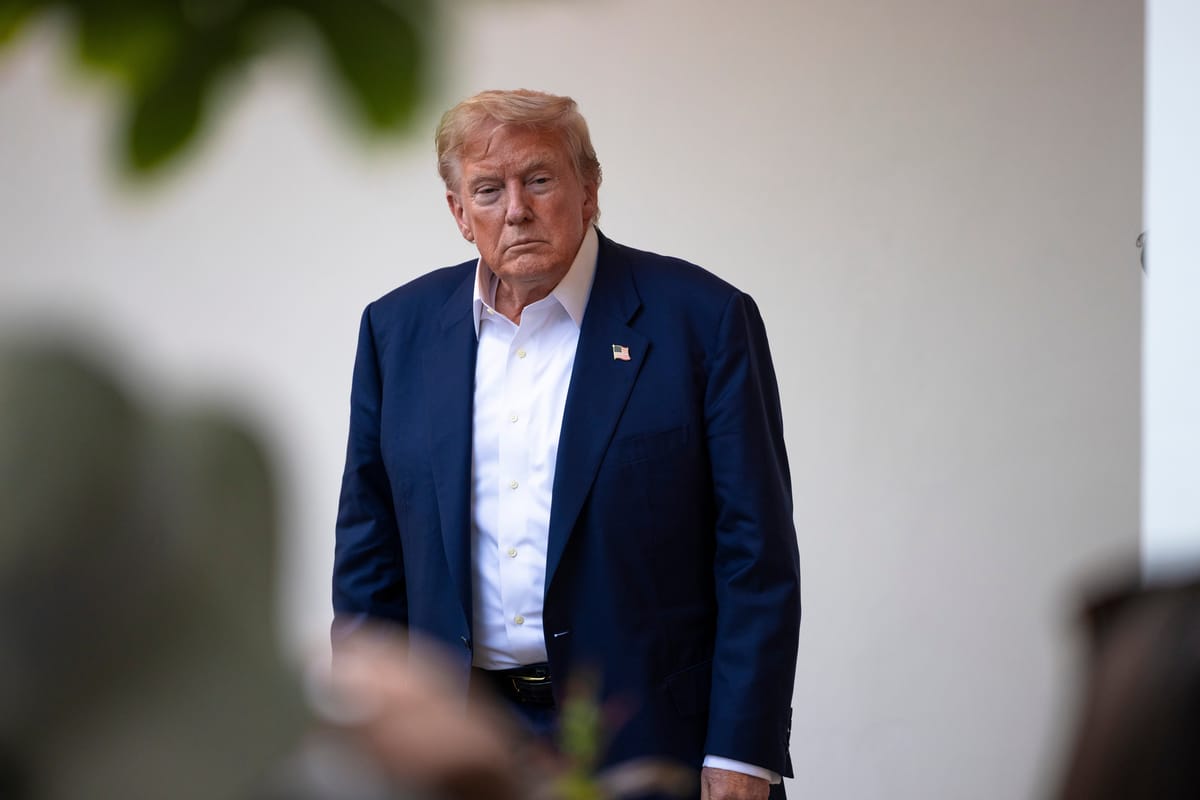
For Donald Trump, the deal may represent a successful business and political calculation. Lower energy prices, reduced military commitments, and increased demand for American weapons all serve important American interests.
For Israel, however, the question is different.
What happens sixty days from now matters far less than what happens five years from now.
If Iran emerges from this period with renewed economic strength, preserved nuclear infrastructure, a rebuilt missile program, and growing influence over Lebanon, history may remember this agreement not as a ceasefire, but as the moment the balance of power in the Middle East shifted back toward Tehran.