During the Second Intifada, a heated debate gripped Israel’s security establishment: Do targeted assassinations actually work? Critics argued that killing leaders was a temporary fix, claiming that "hydra-like" organizations would simply grow a new head.
Recent operations have shattered that myth. We now see a definitive truth: targeted assassinations are devastatingly effective against regimes that have not achieved institutional maturity or organizational resilience.
The Vulnerability of the "Clan"
While modern terror groups possess professional command structures, their core vulnerability is political culture. In a tribal or clannish system, leadership is everything. Loyalty is not to a set of laws or a national ideal, but to the "Chief" or the "Imam."
When you eliminate the leadership in such a system, you don't just kill a person; you sever the vital link between the individual and the functional military apparatus. If you simultaneously remove the economic benefits that maintain clan loyalty, the entire system collapses into paralysis.
The Democratic Contrast
Consider the contrast in a democracy like the U.S. or Israel. If a leader were targeted, the system would suffer a trauma, but the machinery of state, the military, the judiciary, and the bureaucracy, would continue to function with precision. The "office" is greater than the "man."
In clannish regimes, however, there is a Gordian Knot between the "gang" (the ruling elite) and an amateurish military apparatus. The collapse of the former leads to the immediate paralysis of the latter.
The Pillar of the "Press-Ganged" Elite
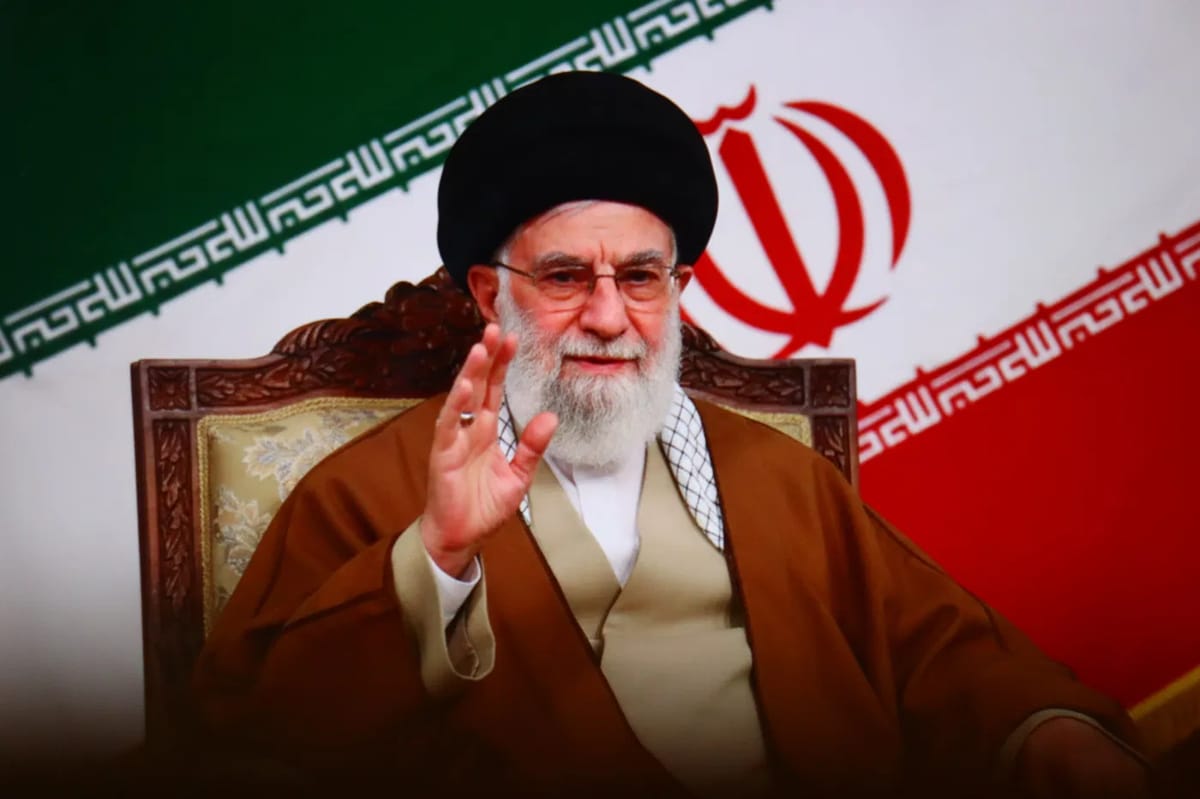
Third-party actors like Russia and China attempt to shore up these "gang-like" structures by providing global narrative support and technical expertise. We see this clearly in Iran.
The Iranian state is rich in highly educated, intelligent individuals, but the regime is forced to "press" its top-tier scientists into service. There is a terminal ceiling on innovation here: it is nearly impossible to force a scientist to excel for a cause they fundamentally reject.
The "Golden Path" of Resilience
According to Carl Schmitt’s theory of the "Sovereign" and Italian Elite Theory, a clannish structure offers rapid command, but it lacks the mandate of a democracy. The ideal structure, the "Golden Path"—balances:
- Centralized Control: Efficient decision-making.
- Professional Leadership: High-level technical expertise.
- Non-Coerced Solidarity: A public that identifies with national values.
This mirrors the Republican Roman model and the "Judges" (Shoftim) of ancient Israel.
It balances the need for a decisive leader with a resilient, voluntary community.
Why America Failed in the Aftermath
If targeted assassinations are so effective, why did U.S. missions in Iraq or Afghanistan fail to produce stability? The failure wasn't the strike; it was the "Environmental Blindness."
The U.S. attempted to impose democratic "software" on populations that preferred the familiarity of "gang-style" governance. Assassinations can neutralize a threat, but they cannot "cure" a culture that identifies its own survival with struggle itself.
When dealing with an ideologically committed population,as seen with the Genocidal Palestinians, decapitating the movement halts operations, but it does not achieve "rehabilitation." The replacement for the fallen leader is often born from the same ideological soil.
Assassinations work when they target a system that has no independent life outside its leader. By striking the "Head of the Snake," the body is rendered inert, even if foreign powers have armored it with technology. The strike wins the battle; the culture determines the length of the war.