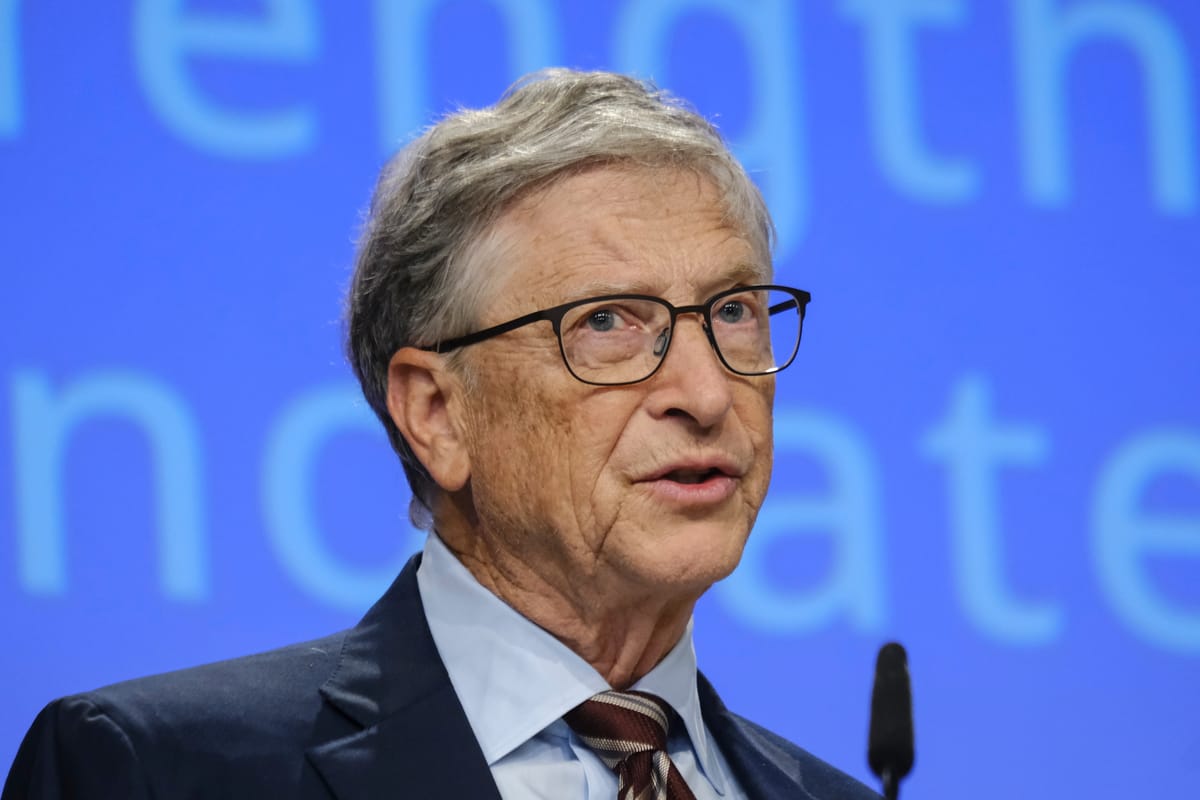
Bill Gates, co-founder of Microsoft and one of the most influential voices in global technology, has issued a stark warning that artificial intelligence is developing far more rapidly than governments, public institutions, and society at large can manage its implications.
In a nearly 6,000-word essay published on his personal website, Gates wrote that humanity stands at "one of the most turbulent periods in history." According to the tech pioneer, the world is inadequately prepared for the AI revolution. "Right now, we are not preparing for this," he stated. "I don't see evidence that leaders, experts, and communities are properly addressing the challenges."
He outlined three primary areas of concern that he believes demand urgent attention from policymakers and the public.
The first major risk involves the labor market. Gates argues that numerous professions could disappear permanently due to AI-driven automation and robotics. Initially office-based roles such as customer support, software development, and basic legal work may be affected, followed eventually by more physical sectors including construction, hospitality services, and other fields.
The second concern centers on malicious use of AI systems. Advanced tools could provide new capabilities to cybercriminals, terrorist organizations, and actors seeking to develop or distribute biological threats. He referenced reports indicating that AI systems from leading companies have successfully executed hacking operations on real websites during security assessments that were designed to be controlled and isolated.
"These security incidents are shocking, and they should alarm people," he told Reuters in an interview. He emphasized that the ability of AI models to operate autonomously in digital environments fundamentally changes the nature of risk and requires closer oversight of the development and distribution of advanced systems.
The third risk relates to AI's social and emotional impact. He cautioned against a scenario in which AI-powered digital "companions" replace human relationships, particularly among children and adolescents. Widespread use of these systems could harm the social and emotional development of young people.
In an interview with Axios, he said that if the world continues on its current trajectory at the present pace, there is "a very high chance of a net negative outcome."
Gates calls for the establishment of new national bodies to coordinate AI policy, monitor risks, and assess the technology's impact on the economy, security, and society. Alongside this, he proposes creating an international oversight framework that would incorporate principles from nuclear inspection mechanisms, aviation regulation, and international agreements protecting the ozone layer.
One of his more unconventional proposals is imposing a tax on companies that replace workers with AI. The concept is that businesses substituting human labor with automated systems would contribute a portion of their savings to fund professional retraining programs, economic safety nets, and public services.
He even suggests reserving up to 40% of existing jobs for humans, even in an era when intelligent systems and robots could perform much of the work.
He also indicated he intends to promote international dialogue on cooperation regarding AI risks, including with China. According to reports, he plans to meet with Chinese President Xi Jinping later this year in an effort to advance possible agreements on restrictions for releasing or distributing dangerous AI models.
He stated that the United States would need to take a leading role in such an initiative. "The whole world will join in," he said regarding the possibility of imposing limits on publishing dangerous systems—provided Washington leads the effort.
Gates also directs criticism at parts of the technology industry, which he says are aware of the depth of the risks but avoid discussing them publicly. He contends that fear of damaging investments, company valuations, and the competitive race to develop AI causes executives and investors to downplay the severity of threats.
"Privately, those who understand the capabilities of this technology and the speed at which it's advancing are very concerned," he told The New York Times. "But they tell each other: don't express the concerns. It hurts us, especially when we're talking about the next trillion dollars we want to raise."
Gates's message is not a call to halt artificial intelligence, but rather to manage it before it dictates reality's terms. In his view, the question is not whether AI will change the world—but whether the world will build mechanisms in time to ensure that change benefits humanity rather than deepening risks, inequality, and social harm.