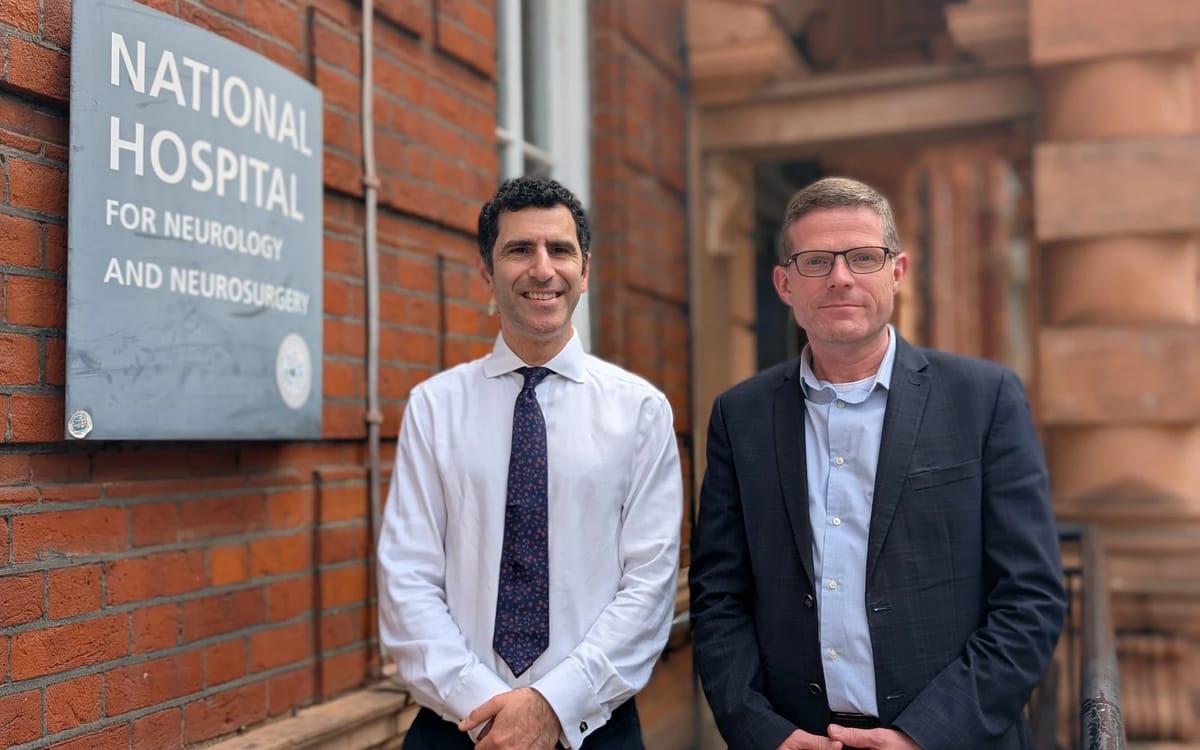
Neurosurgeons at London's National Hospital for Neurology and Neurosurgery have performed what they describe as the world's first brain tumor removal surgery assisted by real-time artificial intelligence. The system, developed at University College London's Hawkes Institute, analyzed live video feeds from surgical endoscopes during the procedure, highlighting sensitive anatomical structures, including nerves and blood vessels, in one of the brain's most densely packed and dangerous regions.
The patient, 48-year-old Rhys Hubert, a father of two from Bedfordshire, England, underwent surgery in May to remove an 11-millimeter benign tumor in his pituitary gland, located at the brain's base. The growth had gradually compromised his peripheral vision to the point where walking became difficult and he required a cane for support.
Hubert's surgery followed a diagnosis in late 2024, after he collapsed during a hiking trip. His condition deteriorated rapidly: his peripheral vision failed and he became dependent on glasses and a walking stick. When offered the opportunity to participate in the world-first trial, he agreed immediately.
"If patients aren't willing to join research, how can doctors learn and how can medicine advance?" Hubert said. The improvement was nearly instantaneous, he reported: "When I opened my eyes after surgery, I felt like I had 360-degree vision back. I hadn't seen that clearly in a year."