
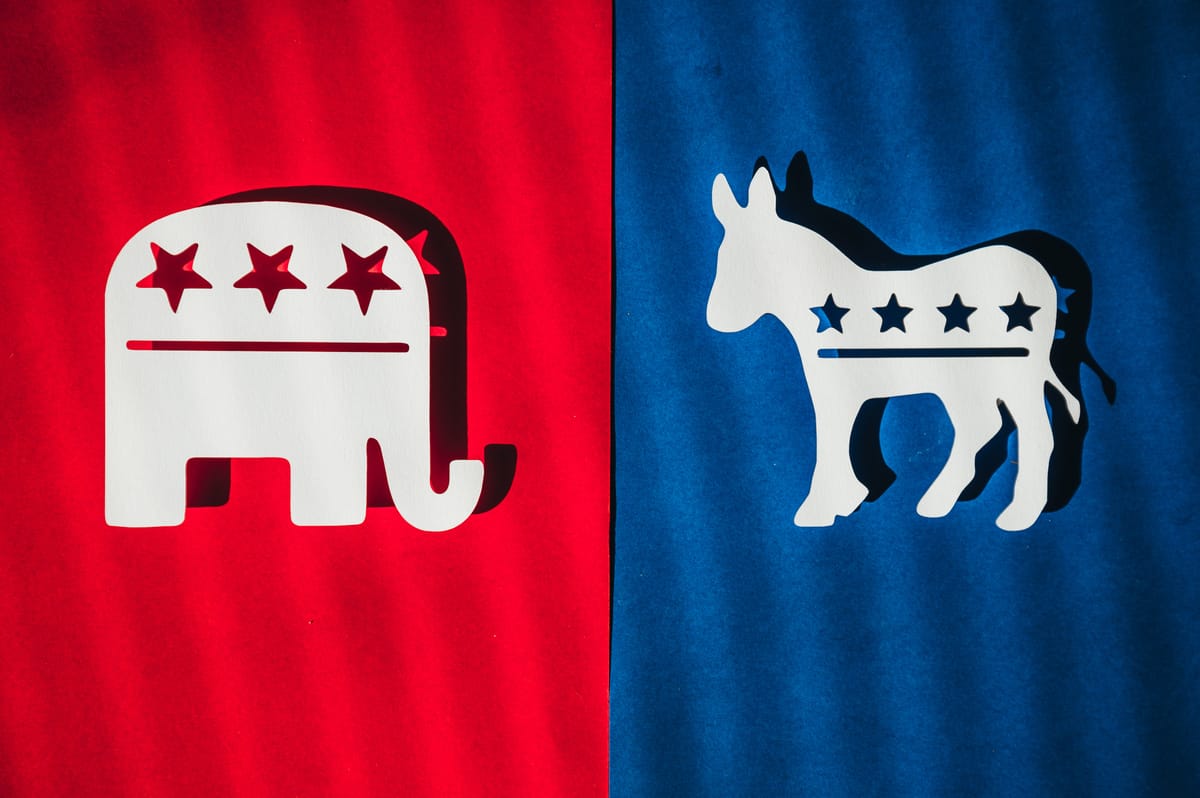
In the modern political landscape, a curious phenomenon has emerged: Democrats are increasingly unwilling to date Republicans, while Republicans largely remain open to partners from across the aisle.
While pundits often point to policy disagreements or "values," the truth may lie in a much deeper psychological and philosophical rift, one that touches on the very nature of humanism and the danger of "political oaths."
The Idealist’s Trap: When the Enemy Becomes Too Vivid
At the heart of this divide is the nature of the Idealist. To an idealist, the world is a project to be perfected, and any obstacle to that perfection isn't just a difference of opinion, it is a moral failure.
For many on the left, this idealism creates a world where the "political enemy" becomes more vivid than the actual utopia they seek to build. When you are an idealist, the person standing in the way of your vision of the world becomes a target of negative attachment. This makes intimacy impossible; you cannot love a person whom you have cast as the primary villain in your struggle for a better world.
The Contrast of the Realist
Conversely, the "non-idealist", a position more commonly associated with the Republican perspective, doesn't view life through the lens of a "built-in" cosmic struggle.
To the realist, politics is a messy, necessary feature of human organization, but it isn't the totality of a person’s soul. This allows for a separation between a partner's ballot and their character. Because they don't see their partner as a hurdle to a perfected universe, they are free to see the human being first.
The Danger of the "Political Oath"
The most profound danger of modern political idealism is its tendency toward the anti-humanistic. A person cannot truly be ethical if they take upon themselves a political oath that they refuse to let other human beings change.
History provides us with chilling examples of this "ideology-first" mindset:
The Totalitarians: Both Nazis and Communists fell into the trap of prioritizing their "vivid version of the world" over the lives of individual people.
The Human Cost: When an ideology becomes more important than the person standing in front of you, you lose the ability to see their humanity. You see a category, a voter, or an "enemy," but never a human.
True humanism requires the flexibility to put the individual before the "oath." If we allow our political visions to become so rigid that they render us incapable of loving those who disagree with us, we have already lost the moral high ground.
To win against "evil," we must be careful not to become what we hate, people who value a "vivid world" more than the living, breathing humans currently inhabiting it.