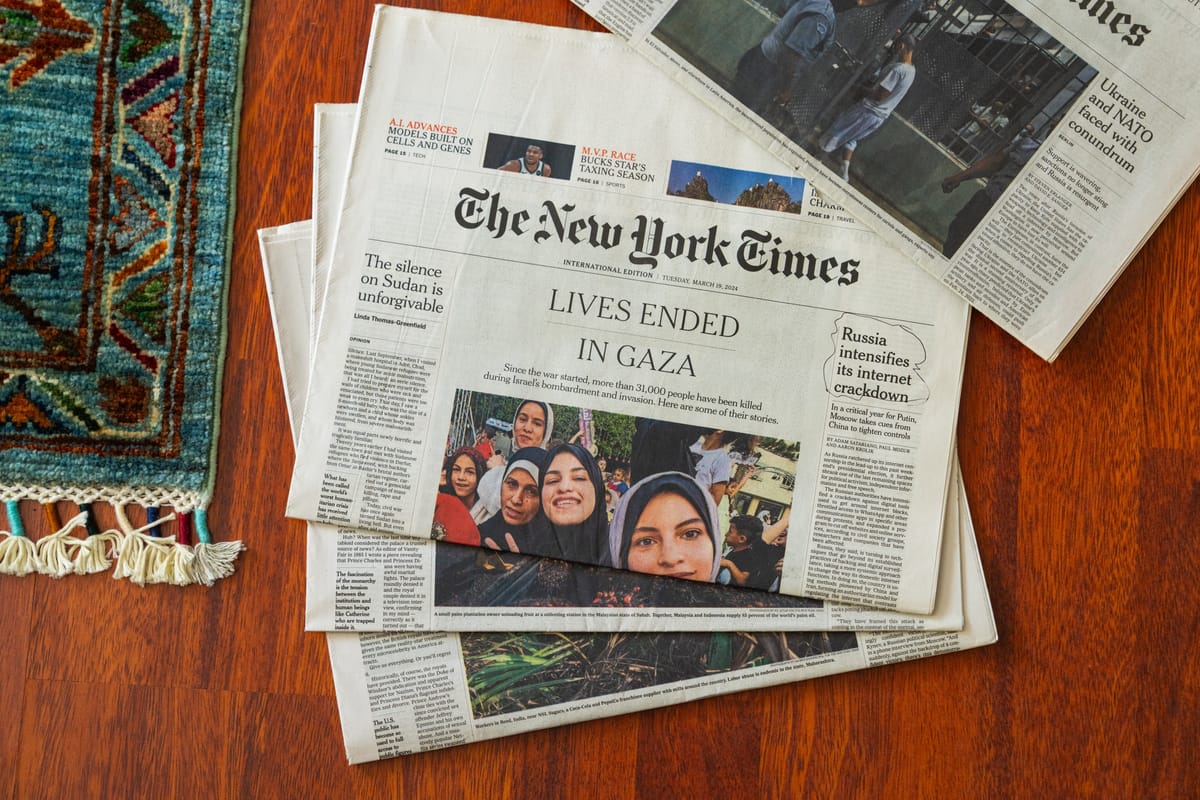
The New York Times faced sharp criticism across media platforms following the publication of a report covering Israeli public sentiment toward the October 7 terror attacks. Written by Jerusalem correspondent Isabel Kershner, the report focused on domestic reactions to an Israeli documentary, but a specific phrasing regarding the massacre drawing heavy backlash from journalists and commentators.
The article examined how citizens divide responsibility for intelligence and political failures preceding the attack, while adding a sentence describing public perception. "Israelis are deeply divided over how to apportion blame for the policy, military and intelligence failures that preceded the attack and the war, but Israelis still largely view themselves as the victims of Oct. 7," the text stated. Hamas terrorists killed approximately 1,200 people in southern Israel during the assault and abducted about 250 hostages, marking the deadliest single day in the country's history.
Independent researchers and media figures quickly highlighted the phrasing online. Writer Eitan Fischberger questioned the phrasing, asking, "What is this, @nytimes?". Fischberger added, "It is not even an opinion piece, a standard news article just casually drops a line suggesting that Israelis were not the real victims of October 7th".
Political commentators and public figures issued strong responses to the publication's phrasing. CNN commentator Scott Jennings called the phrasing an "abomination," while political analyst Brit Hume characterized the public pushback as a "good question". Former radio host Joe Walsh noted, "Israelis were the victims of Oct 7th, right?".
The controversy follows academic scrutiny regarding the publication's regional coverage patterns. A study conducted by Edieal Pinker at the Yale School of Management analyzed 1,559 news articles published between October 7, 2023, and June 7, 2024. The study, published in Studies in Conflict and Terrorism, concluded that the newspaper established a dominant framing assigning near-exclusive agency to Israel while diminishing the operational role of Hamas terrorists.
The Yale analysis revealed that 55 percent of analyzed articles omitted references to Israeli deaths on October 7 or during subsequent military actions, while only 42 percent mentioned Israeli hostages held in Gaza. The study noted that less than 4 percent of articles made any reference to broader Israeli public suffering during the war. In response to previous academic reviews, representatives for The New York Times stated that the news organization covered the war with more rigor than virtually any other US news organization, reporting on the war from all angles.