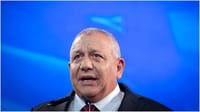
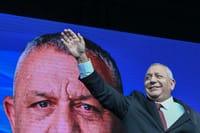
In a statement posted early on Sunday, Likud accused Eisenkot of intending "to breach the trust of Israel's citizens and cooperate with parties that support terrorism." Likud called his response "hysterical" and "disconnected from reality."
On Saturday, Eisenkot set out four principles that any coalition partner would have to accept. Partners must recognize Israel as a Jewish, democratic, liberal and egalitarian state and commit to the values of the Declaration of Independence. They must also back mandatory military, national or civilian service for all citizens, and recognize Hamas as a terrorist organization that Israel is obliged to strip of its military and governing power in Gaza. "Any member of Knesset willing to sign on to these principles is a possible partner on the path to establishing a new and better government for Israel," Eisenkot wrote.
Eisenkot also promised to act at once on what he called a "clear parliamentary majority." His agenda includes setting up a state commission of inquiry into October 7 and pushing through compulsory service for everyone. He also pledged to bolster the military's manpower, compensate and recognize those who serve, and repeal laws he labeled part of a "judicial coup."
Ynet reported that Eisenkot is putting heavy effort into bringing both Shas and United Torah Judaism into a government he would lead. "Eisenkot is going all out to convince the ultra-Orthodox parties, both Shas and United Torah Judaism, to enter the government," a source close to him said. "It won't be with the Arabs. We believe it's possible." The source named Yisrael Beytenu chairman Avigdor Liberman as the main obstacle. Before the election, Liberman pledged not to join a government that includes chareidi parties.
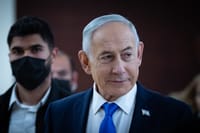
Prime Minister Benjamin Netanyahu weighed in on X on Saturday evening. "Cooperation with Mansour Abbas and Tibi is a disaster for Israel," he wrote. On Sunday, Otzma Yehudit leader Itamar Ben-Gvir urged the chareidi parties not to help the left form a government, warning it would be a "historic mistake." He accused the left of offering to waive conscription for chareidim in return for their support after campaigning on hatred of them. "You have nothing in common with the left," Ben-Gvir wrote.
Ahmad Tibi ruled out joining a government during an appearance on Channel 12's Meet the Press on Saturday, but said he would support replacing the Knesset speaker. The opposition bloc wants to unseat Speaker Amir Ohana at the new Knesset's first session. Removing him would give the bloc control of the parliamentary agenda before a government is formed.
The two camps also clashed on Saturday night over a series of phone calls. Yashar said ministers and incoming lawmakers had called its members, naming Almog Cohen, Education Minister Yoav Kisch and Yaakov Bardugo. Likud replied that Eisenkot and his campaign manager, Ronen Manelis, were feeling the heat because their efforts to partner with parties that support terrorism were being blocked. Cohen and Bardugo both denied making any calls. Minister Orit Strock confirmed she had phoned Yeruham Mayor Tal Ohana, but said she only wanted to congratulate her on entering the Knesset.
With all votes counted in the October 27 election, Netanyahu's bloc won 53 seats and Eisenkot's bloc won 48. The Arab parties took 19, with 11 for the Joint List and eight for Ra'am. Likud remains the largest single party with 27 seats, ahead of Yashar with 21. Turnout stood at 77.9%, the highest level since 1999.
On Sunday, Eisenkot is expected to be the first candidate handed the mandate once Herzog opens consultations with the factions. The Joint List and Ra'am are expected to recommend him.