Get our mobile app
Download on the App StoreGet it on Google Play

Children of Survivors

Avri Gilad on his Holocaust trauma

The broadcaster shared his childhood trauma as the son of Holocaust survivors. Restaurateur Ruti Broudo identified: We were our parents' lifeline

Avri Gilad

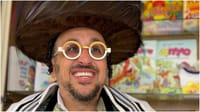
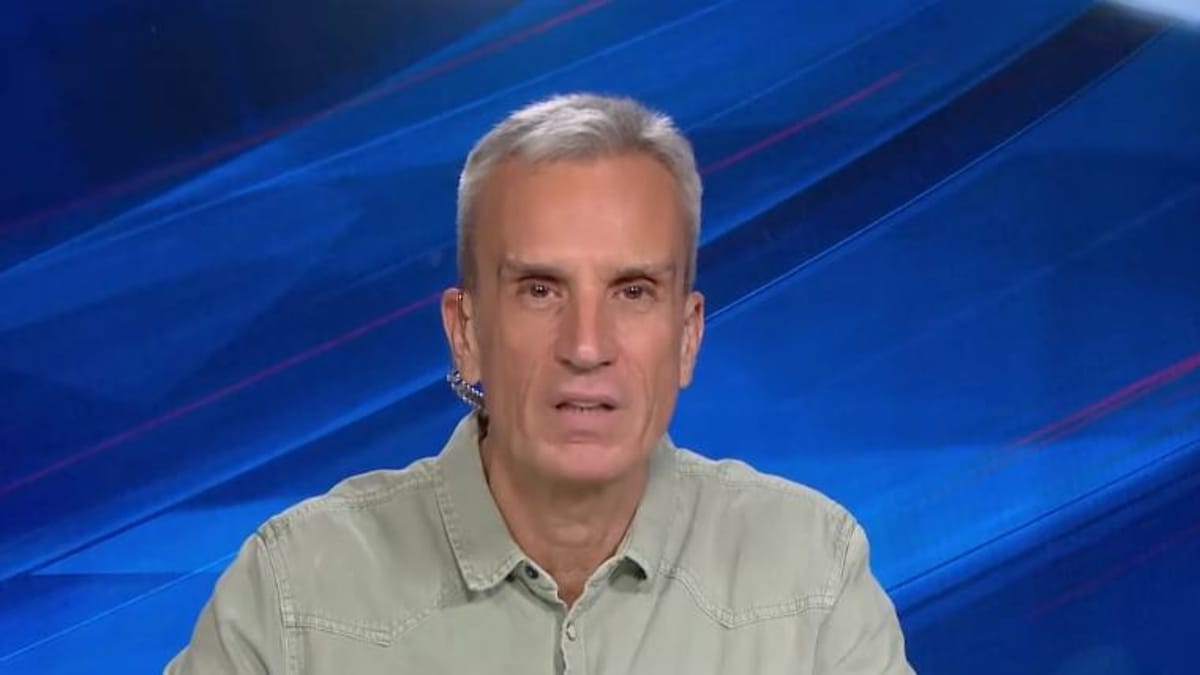
A rare moment of personal disclosure unfolded Sunday night on Keshet 12's "The Winning Kitchen VIP," when Israeli broadcaster Avri Gilad shared the deep trauma that has accompanied him since childhood as the son of Holocaust survivors. Alongside restaurateur Ruti Broudo, the daughter of survivors, Gilad revealed how the wounds of the previous generation shaped his life and the journey of healing he undertook as a father.

"From the second my daughter was born, it became the number one thing in my life," Gilad said on the program. "For my parents, I was the number one thing you don't want to be. The one who constantly raises worries, father standing at the window, waiting for me to come home, and if I'm five minutes late, he's already running down the street calling my name."
"Dr. Mengele took his father from his hands"

When Broodu wondered whether the source of his father's anxieties lay in the Shoah, Gilad confirmed without hesitation: "Dr. Mengele took his father from his hands and sent him to the crematorium. You don't recover from that, especially when you suddenly have a child." In his words, he distinguished between love and worry: "At home I received worry, not love. Worry is something that disguises itself as love. The one who loves allows the other to develop according to his own path; the one who worries places the developing person inside a box of his own needs, always 'why did you do this to me?'"

Broudo identified with that last sentence, which she too heard in her home, but noted that in her case the damage from the Shoah manifested differently: "We felt exactly the opposite, our parents' lifeline. Both parents were in the Shoah and both were what you'd call 'incapable.'" When Broudo asked if Gilad could go on trips, the answer was unsurprising: "No, my father demanded to come with me and then embarrass me."

"He missed the man he could have been"

Gilad described his father as "a very wounded man, the funniest and sweetest man I knew, but the wound of the Shoah, the insane post-trauma of what he went through there, completely disrupted his mind." He added with pain: "He missed, in some way, the man he could have been. It was sad to see and terribly difficult to live in the shadow of that."

His partner on the show, multi-disciplinary artist Aylon Nofer, praised him: "It's so amazing that you didn't pass it on, your fatherhood is so not like that, what a tikkun." Her response led to an especially moving moment.

"Thank you for letting me climb trees"

Gilad, father to three daughters, shared a story that embodies the journey of healing he underwent: "This is my life's mission. From the moment I had my first daughter, I swore to give nourishing love, purified of worry. It destroyed my childhood." He continued: "When one of my daughters was four years old and knew how to write, she wrote me a birthday greeting. She wrote 'Abba, thank you for letting me climb trees.' In my heart I said, 'Say thank you to Dr. Mengele.'"

That last sentence, which sparked a wave of responses on social media, embodies a complex paradox: the trauma that shaped Gilad's childhood became, ultimately, the catalyst for generational healing. The freedom he did not receive from his parents, he grants to his daughters, all because of the painful memory of what his family endured in the Shoah.

Ready for more?

Join our newsletter to receive updates on new articles and exclusive content.

We respect your privacy and will never share your information.

Enjoyed this article?

Yes
No
Follow Us:

Unmissable content


Loading comments...

Also of Interest