Get our mobile app
Download on the App StoreGet it on Google Play

Aviation History

Pilot Survives Being Sucked Out at 17,000 Feet

In one of aviation's most extraordinary emergencies, Captain Tim Lancaster was pulled halfway out of his aircraft when a windscreen failed mid-flight. His crew held onto him for 22 minutes while the co-pilot executed an emergency landing.

British Airways Captain Survives Being Sucked Out of Cockpit at 17,000 Feet

On the morning of June 10, 1990, a BAC 1-11 aircraft operated by British Airways departed Birmingham Airport in the United Kingdom, bound for Málaga, Spain. The flight carried 81 passengers and six crew members. Nothing about the departure suggested the extraordinary crisis that would unfold minutes later.

In the cockpit sat Captain Tim Lancaster, 43, and First Officer Alastair Atchison. Lancaster was a veteran pilot with more than 11,000 flight hours; Atchison had logged thousands of hours himself. The aircraft took off at 7:20 UTC and began its climb to cruising altitude. Passengers settled into their seats, cabin crew began their service routine, and the cockpit operated normally.

No one aboard could have anticipated that within minutes, the crew would face one of the most unusual emergencies in commercial aviation history.

As the aircraft reached approximately 17,300 feet, just over 5,000 meters above ground, a massive explosion suddenly erupted in the cockpit.

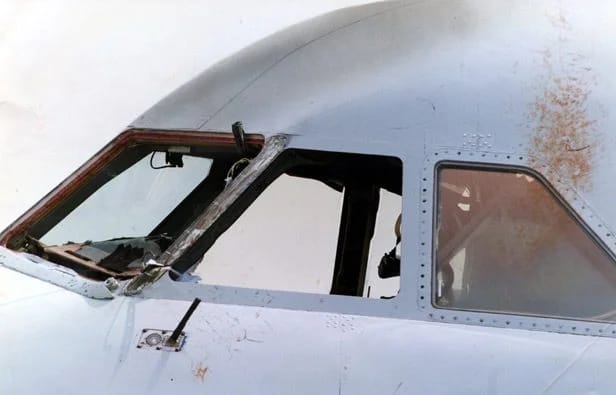
British Airways BAC 1-11
British Airways BAC 1-11 (Social media post)

One of the cockpit windscreens tore away from its frame due to a failure in its mounting bolts. The pressurized air inside the cabin began rushing out with tremendous force. The sudden decompression created an extraordinarily powerful airstream. Documents and objects in the cockpit were hurled about, and the cockpit door was damaged as well. Within seconds, the cockpit transformed from a quiet, controlled environment into a scene of noise, wind, and chaos.

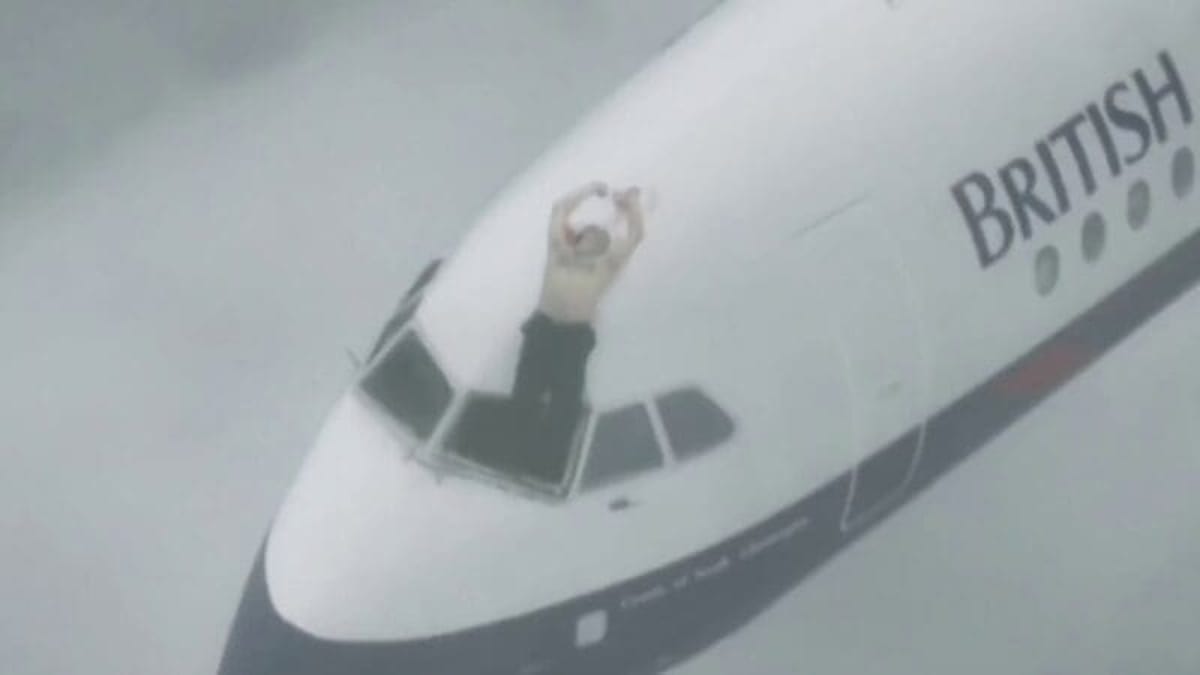
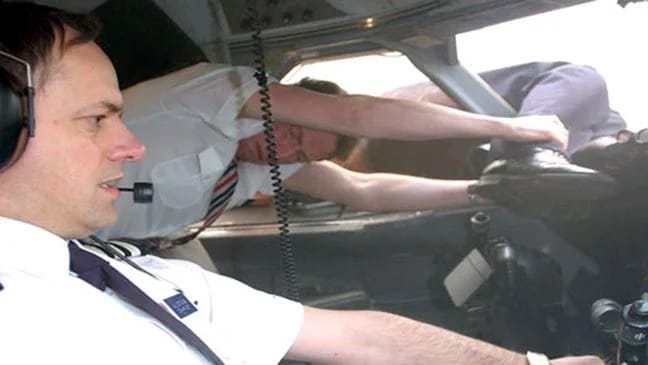
But the greatest danger wasn't the missing windscreen itself. Captain Timothy Lancaster was sucked through the opening, and the upper half of his body found itself outside the aircraft, thousands of meters above the ground.

In an almost unbelievable turn of events, Lancaster did not fall completely from the plane. His legs remained inside the cockpit, caught in the area of the flight controls and his seat.

Reconstruction of Captain Timothy Lancaster outside the aircraft.
Reconstruction of Captain Timothy Lancaster outside the aircraft. (צילום: מסך )

His body was exposed to the powerful airstream, with wind traveling at hundreds of kilometers per hour battering him continuously, while the outside temperature was extremely cold. The force of the air was so great that his headset and oxygen mask were torn away.

While the captain hung outside the aircraft, First Officer Atchison had to comprehend within seconds what was happening and maintain control of the plane. The situation became even more complicated when Lancaster's legs, trapped in the area of the control column, interfered with the aircraft's handling, and the plane began entering a dive.

Atchison took control of the aircraft and attempted to return it to stable flight. He engaged the autopilot and tried to establish contact with air traffic control, but the noise in the cockpit was tremendous and made communication extremely difficult. Meanwhile, cabin crew members realized the captain's life was in grave danger.

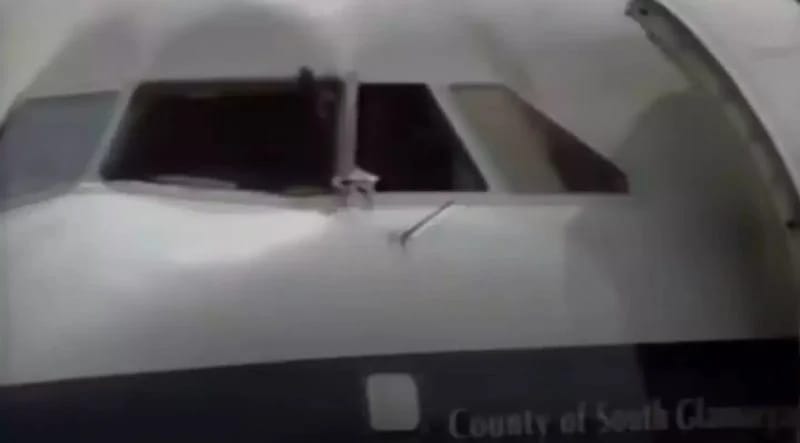
British Airways BAC 1-11
British Airways BAC 1-11 (צילום: מסך )

Nigel Ogden, one of the flight attendants, reached the cockpit, saw Lancaster hanging outside the aircraft, and immediately grabbed him. He held onto the captain's body and tried to prevent him from slipping out completely. Additional crew members joined the effort, and over the following minutes they took turns maintaining their grip on the captain. They attempted to pull him back into the cockpit, but the powerful airstream prevented them from doing so.

The struggle grew more difficult as time passed. The crew members had to hold a person whose weight was affected by aerodynamic forces, while they themselves struggled to maintain stability inside the cockpit. Lancaster continued sliding further out, and his head repeatedly struck the aircraft's fuselage.

At one point the crew feared he was already dead, but they continued holding him. Beyond the attempt to save the captain, there was another concern: if his body broke free completely, it could strike other parts of the aircraft, including the wing, engine, or horizontal stabilizer. So the crew members continued gripping his legs and body, despite the cold, noise, and physical strain.

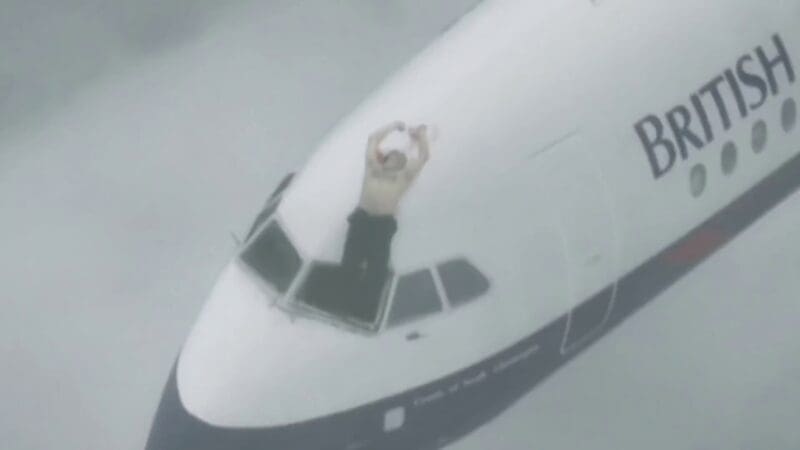
Reconstruction of Captain Timothy Lancaster outside the aircraft.
Reconstruction of Captain Timothy Lancaster outside the aircraft. (Social media post)

At the same time, another battle was underway in the cockpit. Atchison had to fly the aircraft nearly alone, locate a suitable airport, and execute an emergency landing. He requested guidance from air traffic control, and the aircraft was directed to Southampton Airport.

This was not the original destination, and the pilot had to perform a landing at an airport that wasn't part of the flight plan. Additionally, some of the documents and materials that had been in the cockpit were blown out during the decompression. Despite these conditions, Atchison continued descending the aircraft and preparing it for landing, while behind him crew members continued holding the captain.

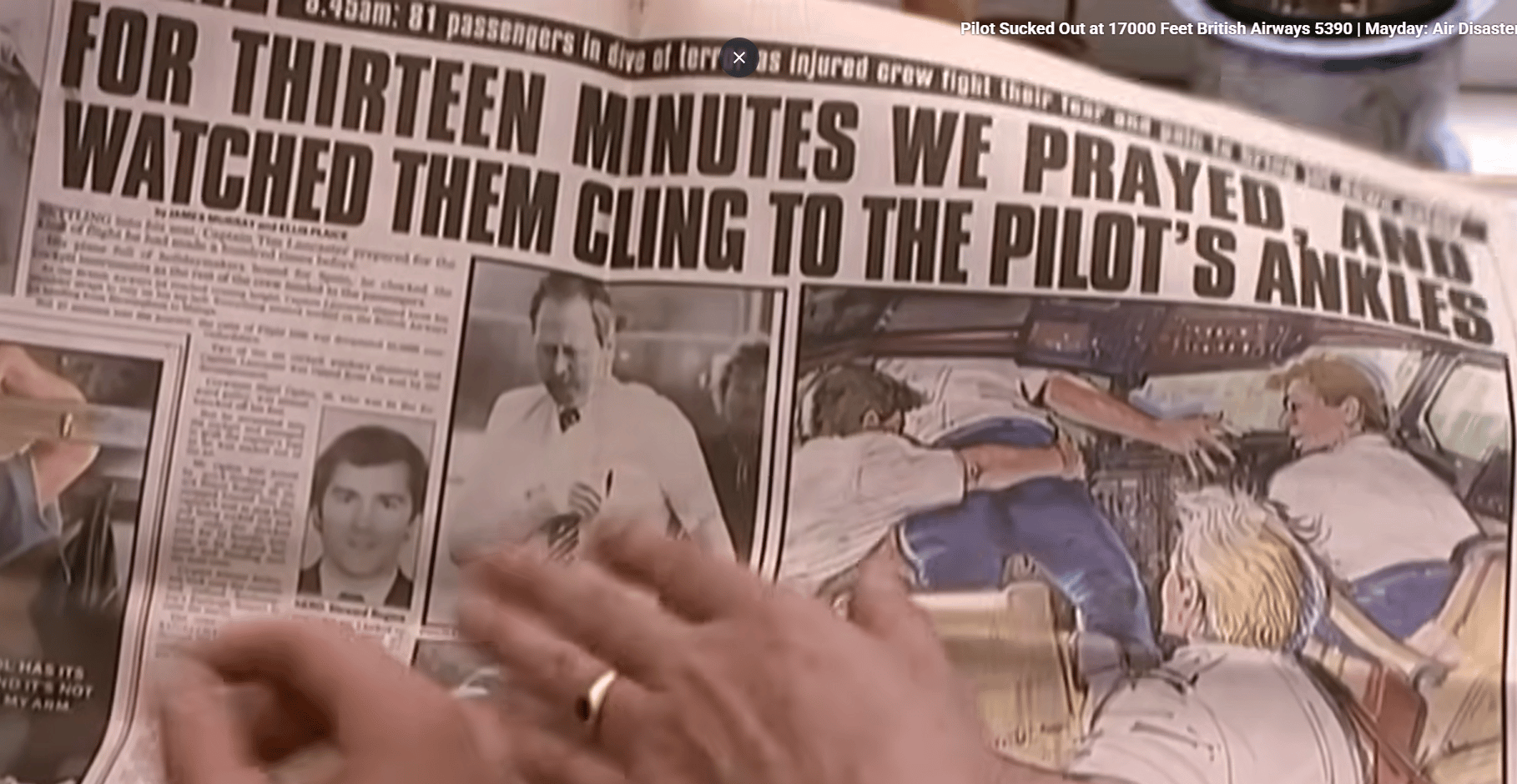
Pilot making headlines
Pilot making headlines (צילום: מסך)

As the aircraft lost altitude, conditions improved somewhat. The pressure and temperature became more manageable, but the danger had not passed. Lancaster remained outside the cockpit, and crew members were forced to continue holding him until the aircraft reached the ground. Eventually Atchison approached the runway at Southampton.

He executed the emergency approach, aligned the aircraft, and successfully landed it safely. The entire incident, from the moment the windscreen tore away until landing, lasted approximately 22 minutes.

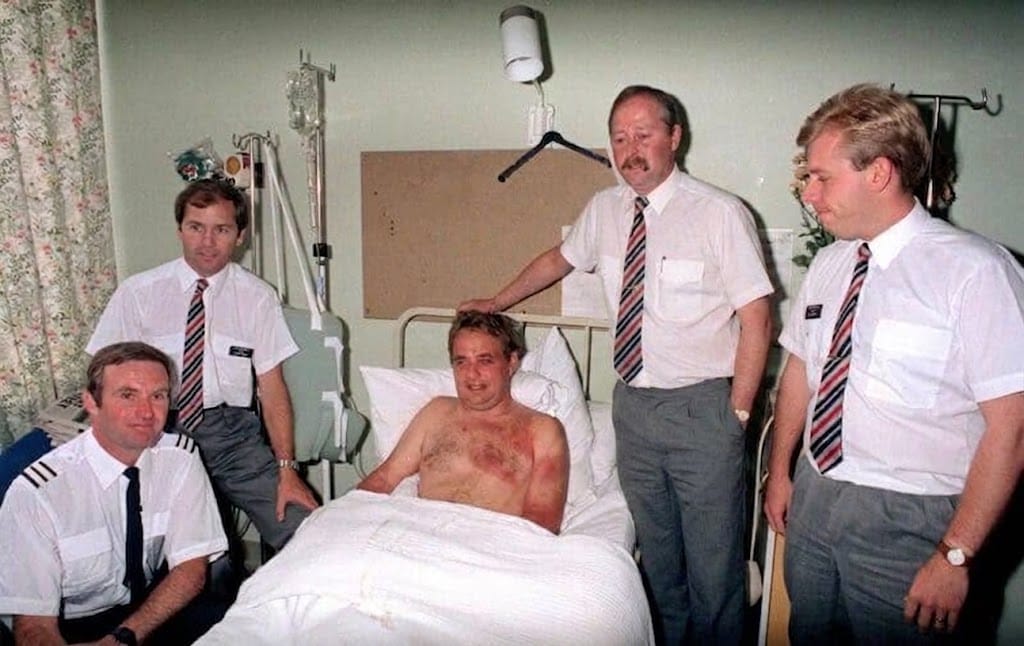
The flight crew and the surviving captain
The flight crew and the surviving captain (Social media post)

Immediately after the aircraft stopped, emergency crews arrived. Rescue personnel helped bring Lancaster back inside the aircraft, and then the most astonishing detail of the incident became clear: the captain was alive. He was transferred to Southampton General Hospital, where he was treated for frostbite, bruising, and fractures, including injuries to his hand and wrist. Despite the extreme conditions he had endured, he survived. Among the 81 passengers there were no fatalities, and the incident ended without loss of life.

After the aircraft landed and passengers were evacuated, an investigation began to understand how an airliner's windscreen could tear away during flight. The British Air Accidents Investigation Branch examined the aircraft, the windscreen, and maintenance work performed shortly before takeoff.

The findings were unequivocal: the windscreen had been installed using bolts that did not meet required specifications. Investigators found that 84 of the bolts used to secure the windscreen were too small in diameter, and six additional bolts were the correct diameter but too short in length. Although these were very small differences in bolt size, they were significant regarding the windscreen's ability to withstand forces acting on it during flight.

The investigation didn't stop at finding the incorrect bolts. Investigators found failures in the maintenance process, supervision, and quality control. The windscreen replacement had been performed shortly before the flight, and the work was not inspected in a manner that should have identified the problem. It was also discovered that the previous windscreen had been installed using inappropriate bolts, and the error was essentially replicated when it was replaced. The findings raised serious questions about how maintenance work was conducted and the control systems designed to prevent such errors.

Crew members received recognition for their performance. First Officer Alastair Atchison and cabin crew members Susan Gibbins and Nigel Ogden were awarded the Queen's Commendation for Valuable Service in the Air. Atchison additionally received the Polaris Award in 1992, in recognition of his handling of the incident and his success in bringing the aircraft to a safe landing.

Timothy Lancaster himself recovered from his injuries, and like anyone who loves their profession, he returned to flying within a few months.


Ready for more?

Join our newsletter to receive updates on new articles and exclusive content.

We respect your privacy and will never share your information.

Enjoyed this article?

Yes (3)
No (0)
Follow Us:

Unmissable content


Loading comments...

Also of Interest