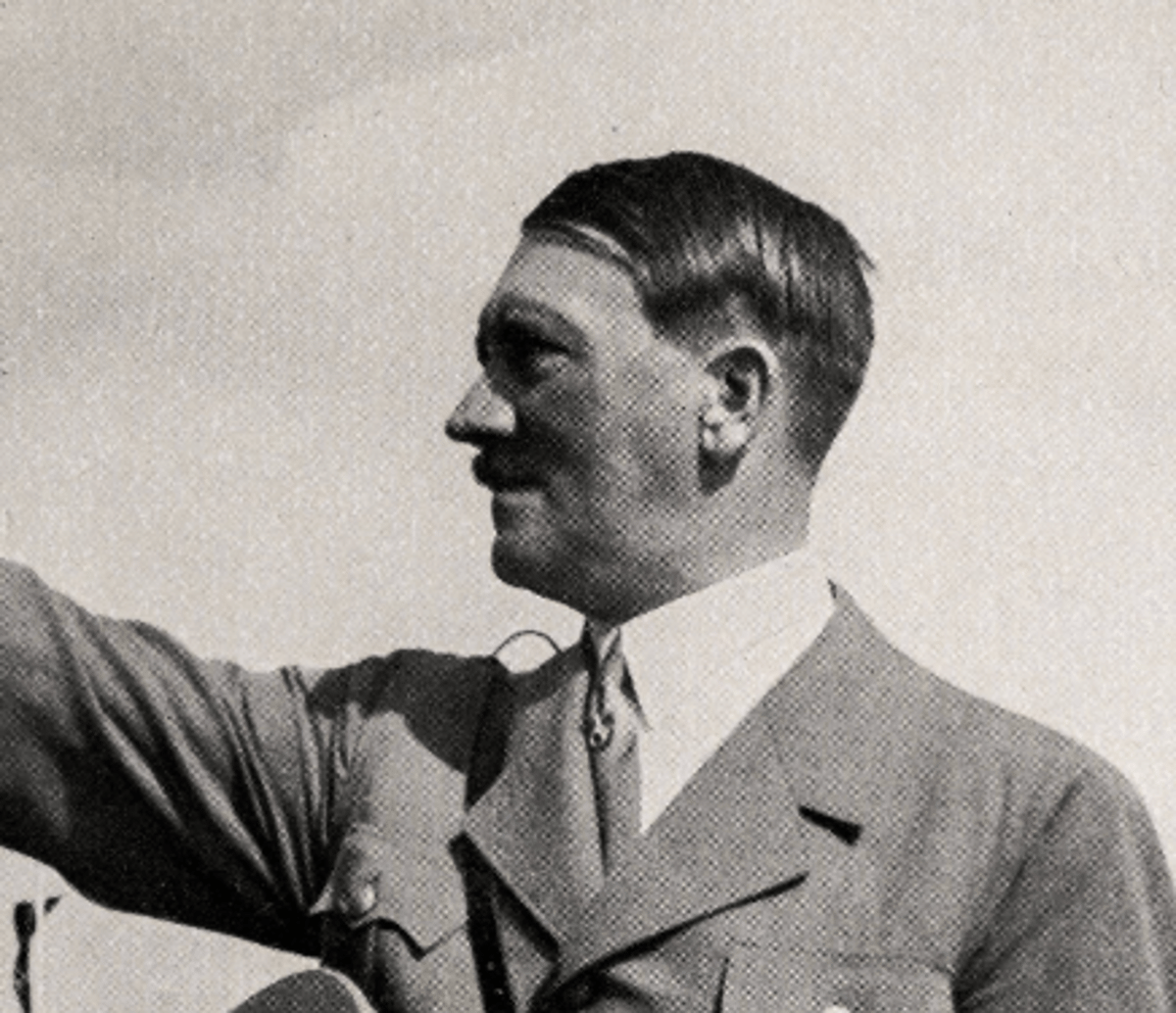
On this day in 1944, German army colonel Claus von Stauffenberg planted a briefcase bomb at Adolf Hitler's Wolf's Lair headquarters in East Prussia in the most famous of the internal German attempts to assassinate the Nazi leader. The bomb detonated during a military briefing, killing a stenographer and three officers, but Hitler survived with only a perforated eardrum, singed trousers, and minor injuries, after an officer unwittingly moved the briefcase behind a heavy table leg moments before the blast.
Stauffenberg was the lead figure in a resistance network of Wehrmacht officers and civilian officials who had grown disillusioned with Hitler over the course of the war. Historians who study the plot note that the conspirators' motivations varied and remain debated to this day. Some, including Stauffenberg himself, had been deeply shaken by the brutality they witnessed toward civilians on the Eastern Front. Major General Henning von Tresckow, one of the plot's key architects, was said to be privately horrified by Nazi antisemitic policy going back to Kristallnacht. According to some historical accounts, reports reaching the conspirators in the summer of 1944 about the mass murder of as many as 450,000 Hungarian Jews at Auschwitz helped push some who had long hesitated on moral grounds to finally commit to the assassination attempt. Other conspirators were driven more by the conviction that Hitler's erratic leadership was leading Germany to catastrophic military defeat.
Believing the assassination had succeeded, Stauffenberg flew back to Berlin to launch Operation Valkyrie, the planned military coup meant to seize control of the government the moment Hitler was confirmed dead. When word reached Berlin that Hitler was alive, the uprising collapsed within hours. Stauffenberg was arrested and executed by firing squad that same night. The Gestapo's subsequent investigation triggered a sweeping purge, with an estimated 5,000 to 7,000 people arrested and roughly 200 executed, including senior Wehrmacht officers. Field Marshal Erwin Rommel, implicated in the plot, was forced to take poison rather than face public trial.
The July 20 plot remains one of the most studied acts of internal resistance to the Nazi regime, a reminder that opposition to Hitler existed even within the highest ranks of the German military, even as it came far too late to alter the course of the Holocaust already underway.