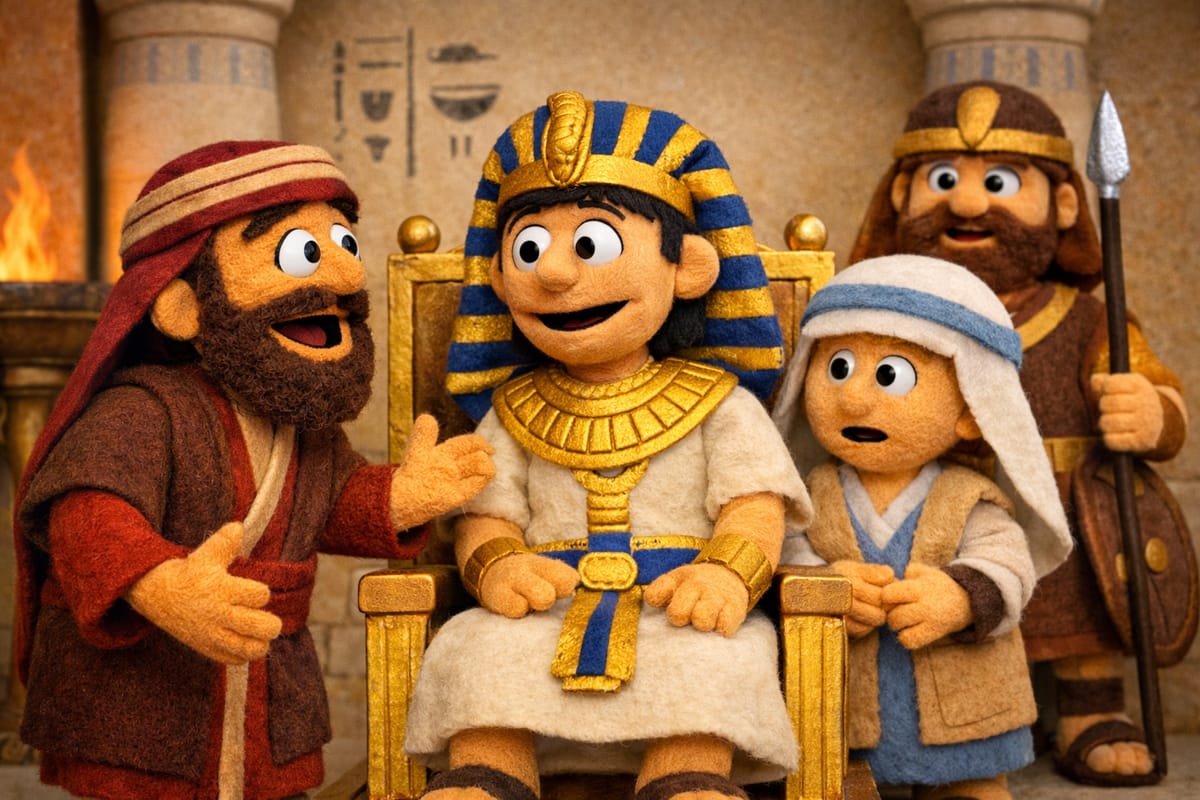
Vayigash opens with a small word that carries an uncomfortable amount of courage. Vayigash. Judah steps forward. Not thinks about stepping forward. Not drafts a position paper about it. He physically moves closer to power, danger, and consequences. This is the moment where moral clarity stops being theoretical and starts being expensive.
Judah stands before Yosef, the second most powerful man in Egypt, and argues for Binyamin. He does not know this is his brother. He only knows that this official can destroy his family with a word. Judah could have stayed quiet. He could have reasoned that Binyamin’s fate was unfortunate but necessary. He could have said, “We tried,” and gone home. Instead, he takes responsibility that he did not technically have to take. He offers himself as a slave. He risks everything. That is leadership, not the ceremonial kind with titles and applause, but the kind that costs something real.
What makes Judah’s stand so powerful is that he is not perfect. This is the same Judah who failed Tamar, who made choices that fractured his family, who participated in selling Yosef in the first place. Vayigash is not about a flawless hero finding his voice. It is about someone who learned, slowly and painfully, that silence is not neutral. Silence is a decision, and it usually favors whoever already has power.
Judah’s growth matters because it tells us something uncomfortable. You do not need to be pure to stand up for what is right. You need to be willing. Judaism does not wait for saints. It demands responsibility from flawed people who understand that doing nothing is sometimes the worst option available.
This parsha lands uncomfortably close to home. We live in a time where it is very easy to explain why now is not the right moment to speak up. The timing is bad. The situation is complicated. The risks are high. Judah knew all of that too. He stepped forward anyway.
Vayigash teaches that moral courage is rarely rewarded immediately. Judah does not know the ending when he speaks. He is not guaranteed success. He acts because it is right, not because it is safe. That is the standard the Torah sets. Not perfection. Not certainty. Just the refusal to stand back when standing forward is required.
Judah walks toward Yosef, and in doing so, toward his own better self. The Torah tells us that redemption often begins with one person deciding that this time, silence is not an option.