Massive public celebrations and coordinated propaganda campaigns have erupted across the Iranian capital, with state-aligned media outlets universally proclaiming a definitive deterrence validation following the sudden cancellation of scheduled Israeli air strikes in Beirut. High-profile conservative newspapers and state editors immediately seized on the tactical pause, framing the development as absolute proof that their strategic warnings can successfully dictate boundaries on the battlefield. The coordinated media push is designed to project regional dominance and reinforce the narrative that the regime retains total influence over the ongoing war in Lebanon.
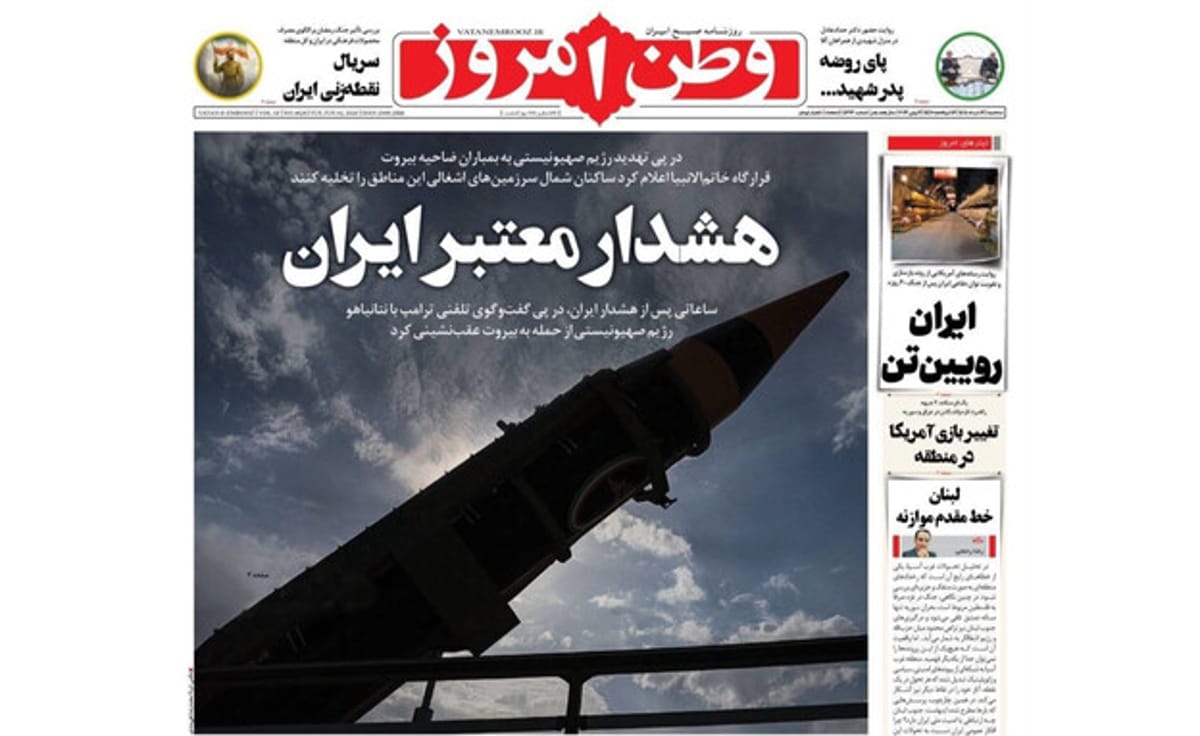
The prominent conservative publication Vatan Emrooz dedicated its entire front page to the development under a sweeping headline celebrating what it termed a highly credible and effective national warning. The editorial argued that explicit countermeasures issued by the armed forces command, which had ordered civilian evacuations throughout northern Israel, had successfully altered the decision-making matrix in Washington. According to their published narrative, the aggressive stance forced the American administration to intervene directly and command a total withdrawal from the planned offensive.
Simultaneously, the Hamshahri newspaper, a major media organ directly connected to the state framework, published leading articles asserting that the national threat had thoroughly proven its real-world utility. The publication featured large graphics displaying intertwined national and paramilitary flags alongside advanced long-range ballistic missiles to emphasize their deep commitment to protecting their regional proxies. Editorial boards insisted that the rapid intervention by the White House arrived as a direct consequence of the immense strategic anxiety generated by their military posture.
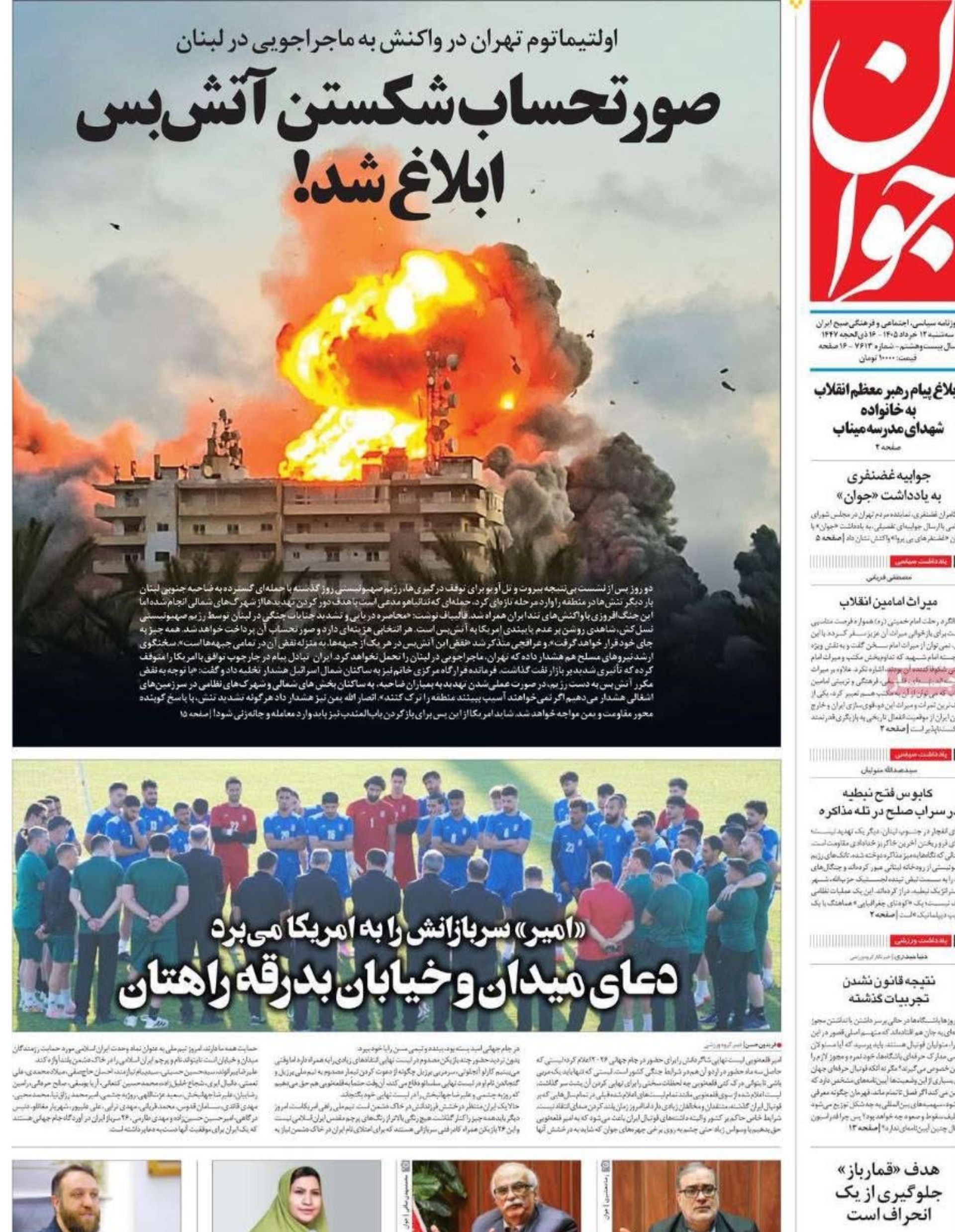
Further reinforcing the propaganda campaign, the Javan newspaper, which maintains direct ties to the Islamic Revolutionary Guard Corps, published bold declarations asserting that the bill for violating the standing ceasefires had been officially delivered. The outlet characterized their recent security ultimatums as a direct, necessary response to foreign adventurousness along the border. The central message across all platforms remained entirely consistent, telling domestic audiences that physical military pressure is the only viable method to restrain adversarial operations.
The editor-in-chief of the prominent state mouthpiece Kayhan took the rhetoric even further, publishing detailed commentaries mocking the relationship between the United States and its regional allies. The editorial argued that the sudden suspension of the air campaign proves the two nations function as a single, inseparable entity, claiming that Washington had effectively pulled back its wild proxy following the explicit warnings from Tehran. While defense analysts view the media blitz as a standard psychological operation, the intense focus on this deterrence validation highlights the regime's desire to claim a major strategic victory amid ongoing regional volatility.