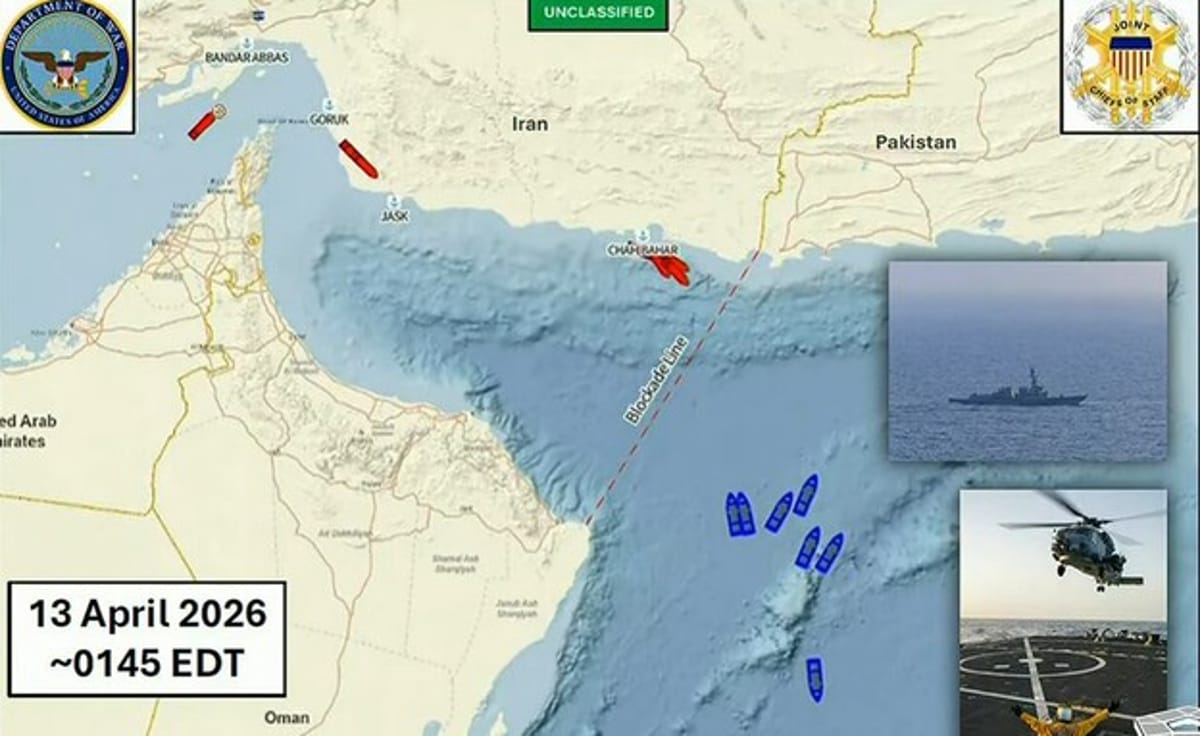
President Donald Trump concluded a critical session in the White House Situation Room on Monday evening, seeking a breakthrough in the ongoing war with Iran. As the U.S. naval blockade of Iranian ports approaches its second week, the administration faces mounting pressure to determine its next move. With global oil prices continuing to rise and political clocks ticking, Washington is now reviewing a proposal from Tehran that suggests deferring the contentious nuclear issue to first address the removal of the maritime encirclement.
The situation in the Persian Gulf remains intense as both nations engage in an economic war of attrition. While a formal ceasefire is in place, the maritime blockade continues to serve as a primary tool of U.S. pressure, aiming to cripple Iranian oil revenue. According to research from the FDD, the blockade is estimated to cost Iran approximately 435 million dollars per day, totaling nearly 13 billion dollars monthly. Because approximately 90 percent of Iranian maritime trade relies on the Persian Gulf, the regime is struggling to find alternative routes, and some experts suggest that the lack of storage space could lead to long-term damage to Iranian oil fields if the blockade is not lifted soon.
Inside the administration, the strategy remains a point of contention. Secretary of State Marco Rubio and CIA Director John Ratcliffe have advocated for maintaining the current course, believing that the economic strangulation will eventually force Tehran to capitulate. Conversely, figures such as Senator Lindsey Graham are urging the President to pivot back toward direct military strikes to decisively break the regime's resolve. The Iranians, meanwhile, are leveraging the global economic impact of the blockade, knowing that President Trump is sensitive to rising fuel prices and the broader inflationary pressure on the American consumer.
The complexity of the situation is compounded by the strategic importance of the Strait of Hormuz, where nearly 20 percent of global energy supplies typically pass. With current oil prices hovering around 107 dollars per barrel, the economic strain is beginning to weigh on American voters. Furthermore, the President faces a political deadline, as some Republican lawmakers have suggested they may withdraw support for continued military operations after May 1, placing the administration under the pressure of an unofficial 60-day clock. As both sides wait for the other to yield, the reality remains that for Tehran, the cost of the blockade is high, but the willingness to abandon its long-term strategic goals remains low, leaving the President with the difficult choice of either escalating military engagement or finding a face saving diplomatic exit.