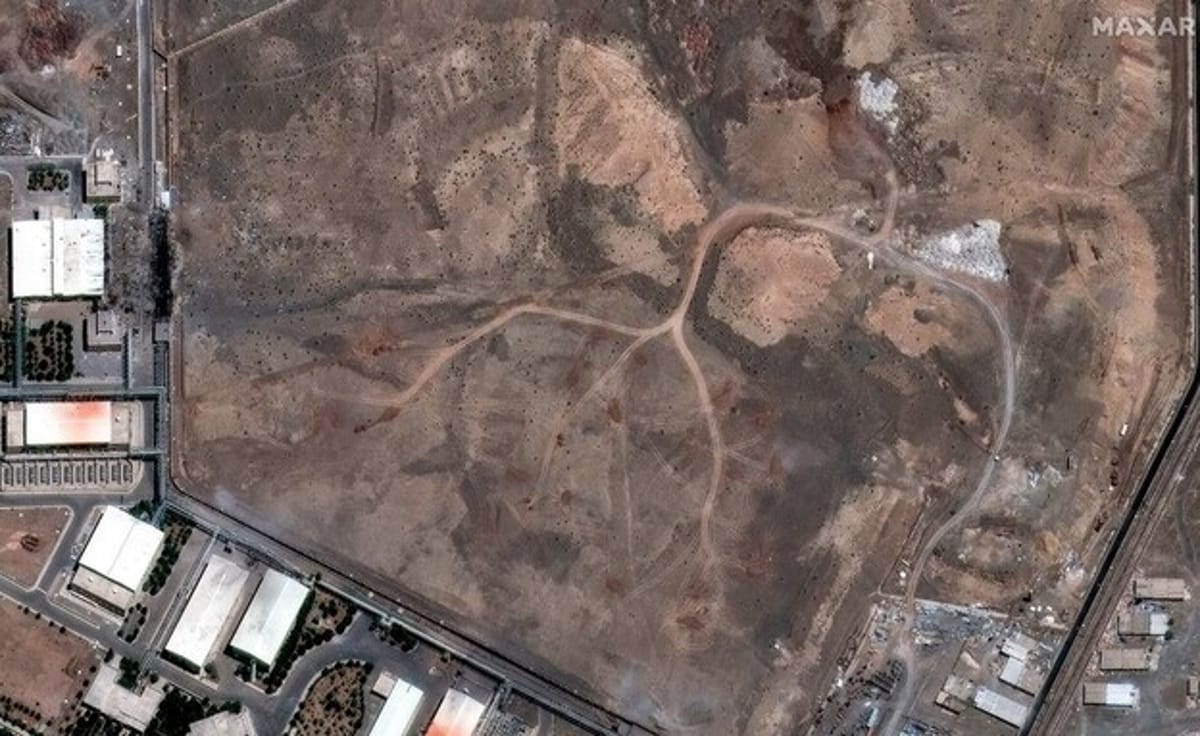
A new report suggests that the Iranian regime has emerged from weeks of intense American and Israeli air strikes with its nuclear program largely intact. While precision bombings successfully destroyed various research laboratories, missile arrays, and "yellowcake" production facilities, experts believe that Tehran has successfully hidden its most critical assets. According to data from the Wall Street Journal and international monitors, Iran maintains a stockpile of approximately 440 kilograms of uranium enriched to 60%, a level that is dangerously close to weapons grade. This survival of core nuclear capabilities provides the regime with a powerful bargaining chip as it enters high stakes negotiations in Pakistan.
The Fortified Nuclear Shield
A central concern for Western intelligence is the location of the enriched material. Approximately half of the 60% enriched uranium was reportedly moved into specialized containers and hidden deep within a tunnel network beneath the Isfahan nuclear site. Furthermore, while US Tomahawk missiles and Israeli strikes hit surface structures at Natanz and Fordow during the previous war in June, Iran’s most advanced centrifuges remain operational in deep underground bunkers. One such site, known as "Pickaxe Mountain" near Natanz, is built so deep into the rock that it is believed to be immune to even the most powerful bunker busting munitions in the American arsenal.
The survival of these components has direct implications for the current diplomatic standoff. US Vice President J.D. Vance noted that previous talks collapsed because Tehran refused to commit to a total cessation of enrichment or the dismantling of its core facilities. In recent discussions, Iranian officials have signaled a willingness to dilute some of their 60% stockpile to 20%, but they remain adamant about maintaining their "nuclear rights." As hardline elements within the Revolutionary Guard call for the formal development of a nuclear deterrent, the presence of these hidden stockpiles suggests that the regime is far closer to a breakout than previously hoped. The challenge for the West remains the "bottleneck" of warhead assembly, a complex process that Israel attempted to disrupt by targeting metal conversion facilities, but the core fuel for a bomb remains under the regime's control.