In an unprecedented on-camera interview, a Mossad operative who worked undercover in Iran during the brief but intense Israel-Iran war in June 2025 described his role in a high-stakes nighttime mission to neutralize a ballistic missile threat. The agent, using the alias Arash, sat down with journalist Ilana Dayan for the investigative program "Uvda" in autumn 2025 at a secure, remote location.
Arash, now around 40, was born and raised in Iran, served in its military, and studied at university there. His turning point came at age 11 when his sister failed to return home one night after removing her hijab, leading to her arrest and beating by regime forces. The family eventually secured her release and fled to the West, but the trauma left a permanent mark. As he grew older, Arash concluded he could achieve nothing against the regime without external help. At 30, he made the life-altering decision to contact the Mossad online.
He recalled the moment he opened the contact page. I opened the page to send a message, and at that exact second I wanted to send it, it was a very difficult decision for me. Asked if he understood he was crossing lines and committing to Israel's side, he replied, I crossed the lines. When the interviewer referred to Iran as his country and Israel as its enemy number one, he corrected her sharply. Wait, wait, stop. When you say Iran you are talking about my country, my people, not the regime. It is not the enemy of my country, it is the enemy of my enemy, it can be my friend.
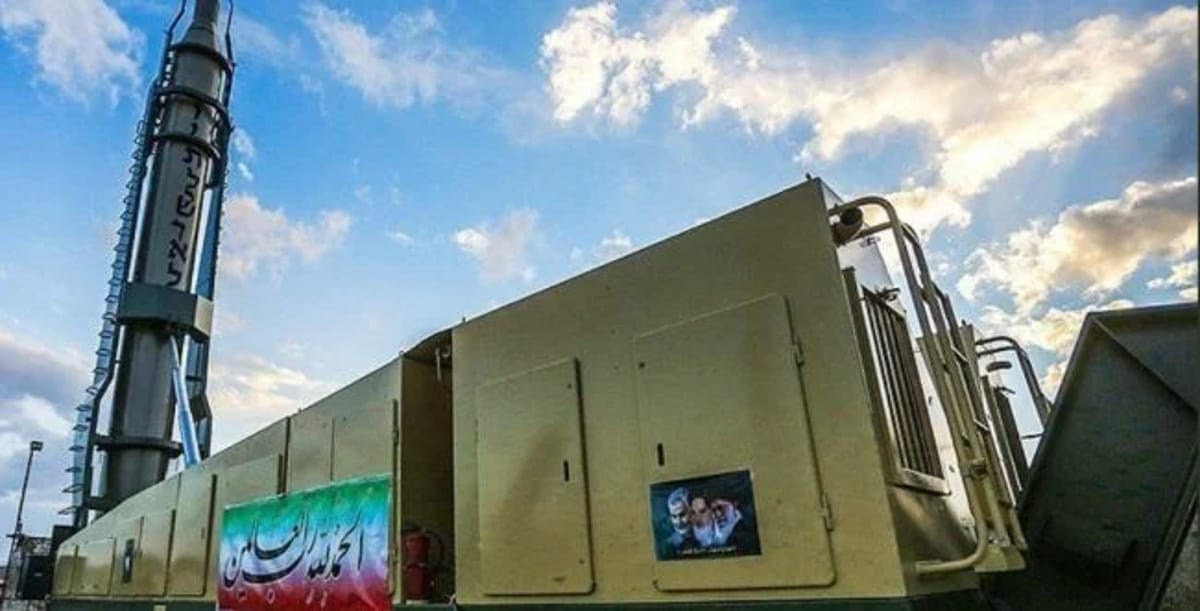
Arash described his initial meeting with a Mossad handler, ongoing contact with controllers, and rigorous training that prepared him for the dangerous operation on the night of June 12-13, 2025. We were in the safe house, ready for movement. I knew there was a big mission, but I did not know how or when. After the afternoon they called us and said: Okay, get to the point. We were a group in the car with a launcher, with missiles. We had good camouflage, everything was perfect, no one could identify us.
The tense drive to the target and the long wait followed. Until I received the order to launch I had to wait more than two hours. It was awful, I was afraid of everything. Around 3 a.m. the command finally arrived. When we launched the missiles, because the missiles had cameras, I could see our target, it was a launcher ready to fire ballistic missiles at Israel, we destroyed it.
The operation formed part of a broader Israeli campaign that night, which included assassinations of nuclear scientists, elimination of senior figures, and destruction of air defense batteries. Yet the same night exposed a critical gap: Israel's inability to neutralize the heavily fortified Fordow enrichment facility, buried deep inside a mountain and considered the crown jewel of Iran's nuclear program. Former Mossad deputy director Udi Levi admitted, I thought Fordow was solved, I assumed it was solved, if you go to an event that is one of a kind in a generation.
The report detailed years of Israeli planning to address Fordow, including a breathtaking operation launched under then-Mossad chief Tamir Pardo that Netanyahu enthusiastically supported. Netanyahu reacted with enthusiasm to this operation, he flew on it, said former Mossad director Yossi Cohen. The project consumed massive resources in manpower and funding, carried a biblical code name with exotic appeal that fired imaginations but also bred skepticism among some officials. Asked if Netanyahu ever questioned the cost, manpower, and low odds of success, Pardo replied, If he had said so, it would have stopped that second.
Pardo acknowledged no alternative existed at the time. And did you never think maybe it is better to cut losses and stop the whole thing? And what is the alternative? There was no alternative at that moment. At that moment it was the only thing on the table, there was nothing else. The Mossad invested heavily for nearly three years until Cohen, upon taking over in early 2016, shelved it. I assessed it would not happen. In mid-2021, new director David Barnea revived and restarted the plan.
The Prime Minister's Office responded that contrary to claims, the prime minister led preparation of multiple plans to strike all components of Iran's nuclear program, including infrastructure and leading scientists. Regarding Fordow, over the years under the prime minister's direction attack plans were developed, some of which were not possible due to the events of October 7. Following that, the prime minister led strategic cooperation between Israel and the United States that resulted in severe damage to the facility.