A rocket fired by Hezbollah struck a Byzantine-era church site in Nahariya on Friday, damaging a modern protective structure built to preserve the ancient remains, Israeli authorities said.
According to the Israel Antiquities Authority, the projectile hit the site during a barrage launched from Lebanon, causing debris to fall onto the historic mosaic floor. Initial assessments found that while the protective covering sustained damage, the mosaic itself was not harmed.
Teams from the Antiquities Authority, along with local officials and representatives from the Israel Tax Authority, conducted an on-site inspection on Sunday to evaluate the impact. The agency said the mosaic had been covered by debris but remained intact.
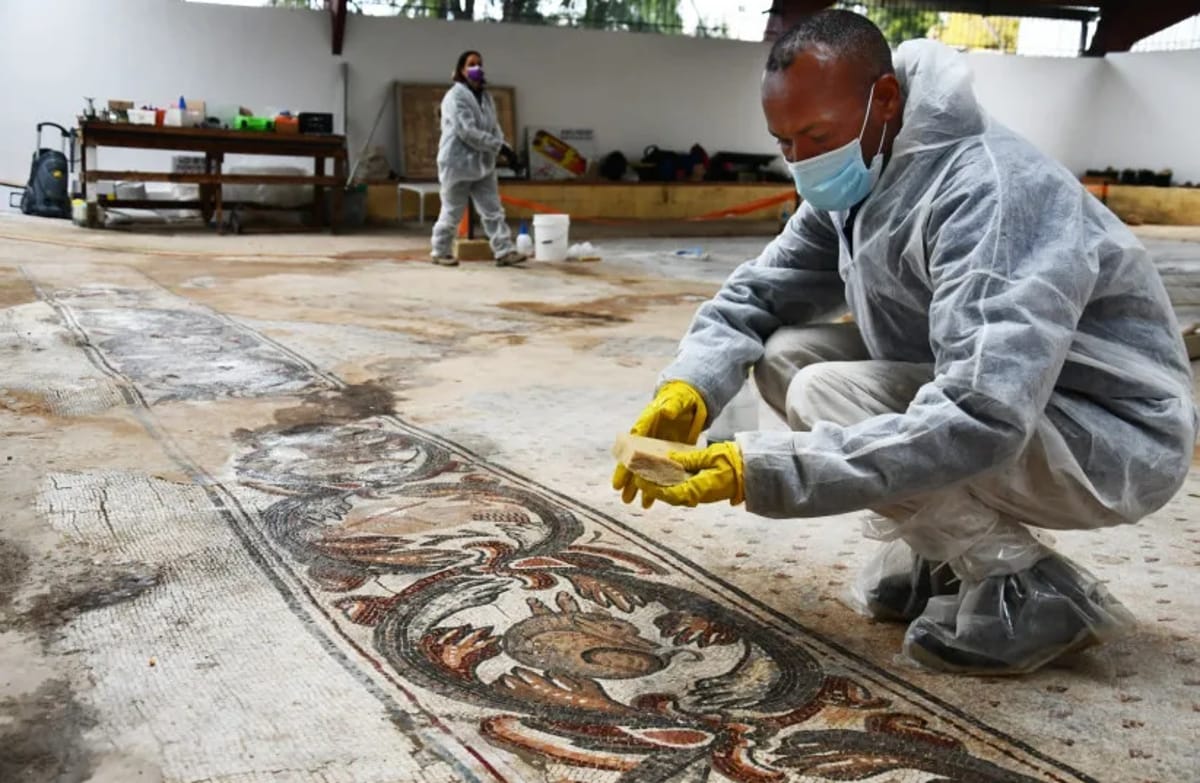
The site, first identified in 1964, contains the remains of a Byzantine church dating to around the 6th century CE. At its center is a large mosaic floor spanning more than 500 square meters, featuring detailed scenes of daily life, animals, agricultural motifs, and Christian symbols. The artwork includes more than 100 medallions, most of which have survived.
The church was originally destroyed in 614 CE during the Persian conquest of the region. Evidence of that destruction, including burn marks and traces of molten material, is still visible within the site.
In recent years, the mosaic underwent a two-year restoration process led by the Antiquities Authority and was opened to the public in 2022 under a protective structure designed to shield it from environmental and physical damage.
Archaeological findings at the site indicate the church was likely commissioned by a wealthy patron, possibly linked to ecclesiastical leadership in the region, based on inscriptions found in ancient Greek.
The complex itself was built atop an even older settlement layer, with remains dating back approximately 4,500 years, highlighting the area’s long history of continuous habitation.
Officials said further assessments would determine whether additional conservation work is needed following the strike.