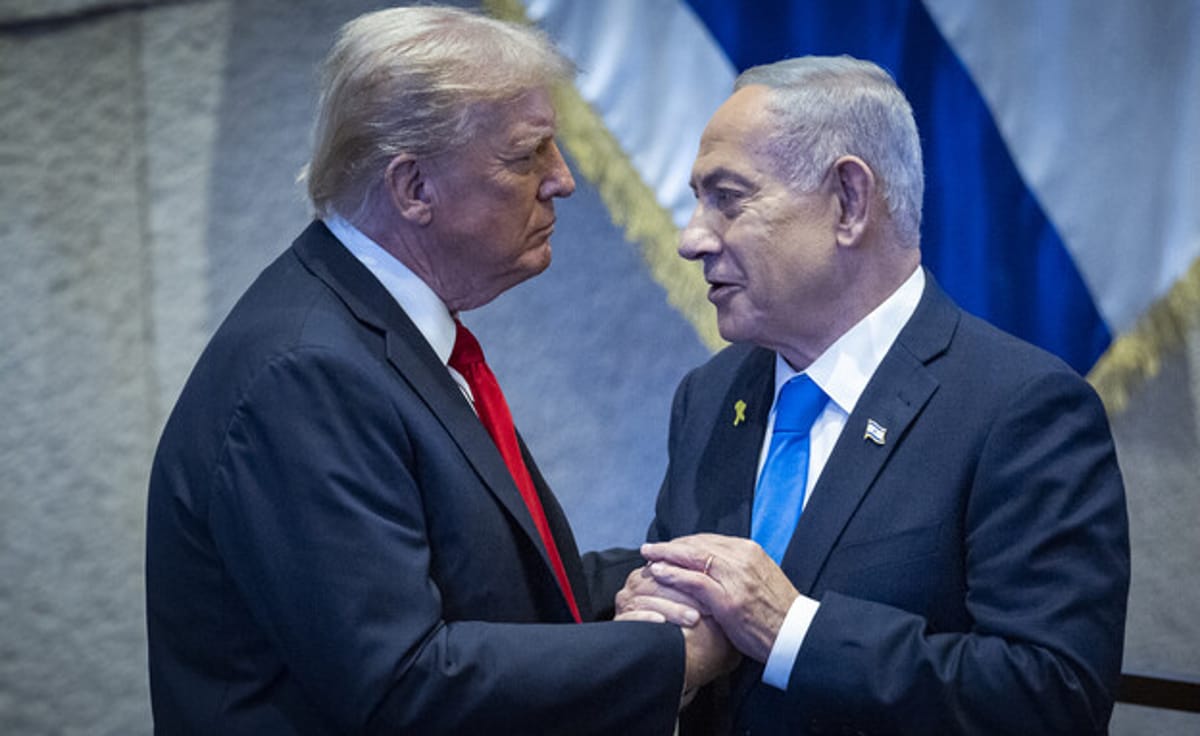
The Iranian regime is currently navigating a period of unprecedented distress following devastating military blows from both Israel and the United States. While the Iranian nuclear program has suffered massive setbacks, Tehran is now doubling down on its ballistic missile project as a primary means of survival and aggression. Recent military exercises involving missile launches have prompted Prime Minister Netanyahu to issue a stern warning that Israel will respond forcefully to any Iranian action. Reports suggest that in his upcoming meeting with President Trump, Netanyahu plans to present a detailed operational plan to dismantle the Iranian missile array and request full American support for the move.
Despite its outward show of strength, the Iranian leadership is grappling with deep strategic and economic crises. The regional proxy network, including Hamas, Hezbollah, and various Iraqi groups, is fighting for its very existence under intense pressure to disarm. Domestically, the Iranian public faces severe water and electricity shortages, a rapidly devaluing currency, and a failing digital currency market. However, the regime maintains a vital lifeline through China, which continues to purchase nearly all of Iran's oil exports, providing roughly $35 billion in annual revenue. This capital allows Supreme Leader Khamenei to keep the regime afloat while rebuilding the missile infrastructure that he views as a necessary substitute for his weakened nuclear ambitions.
An intense internal debate is now raging between pragmatists and conservatives within the Iranian leadership. While pragmatists argue for flexibility to ease Western sanctions, the Revolutionary Guard remains committed to projecting power and escalating threats to maintain legitimacy. This internal friction increases the likelihood of a new war, as Israel’s updated security doctrine focuses on preventing the development of threats rather than merely containing them. Both Israel and the U.S. have crossed the psychological barrier of striking directly within Iranian territory, realizing that the repercussions are manageable compared to the risk of a fully armed Iran.
Israel now faces a difficult dilemma, should it strike now while the Iranian axis is at a historic low, or wait for the diplomatic and military cover of the Trump administration? The arguments for an immediate strike are compelling, as delaying allows Iran to improve its air defenses and mass produce missiles that are explicitly aimed at Israeli cities. Furthermore, a strike now could act as a trigger to destabilize an already fragile regime. On the other hand, a preemptive strike without a clear American green light is risky, especially as Washington currently prefers economic pressure over renewed active warfare. Additionally, the IDF is still focused on the urgent tasks of fully disarming Hamas and Hezbollah. Ultimately, many experts believe that waiting too long will make the eventual price of action far higher, making the decision at Mar-a-Lago a potential turning point for the entire Middle East.