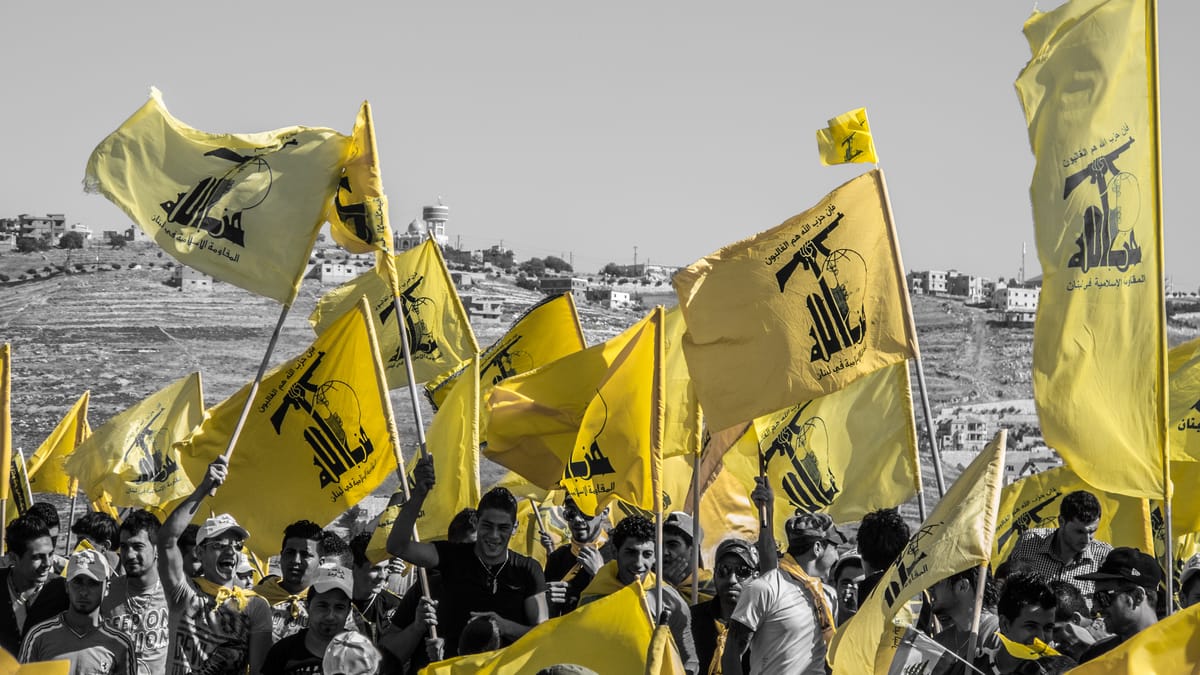
In a rare and revealing phone interview conducted near the ruins of a Hezbollah-controlled village in southern Lebanon, a self-described armed fighter from the organization's combat ranks spoke openly to Channel 12.
Standing just dozens of meters from the caller's destroyed home, now part of a landscape of devastation, the conversation highlighted the profound shifts in Hezbollah's dynamics with Israel. This fighter, one of an estimated 50,000 armed members, attributed his willingness to speak to the "tectonic change" brought by the recent war and the looming fear of renewed conflict. In the Middle East, he noted, perception often rivals reality in importance. His words paint a picture of an organization that once dictated terms through calculated retaliation but now grapples with existential challenges, including a sense of total exposure to Israeli intelligence.
The Old Playbook: Nasrallah's "Equations" and Proportional Responses
For decades, Hezbollah's approach to Israel was defined by a system of "equations" pioneered by its late leader, Hassan Nasrallah, dating back to the 1990s. This strategy was built on the principle that every Israeli action would incur a precise, proportional cost. "You show on us, we will show you like that," as the fighter described it. If Israel launched airstrikes or incursions, Hezbollah would respond in kind, perhaps with rockets or targeted attacks. Explosive drones from Israel might be met with rocket barrages from Lebanon.This tit-for-tat method allowed Hezbollah to maintain deterrence while avoiding all-out war. The group, armed with an arsenal once estimated at 160,000 missiles and rockets, a force of tens of thousands, massive budgets, and elite units like the Radwan force, positioned itself as a formidable Shiite terror organization. Israel, deterred by the potential costs, often operated with restraint in Lebanon.
Nasrallah's equations gradually escalated over time, but they held until recent events shattered the framework. As the fighter explained, Nasrallah "did not understand that the rules of the game have changed," leading to the collapse of this balanced retaliation model.
In contrast to groups like Hamas, which the fighter described as more impulsive, launching attacks without long-term calculation, Hezbollah prided itself on strategic patience. "This is an organization that looks l[towards the] long-term," he said. Even now, the group absorbs hits to prepare for future phases, viewing a difficult year as a necessary sacrifice rather than an existential defeat.
Mounting Crises: Displacement, Corruption, and Rehabilitation Struggles
Today, Hezbollah faces a deepening crisis that extends beyond its confrontations with Israel to internal fractures among its people, activists, and Shiite power base. Despite remaining the "exclusive sovereign" in southern Lebanon, where the Lebanese state is notably absent, the organization is reeling from the war's aftermath. Approximately 100,000 Shiites remain displaced, with 90,000 from the south alone, many exiled northward to Beirut.
Internal criticism is rife, targeting the leadership for failing to manage the displaced crisis and for "failed economic management, sometimes even corrupt." Compensation for destroyed homes and losses has been inconsistent and delayed. The fighter explained that promises of rebuilding (such as $30,000 per affected family) have not materialized. There are no proper offices, orders, or systems in place, leaving families in limbo. Even memorials and support for the wounded are not always provided fully or on time.
Financial woes compound the issues. Iran, Hezbollah's primary backer, is in discussions regarding sending money to Hezbollah, but economic restrictions on Lebanese banks have forced them to rely rely on alternative methods. Funds now flow through couriers, often via Turkey with suitcases of cash, some of which have been intercepted, cryptocurrencies, and money exchangers.
The absence of Nasrallah, "the most important leader in the Shiite axis," is acutely felt. His successor, Naim Qassem, is dismissed as a "pale shadow" who "does not come close [to Narsallah and cannot] fill the vacuum." Internal debates rage between lower ranks, the fighters on the ground, who reject Qassem's authority and demand action, frustrated by constant absorption of blows. "We cannot [absorb blows from israel] all the time," they argue, warning that the hits are a disaster for the operatives' morale. Anger simmers at the leadership for entering the war, risking civil strife.
Rebuilding military capabilities is equally fraught. Producing and hiding missiles and rockets has become "much harder," especially within civilian populations, a tactic now challenged by heightened scrutiny. Fighters struggle to rent apartments in the south, as landlords fear their properties becoming targets for the Israeli Air Force.
Supply routes from Tehran to Beirut have narrowed dramatically: The Damascus international airport axis is closed due to Assad regime activities, direct flights from Iran to Lebanon are nonexistent, and IDF forces in the Hermon area have made interceptions.
Hezbollah counters by exploiting a legal loophole: Lebanese law prohibits the army from entering private areas, so activists are moving ammunition and rockets into such spaces in southern villages.
Adding to the pressure, public discourse in Lebanon has shifted. Demands to disarm Hezbollah, once whispered out of fear of "the real boss of Lebanon," are now voiced openly. "What was whispered in the past quietly... is said [lout loud] today," with calls for one state, one army, and one weapon.
The fighter viewed disarming as an "existential threat." He predicted fierce resistance if Lebanon tries to diarm Hezbollah, implying the group would fight back, potentially dragging Lebanon into civil war.
Intelligence Penetration: A Feeling of Total Transparency
The war has exposed Hezbollah to unprecedented Israeli intelligence prowess. After the "blindness" of October 7, the IDF and Mossad have demonstrated "exceptional intelligence capabilities" in Lebanon, making the other side feel "completely threatened, completely transparent." The fighter described a sense of vulnerability: Israeli forces know positions, movements, and plans, with children even warning of surveillance reaching everywhere.
This transparency stems from deep infiltration. Over the past year, Israel has eliminated around 400 terror activists attempting to rehabilitate operations in southern Lebanon, including high-profile figures like Mohammad Reza Zahedi (referred to as Tabatabai in the transcript), dubbed the "chief of staff" of Hezbollah's array. Such precision strikes suggest extensive human intelligence networks.
While the exact number of Hezbollah operatives doubling as informants for Israel's Shin Bet is not specified in the interview, the fighter's candidness, unusual for a combat member, underscores the erosion of internal security. His decision to speak, driven by war's changes and fear of renewal, hints at broader disillusionment.
As Lebanon teeters, with its government poised to declare the area south of the Litani "clean" next month, a claim Israel disputes, the clock ticks toward possible escalation. Hezbollah, once a master of deterrence, now absorbs Israeli strikes in a bid for long-term survival, but the cracks are widening.