
New IDF Policy Shift Triggers Reservist Family Backlash
Opposition is hardening around the decision to replace the long-standing week-on, week-off model with a rigid 10–4 schedule. What the army presents as an efficiency measure is described by reservists and their families as a breaking point.

As the IDF moves toward implementing a new reserve duty framework in 2026, opposition is hardening around the decision to replace the long-standing week-on, week-off model with a rigid 10–4 schedule. What the army presents as an efficiency measure is increasingly being described by reservists and their families as a breaking point.
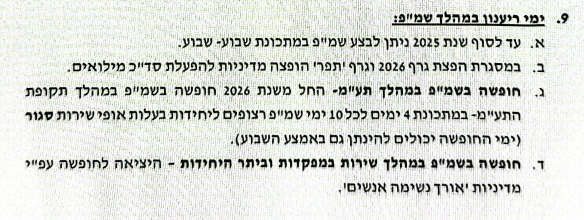
Under the new system, reservists will serve ten consecutive days of operational duty followed by four days at home. The change is part of a broader effort to cut reserve usage by roughly a third next year, driven by budget agreements between the Finance and Defense ministries and by concerns over misuse of reserve days. On paper, the model promises predictability. On the ground, many say it delivers longer absences with little real relief.
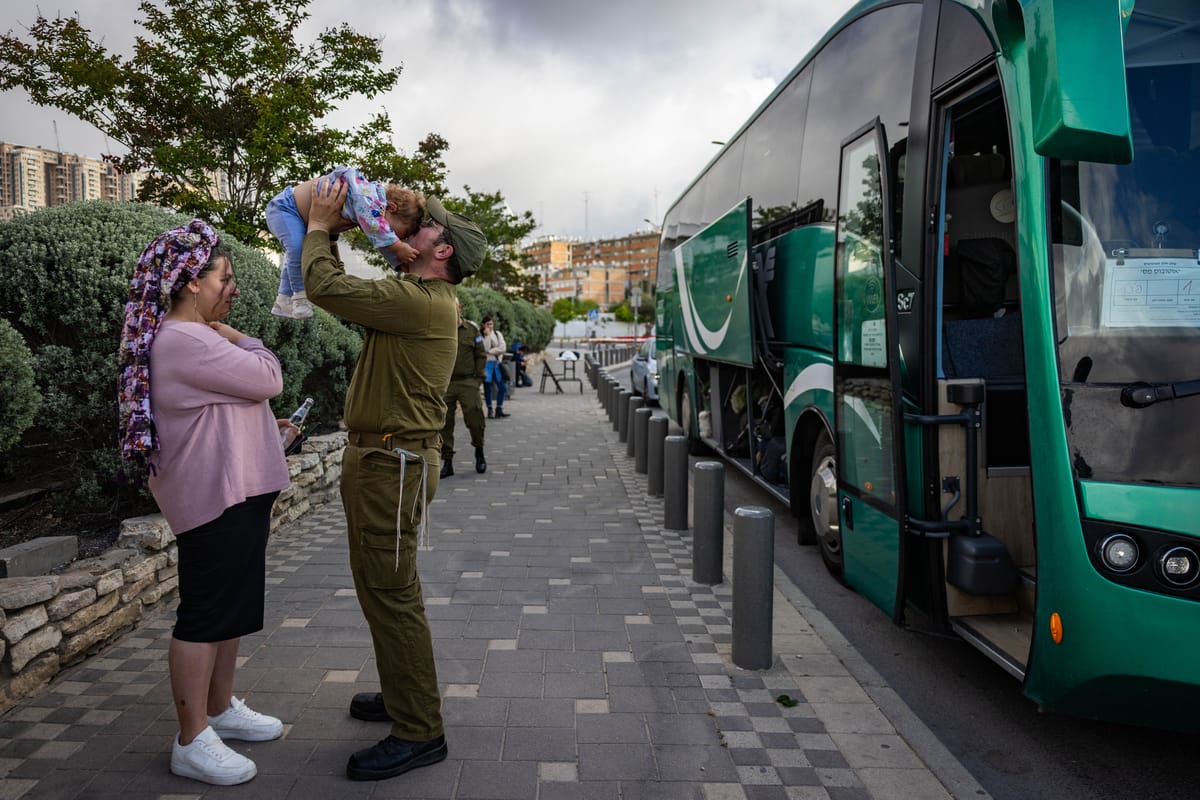
Na’amah, whose husband is expected to be called up just as she gives birth, described the gap between theory and reality. “The new arrangement does give some certainty about when we’ll see our husbands,” she said, “but in practice, we’ll barely see them during these periods.” For families juggling work, childcare, and major life events, ten uninterrupted days alone can be overwhelming, while the four days at home are often swallowed by exhaustion and preparation for the next call-up.
Reservists themselves are voicing growing resentment. Moshe, a reservist with repeated deployments behind him, put it plainly: “If they really cared about reservists, they wouldn’t be making this move.” Others warn that the policy risks hollowing out units altogether.

One anonymous reservist scheduled to be called up in the coming month was even more direct. “There won’t be people for the battalion if we do 10–4,” he said. His concern reflects a fear that extended absences will push already-stretched reservists and their families past the point of sustainability, leading to burnout, attrition, or quiet disengagement.
That fear is reinforced by a deeper sense of exploitation voiced by another anonymous reservist. “We will come to reserve duty because we were raised to believe the state needs us. We say ‘hineni’ and we don’t ask questions,” he said. “Unfortunately, it looks like the state is exploiting us, and because it knows we will show up no matter what, it saves money on our backs. That’s the truth, and it hurts very much.”
What makes these statements particularly striking is that they are not accompanied by threats of refusal. Reservists repeatedly emphasize that they will continue to report for duty. The anger is not about serving, but about the feeling that loyalty is being treated as an unlimited resource.
Under the previous week-on, week-off model, families could at least establish a rhythm. Parents could share responsibility, reservists could recover, and households could function in cycles. The 10–4 framework concentrates absence into longer stretches and compresses recovery into a narrow window, leaving families in a near-constant state of disruption.
The IDF says the change is necessary to improve operational continuity and align reserve service with fiscal reality, and that it is acting under political directives. Reservists and their families do not dispute the need for reform. What they dispute is a reform that, in their view, ignores the human infrastructure that makes reserve service possible at all.
As implementation approaches, the warning from the ranks is becoming clearer: efficiency that erodes families may ultimately erode readiness as well. And if battalions start to feel that erosion, the cost of the 10–4 model may be measured not just in morale, but in manpower.