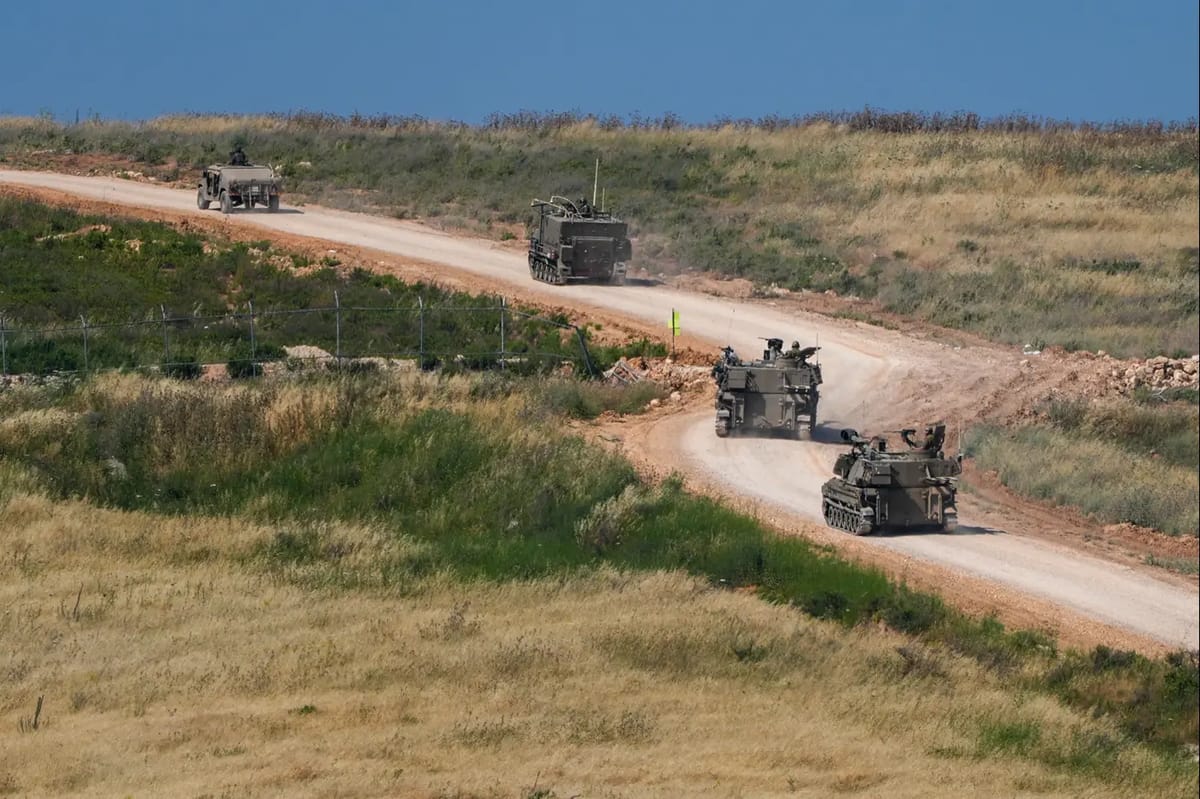

The defense establishment has launched a fundamental transformation of its northern protective doctrine, shifting away from standard border line maintenance toward the active creation of a permanent forward security matrix established entirely within enemy territory. According to high-level operational frameworks developed by the Minister of Defense, the current military maneuver across southern Lebanon relies strictly on the total absence of civilian populations within the captured border villages and towns. This structural vacancy provides frontline combat units with complete operational freedom to locate, engage, and permanently eliminate the entrenched assets of Hezbollah without the strategic complications of urban humanitarian constraints.
The emerging operational layout differs fundamentally from the historical security zone maintained by the armed forces prior to the complete withdrawal completed in the year 2000. In the previous iteration, local towns remained populated by civilian residents, whereas the current paradigm treats the entire zone as a sterile military sector that is being comprehensively cleared of hidden tunnel networks, combat personnel, and stored munitions. Senior defense officials stated that iconic border strongholds like Bint Jbeil and Qantara have been fundamentally altered, comparing their current state of structural clearance to the intensive operations previously conducted in Beit Hanoun.
At present, combat engineering battalions are actively processing and clearing more than sixty distinct towns and villages scattered across the rugged terrain of southern Lebanon, a sweeping initiative that now includes sections of Tyre that have emptied completely of their civilian population. A primary focal point of the current push is the permanent capture and fortification of the strategic Ali al-Tahar ridge, which reaches its highest geographical elevation at the historic Beaufort Castle. Securing this elevated terrain grants the military total visual and kinetic dominance over the entire low-lying basin, effectively stripping Hezbollah of its critical observation posts used to direct direct-fire anti-tank missiles and rocket barrages toward northern Israeli communities.
Beyond denying the enemy crucial high-elevation observation assets, the continuous physical deployment on the mountain ridges provides an optimal platform to intercept and disrupt logistics channels running from Syria into Lebanon. Field commanders reported that Hezbollah committed significant tactical reserves to block the military advance around the Beaufort ridge, and following their total failure to hold the high ground, the group began projecting its deep frustration by launching waves of standard rockets, attack drones, and smaller quadcopters toward frontline positions and home-front communities. Despite these continuous aerial irritants, defense planners emphasize that the incoming fire does not represent an existential threat to the state, though intense engineering efforts remain active to mitigate the tactical gap.
The broader overarching objective of the forward layout rests on three core pillars, beginning with the preservation of absolute operational flexibility to hit any emerging threat, followed by the permanent physical dismantling of the joint command posts and shared logistics hubs linking Iran directly to its regional proxy. However, strategic planners admit that a critical diplomatic vulnerability remains in the current architecture due to firm American opposition regarding any expanded kinetic maneuvers inside the capital of Beirut. Because of these external political constraints, the Operations Directorate of the General Staff is already mapping out an extended, year-long deployment graph that treats the current multi-theater footprint as a permanent baseline for the foreseeable future.