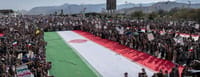
In the wake of Israel's historic decision to recognize Somaliland as an independent state, the first United Nations member to do so, a Turkish anti-Israel media outlet has released a detailed analysis outlining what it claims are Jerusalem's underlying motives.
Somaliland, a self-declared republic that broke away from Somalia in 1991 following a brutal civil war, has long sought international recognition but has been largely ignored by the global community to preserve Somalia's territorial integrity.
Israel's recognition marks a diplomatic breakthrough for the de facto state, which boasts relative stability, democratic elections, and control over its territory, including the strategic port of Berbera.
Netanyahu hailed the agreement as a step toward enhanced cooperation in security, technology, and agriculture, while Somaliland's Foreign Ministry expressed gratitude on social media, calling it a "milestone" in their quest for sovereignty.
However, the Turkish channel's breakdown, translated and shared by regional analyst Abu Ali, known for monitoring Arab and Turkish media, paints a more calculated picture.
The outlet, described as staunchly anti-Israel, alleges that Jerusalem's move is driven by these intelligence, military, and geopolitical imperatives amid escalating tensions in the Red Sea and broader Middle East.
1. Intelligence and Surveillance Advantages
The channel claims Somaliland serves as a "forward intelligence base" for Israel due to its proximity to Yemen and the Red Sea.
This positioning would allegedly allow Israel to monitor Houthi missile and drone activities – a pressing concern given the Iran-backed group's ongoing attacks on shipping lanes and Israeli targets.
Additionally, it highlights potential for tracking Iranian maritime operations, including arms smuggling, and establishing signals and electronic intelligence capabilities. Experts note that the Red Sea has become a flashpoint since the October 7, 2023, Hamas attacks on Israel, with Houthi disruptions affecting global trade.
2. Control Over the Red Sea and Bab al-Mandab Strait
A core focus of the analysis is Israel's purported aim to gain "direct observation" over the Bab al-Mandab Strait, a critical chokepoint for global commerce where up to 12% of world trade, including oil tankers, passes through.
The channel argues this would provide early warning against maritime threats and help monitor shipping routes. More provocatively, it suggests the recognition creates a "counterweight" to Egyptian and Saudi influence in the area, potentially shifting regional power dynamics.
Recent X posts from analysts echo this, with one thread labeling it a modern counter to historical efforts to block Israeli access to African shores.
3. Military and Logistical Access
Access to Somaliland's Berbera port is highlighted as a game-changer, offering Israel full naval and air deployment options.
The analysis points to rapid supply capabilities during crises and the establishment of military infrastructure, potentially supported by Gulf allies like the United Arab Emirates (UAE), which has invested heavily in Berbera.
This aligns with broader reports of UAE-Somaliland ties, including military training and port development, which could now extend to Israeli involvement.
4. Regional Geopolitics and Broader Implications
The Turkish outlet frames the recognition as part of Israel's diplomatic expansion in the Horn of Africa, building on the Abraham Accords that normalized ties with several Arab nations.
It accuses Israel of creating a "new regional axis" to counter Turkey's strategic presence in Somalia, where Ankara has a military base and provides aid, as well as hedging against Saudi and Egyptian influence.
Intriguingly, the analysis also claims the move could facilitate the transfer of Gazan refugees to Africa, though no evidence is provided, and Israeli officials have not commented on this allegation.
Reactions have been swift and sharp. Somalia's government demanded Israel retract the recognition, calling it "state aggression." Turkey labeled it an "unlawful intervention," while Qatar warned of a "dangerous precedent" that could encourage secessionist movements elsewhere.