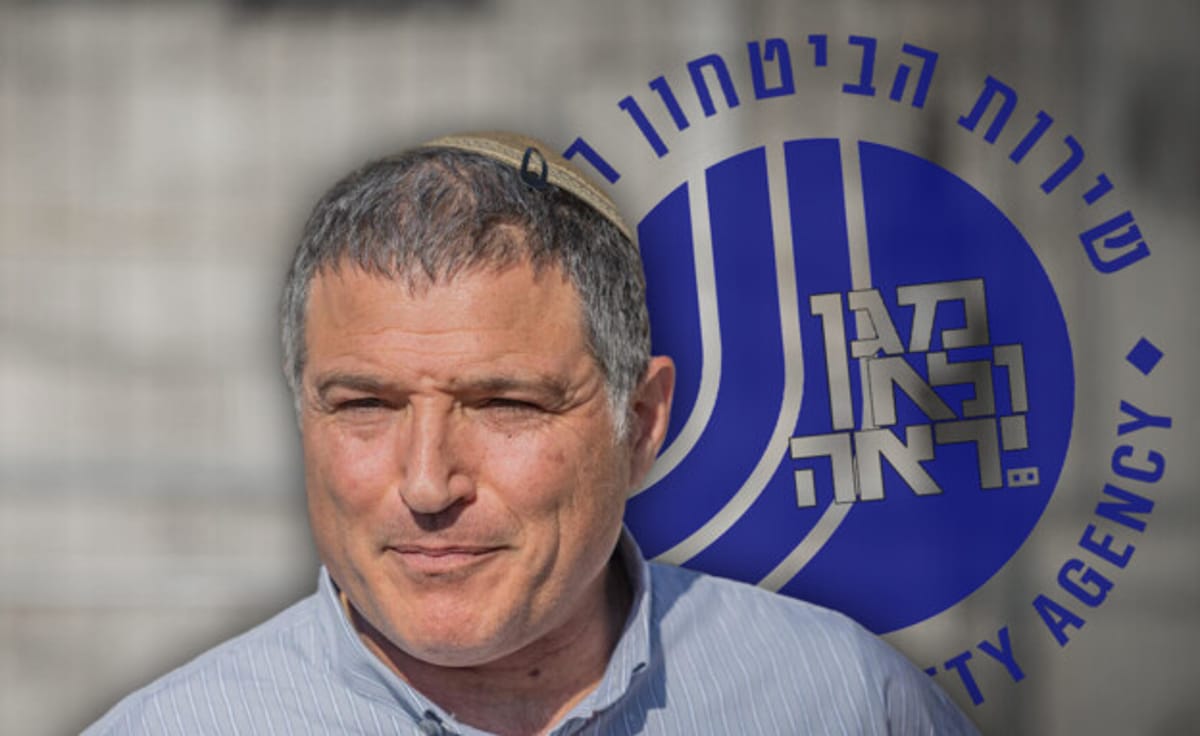
The Gronis Committee; the advisory body for senior appointments in Israel, has unanimously approved Prime Minister Benjamin Netanyahu's controversial nomination of Major General (Res.) David Zini as the next head of the Shin Bet (Israel Security Agency). The confirmation follows a deeply contested process, marked by strong opposition from former security chiefs and public petitions.
The committee's role is to vet candidates for the highest public service positions based on integrity and adherence to rules. Despite thousands of public objections, the committee concluded that Zini's acceptance of the nomination did not violate ethical guidelines, even confirming that an initial meeting with Netanyahu took place in a car.
However, the committee's decision included a stinging affirmation of a key concern raised by Zini’s opponents, including four former Shin Bet directors (Nadav Argaman, Ami Ayalon, Yoram Cohen, and Carmi Gilon), who had filed formal objections. The committee explicitly stated that evidence showed there have been "cases in which Netanyahu asked heads of the Shin Bet to carry out actions that are not appropriate in a democratic regime."
In its decision, the committee issued a clear expectation for the future director: "We expect that Major General Zini or any other person appointed, will know that his subordination to the Prime Minister and the government does not justify this." Zini, for his part, had previously denied claims that he told the Prime Minister his allegiance to the leader superseded the law, clarifying that while the Shin Bet Chief is subordinate to the Prime Minister, the Prime Minister is, in turn, subordinate to the law. "I am committed to the law," Zini stated unequivocally.
The scrutiny of Zini’s appointment was intense, focusing on his lack of relevant intelligence experience, his perceived political proximity to Netanyahu, and past statements expressing opposition to hostage exchange deals, which he described as a "war of eternity." Furthermore, critics pointed to the irregular process of his nomination, including the initial direct contact with Netanyahu which led to his dismissal from the military by the Chief of Staff, Lt. Gen. Eyal Zamir, for bypassing military hierarchy. Despite this history, Zamir offered Zini his congratulations and full cooperation, stating that Zini would bring his personal capabilities and combat experience to the role.
The Groonis Committee, chaired by former Supreme Court President Asher Grunis, stressed the critical importance of non-political affiliation for the head of the secretive agency, warning that without strict adherence to democratic norms, "the danger is greater because the activity could be carried out in secret." The committee affirmed that while it cannot evaluate professional suitability, Zini himself had "no integrity issue" preventing his appointment.
The formal approval now sends the nomination to the government for a procedural vote, but the legal battle is expected to continue at the Supreme Court (High Court of Justice). Legal sources anticipate that several public petitions will be filed, challenging the appointment based on "extreme unreasonableness" and potential conflicts of interest involving both Zini and Netanyahu. Despite this, the Attorney General, Gali Baharav-Miara, who did not recommend the committee disqualify the candidate, is expected to defend the appointment, signaling a high likelihood that the Supreme Court will ultimately refrain from overturning the committee's unanimous decision.