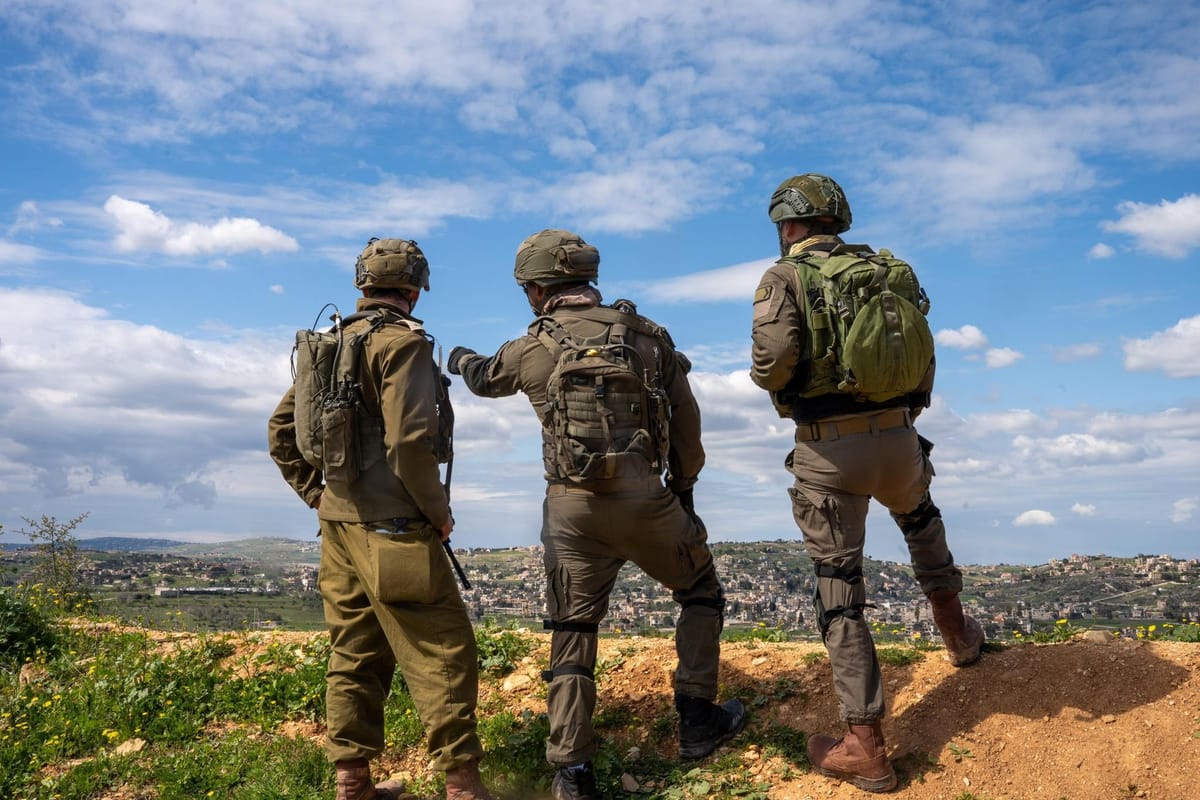
As the coalition hammers the Iranian heartland, the Israeli military is significantly expanding its ground operations in Southern Lebanon. The IDF announced on Tuesday that Divisions 91 and 36 are pushing deeper into Hezbollah territory as part of a "forward defense" operation designed to permanently dismantle the terrorist group's infrastructure. While the war in Iran is expected to last only a few more weeks, a report from the Financial Times suggests that Israeli security officials are preparing for a much longer campaign in Lebanon. The consensus in Jerusalem appears to be that the threat from Hezbollah must be completely uprooted, regardless of when a ceasefire is reached with their masters in Tehran.
Eliminating the Radwan Elite
The ground war has been marked by intense, close-quarters combat and surgical strikes. Recently, Israeli forces identified a gathering of commanders from Hezbollah’s elite Radwan Force inside a building in Southern Lebanon. The Air Force was called in immediately, leveling the structure and killing the senior officers along with destroying a nearby weapons depot. In separate incidents, the 769th Brigade identified and liquidated a Hezbollah terror cell shortly after they were spotted, while a tank from the 36th Division eliminated another group of terrorists as they attempted to enter a building near Israeli positions. These actions are part of a systematic effort to ensure that Hezbollah cannot regroup or rebuild its "first line" of defense.
"Punch in the Mouth": Iran's Defiance
Despite the catastrophic losses, the leadership in Tehran is maintaining a public face of absolute defiance. Mohammad Baqer Qalibaf, the Speaker of the Iranian Parliament, explicitly rejected any possibility of a ceasefire on Monday. "We are definitely not looking for a ceasefire," Qalibaf stated, adding that the "aggressor" must be given a "punch in the mouth" to learn a lesson. He criticized the Israeli strategy of "war-negotiation-ceasefire," vowing that Iran would break this cycle through continued violence. This rhetoric suggests that while the military capability of the regime is failing, the political leadership is not yet ready to admit defeat.
Deepening the Defense
The IDF remains focused on clearing the thousands of terror tunnels, observation posts, and missile launch sites that Hezbollah has spent 20 years constructing. Soldiers have recovered vast amounts of weaponry and propaganda materials, providing further evidence of the group's plans for a mass invasion of northern Israel. A military spokesperson emphasized that the IDF will continue to act to "prevent the intensification and rehabilitation of the Hezbollah terrorist organization." As the "Special Situation" on the Israeli home front is extended for another two weeks, the message from the military and the government is clear: the war against the northern proxy will not end until the security of the Galilee is guaranteed for generations to come.