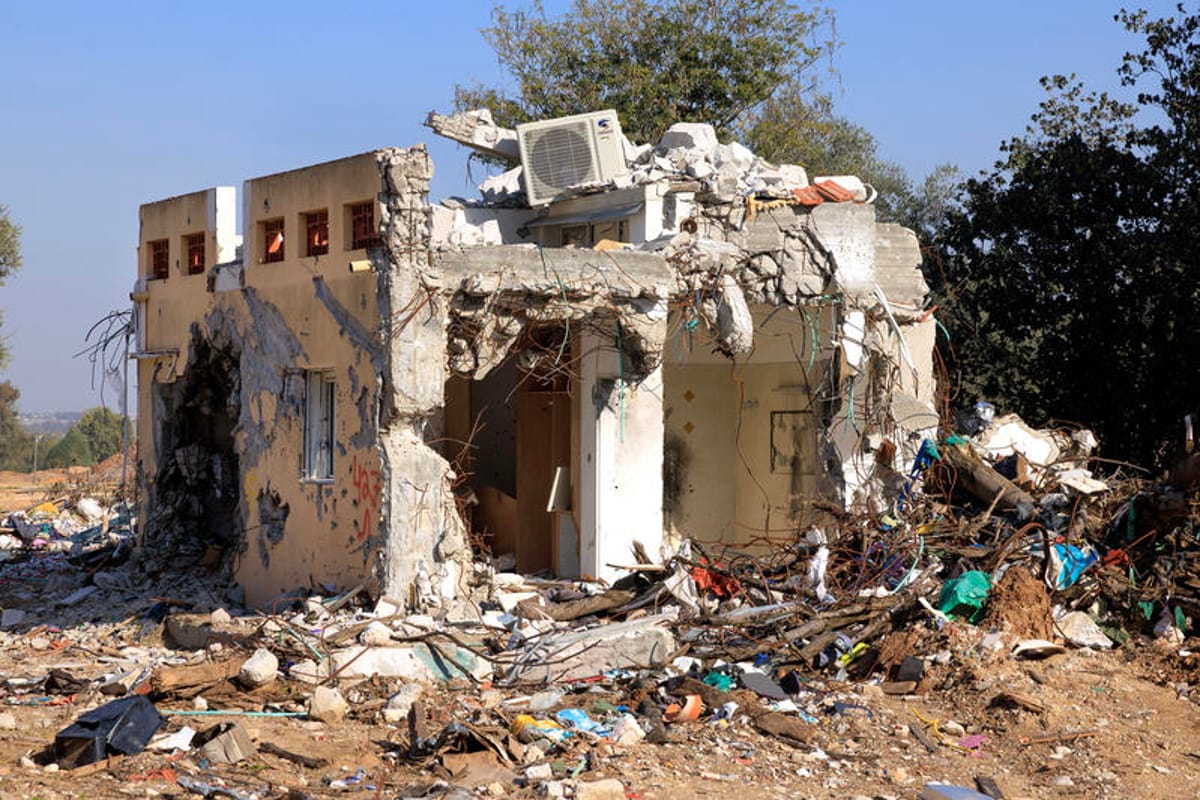
Simchas Torah 5785 is etched into public memory as one of the most shattering moments in the history of the Jewish people in their land. Beyond the terrible tragedy, the ongoing war, and the parallel prayers for the health of soldiers and the release of hostages, the breach and terror experienced on that awful day brought about a deep and structural change in the public and personal consciousness of every resident of Eretz Yisrael.
The basic innocence that was an inseparable part of the familiar fabric of life evaporated in an instant. In its place came a new alertness, not one that leads to paralyzing anxiety, but to a sober and responsible view of reality.
We have gathered six central phenomena that were born from the complex security situation and have since become an inseparable part of the way of life for the public in Israel:
1. Locking doors as a fixed habit
If in the not-so-distant past, locking the house was an action reserved for nighttime hours only, today it is an automatic action performed the moment one enters the door. The difficult scenes from Be'eri, Nir Oz, Ofakim and the southern communities, where the simple handle of the safe room or front door separated life from death, completely changed the attitude toward privacy and home security. Today, locking is not evidence of fear, but of taking the most basic hishtadlus to protect the household.
2. "What happens if I'm caught in a terror attack?"
Thought creates reality, and in this case, mental rehearsal creates preparedness. Many Israelis find themselves running through scenarios in their heads that never occurred in the past: "What will I do if a terrorist surprises me on the street?", "Where will we find shelter if we hear a siren right at the bend in the road?" This mental rehearsal, which was once the domain of security forces alone, has become a real tool for dealing with extreme situations and preventing panic in real time.
3. Scanning the terrain in public spaces
Walking innocently down the street, sitting at a bus stop, or entering a shopping center do not look as they once did. The Israeli eye has become sharper and more skilled: checking the location of the nearest protected space, identifying emergency exits, and directing attention to any suspicious movement or unidentified object. This alertness does not harm the routine of life, but provides an additional protective layer in the public domain.
4. Making the most of every family moment and bringing hearts closer
The understanding that life is a temporary deposit has gained renewed force. The sense of temporariness and hovering danger has sharpened for all of us the importance of shared hours with children, parents and extended family. Parents are more careful to hug, to listen and to be present, from a deep understanding of "who knows what a day will bring." Shabbosos and Yomim Tovim have taken on an even deeper meaning of connection, love and strengthening the family unit.
5. Emergency preparations and equipping the safe room
The safe room or home shelter has transformed from a side storage room to the beating heart of home preparedness. Storing water, dry food supplies, emergency lighting, battery-powered radio and portable chargers are no longer a recommendation from the Home Front Command, but a task completed in every home in Israel. Every family now understands the importance of functional independence for several days in case of escalation.
6. Coming to terms with disruption of routine
If in the past every change in the school or work schedule aroused complaints, today the public has discovered impressive mental flexibility. Event cancellations, distance learning and adapting work routine to the security situation are accepted with understanding and patience. The ability to adapt quickly to changes has become a vital trait that enables maintaining mental and public resilience.
In the end, physical alertness and vigilance do not come at the expense of simple and burning faith. Precisely through natural means and taking the measure of hishtadlus, the chareidi and Israeli public as a whole understands all the more the verse: "If Hashem does not guard the city, the watchman keeps vigil in vain." Physical preparedness and environmental awareness go hand in hand with increased tefillah, Torah learning and strengthening unity among us, the true tools that protect the Jewish people in every generation.