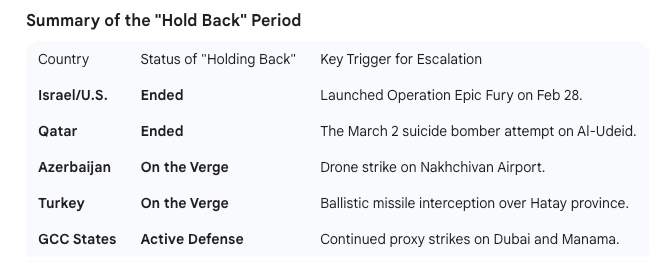
The period of "holding back" has largely ended for the regional powers. While the U.S. and Israel are the primary combatants in Operation Epic Fury (also known as Operation Roaring Lion**), the neighboring Arab nations have shifted from neutral bystanders to active defenders, and in some cases, are approaching the threshold of direct retaliation.
Here is the current status of the nations under fire:
1. Qatar and the "Point of No Return"
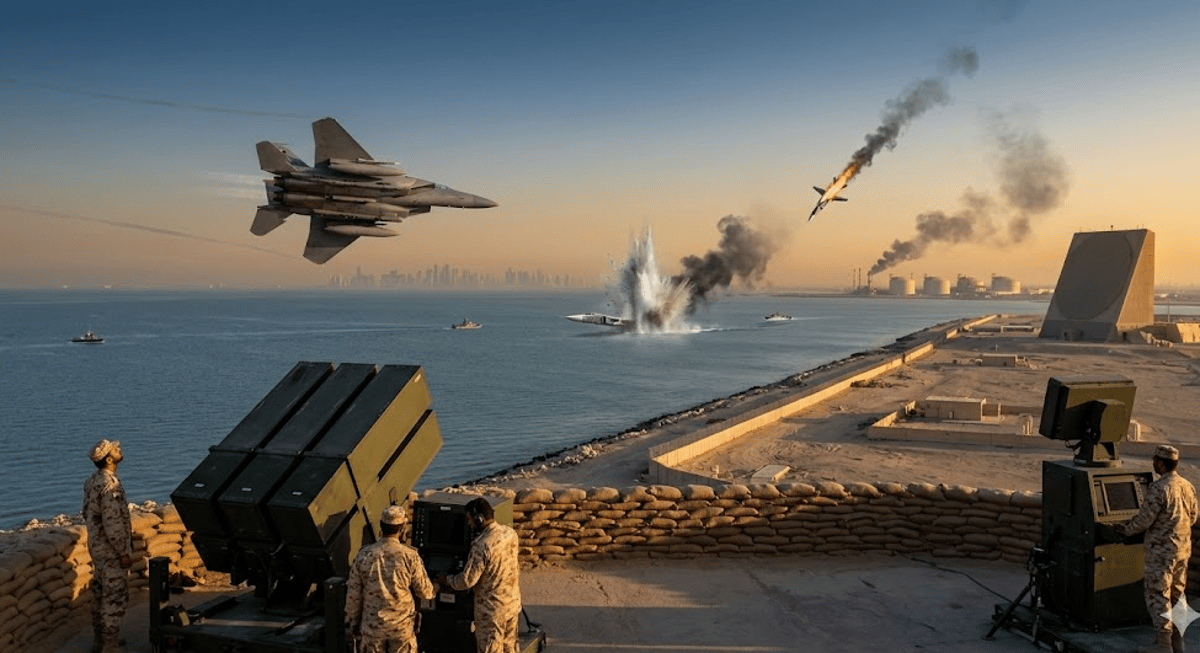
Qatar, traditionally the region's primary mediator, effectively ended its neutrality on March 2, 2026. After intercepting seven ballistic missiles and downing two Iranian Su-24 bombers targeting the Al-Udeid Air Base, Doha took the unprecedented step of shutting down all LNG production and declaring Force Majeure.
The Threshold: Qatar is no longer "holding back" diplomatically. By halting the global energy supply, they have engaged in a form of economic warfare against the instability caused by Iran. Militarily, they are now operating in a high-alert "active defense" posture.
2. Turkey and Azerbaijan: The Shusha Protocol
Following an Iranian missile interception over Turkish airspace and a drone strike on Azerbaijan’s Nakhchivan Airport, the two nations have activated the Shusha Declaration.
The Response: They have moved from diplomatic protests to active military coordination. Turkey has closed its borders with Iran and warned that it will meet any further "hostile acts" with a symmetrical military response. They are currently acting as a "northern wall" to prevent the conflict from spilling further into the Caucasus.
3. The UAE, Bahrain, and Kuwait
These nations have been the most frequently targeted by Iranian proxies (such as the Islamic Resistance in Iraq).
Current Posture: They are currently operating under a Unified GCC Defense framework. While they have not yet launched independent strikes into Iran, they have permitted U.S. and Coalition forces to use their bases for offensive sorties.
Retaliation Status:*The UAE has termed the strikes a "flagrant violation of sovereignty." Analysts suggest that if civilian casualties continue to rise (currently 13 dead across the Gulf), these nations may move from passive defense to supporting a formal "Integrated Air Defense" that takes preemptive action against launch sites.
4. Jordan and Saudi Arabia
Jordan: Has been intercepting Iranian projectiles crossing its airspace toward Israel. The Jordanian government has stated these violations are "unacceptable," signaling that their patience for being a "transit zone" for Iranian missiles has run out.
Saudi Arabia: Despite the 2023 rapprochement, Riyadh has condemned "blatant Iranian aggression." They are currently focusing on protecting their Aramco infrastructure but are increasingly aligned with the U.S.-Israeli coalition's intelligence-sharing network.